ZERO-SUGAR BEVERAGE SAMPLE REQUEST
Zero-Sugar Beverage Sweetener Blend Sample Request
Discuss a beverage sweetener sample with the drink, final sales market and taste question first. Clarify the base, process, packaging and quotation details as the project develops.
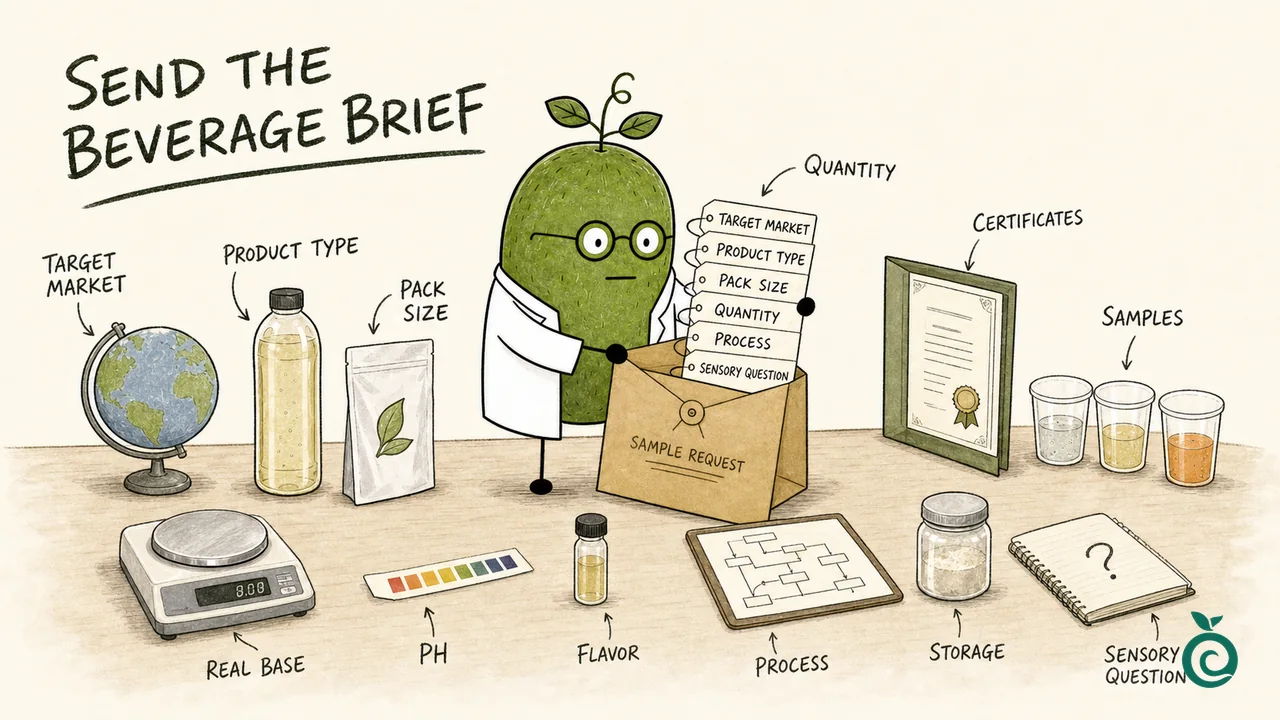
The illustration groups useful topics for follow-up, not requirements that must all be completed before contact. The pictured certificate, balance reading, pH strip and cups are schematic, not documents available for your project, measured results or a dose recommendation. Start with your beverage, final sales market and one question, then clarify the remaining details together.
Use this page to request a sample or quotation discussion for a zero-sugar or sugar-reduction beverage sweetener system. Hengliyuan can discuss monk fruit, stevia, allulose-supported, erythritol-free and custom natural sweetener blend directions, subject to the target market, finished beverage and required documents.
The most useful first message describes the beverage and the decision the sample must answer. A carbonated fruit drink, hot-fill tea and mineral protein beverage should not be treated as the same test.
Tell us what beverage you are making
State whether the project is a carbonated soft drink, still fruit drink, juice-style beverage, tea, coffee, hydration drink, electrolyte beverage, protein drink, powdered drink or another format. Add the target market and serving size.
Describe the sweetener job
Tell us what the system must improve: sweetness onset, peak, finish, bitterness, metallic or licorice-like notes, acid balance, aroma, body, solubility or an erythritol-free requirement. If the project needs a monk fruit and stevia direction, an allulose-supported direction or another natural sweetener blend, state that as a development direction rather than a fixed formula request.
Share the real base and process
The most useful sample brief includes pH or acidity, flavor, fruit, tea, coffee, protein or mineral base, soluble solids, viscosity, carbonation, mixing order, heat treatment, filling, serving temperature, packaging and storage checkpoint. Add the current or sucrose control and the main sensory problem if available.
Align documents and market review
List the documents needed for the actual grade and market, such as product specification, COA, SDS, allergen statement, origin, food-safety certificate, halal or kosher file, non-GMO statement, nutrition support or export documents. U.S. zero-sugar and zero-calorie wording has separate conditions under 21 CFR 101.60; that U.S. rule should not be copied into EU, China, Indonesia or another market without a separate review.
Start with the drink, market and one question
Start with the final sales market, beverage type and the taste, body or physical issue the sample should answer. Add any known packaging specification, estimated quantity, required certificates/documents and whether samples are needed. A complete formula, finished scorecard or all six fields are not required for the first message. Share the real base, target sweetness, current control, process and available observations when known. We can clarify undecided details as the discussion develops. A sample is not a guarantee of a final formula, shelf life or regulatory approval.
Related planning references
The beverage blend guide explains why a blend may be tested, and the existing validation scorecard organizes a control/A/B/blend comparison. Mao et al. (2025), https://doi.org/10.1038/s41538-025-00507-7, studied sucrose–citric-acid water models; it supports the reason for checking timing but provides no commercial blend ratio.
Add these details as the beverage sample discussion develops
- Target market
- Product type
- Packaging specification
- Estimated quantity
- Required certificates/documents
- Whether samples are needed
Common questions
Can the sample be monk fruit and stevia based?
That direction can be discussed when the market, beverage base, target sweetness and sensory question are clear. The final blend still needs real-base testing.
Can the project be allulose-supported or erythritol-free?
Yes, those can be stated as project constraints or development directions. Ingredient permission, label treatment, body target and taste must be checked for the target market and beverage.
Can one sample cover both still and carbonated beverages?
The ingredient direction may be related, but still and carbonated formats should be evaluated separately because carbonation, foam, acid and serving conditions can change the result.
What is needed before a quotation direction is discussed?
An initial discussion can start with the beverage, final sales market and main question. A production quotation needs the selected product or agreed formula version, pack, quantity, documents and commercial scope confirmed; those details can develop alongside sample review.