
Read this guide in
Hengliyuan Applications and Selection
Monk Fruit Juice Powder for Tea Drinks: Aroma, Sweetness, Color, and Sample Selection
Compare monk fruit juice powder in clear tea, fruit tea and milk tea. Keep the tea base fixed and check aroma, sweetness, colour, ice and processed samples.
Whether a tea beverage is suitable for monk fruit juice powder depends on both sweetness and flavor. If you want to highlight the tea’s own aroma, confirm whether it remains clear after the juice powder is added. If you want to develop a blended tea beverage with monk fruit character, compare the monk fruit flavor with the tea base.
Hengliyuan can provide monk fruit juice powder with or without an added carrier. Start sampling with your existing tea base and formula, then determine the specification and dosage according to the target taste, tea appearance, and actual production method.
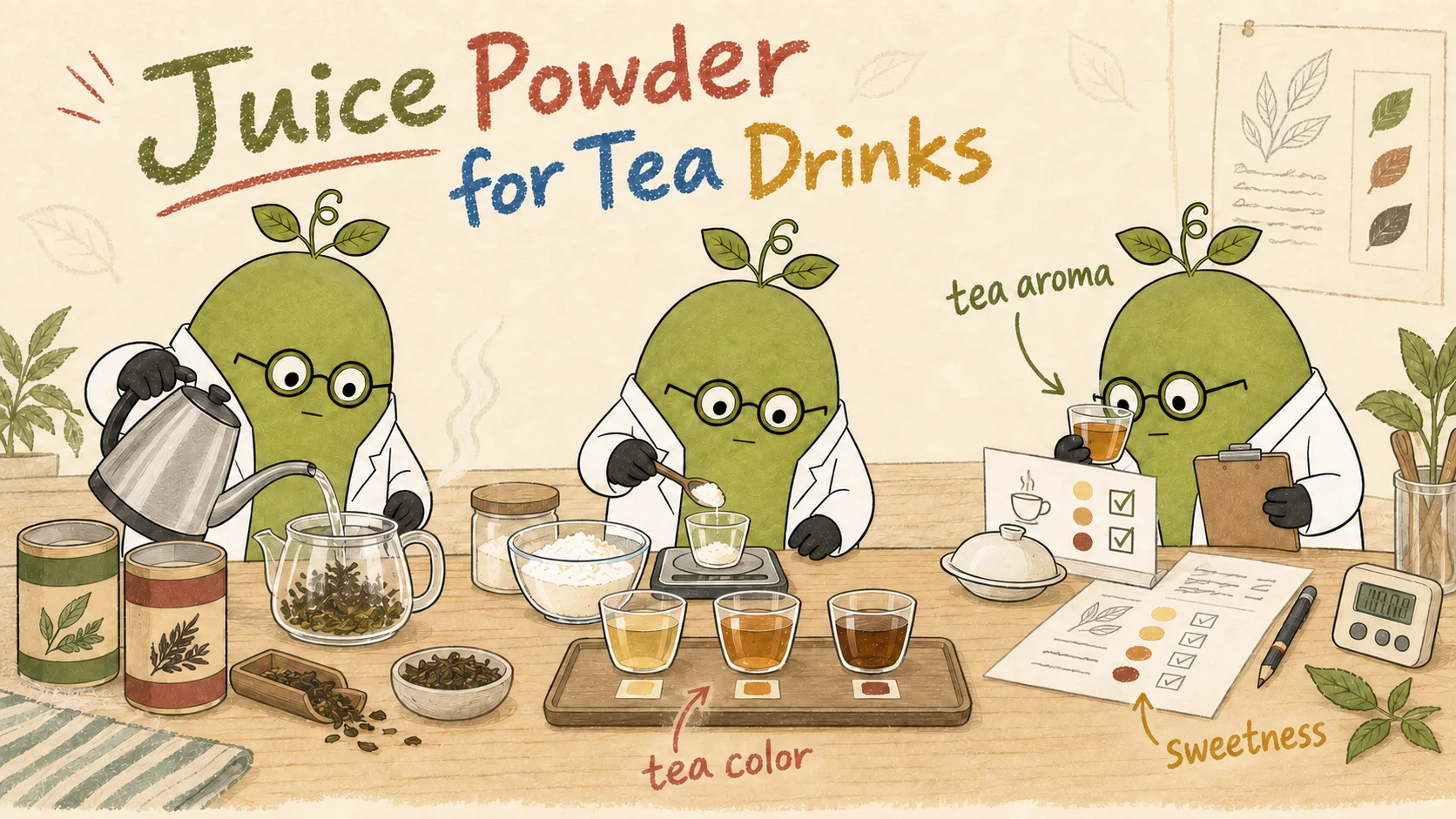
The illustration follows tea-base preparation, powder weighing and separate checks of aroma, sweetness and colour. Its cup colours, tick marks and timer are illustrative, not graded Hengliyuan samples or a standard brewing time.
How do selection priorities differ for clear tea, fruit tea, and milk tea?
Tea-forward beverages: preserve the tea aroma you want to present
For products led by tea aroma, evaluate sweetness and tea flavor separately. Once the sample reaches the required sweetness, confirm that the tea aroma remains clear, that the monk fruit flavor fits the positioning, and that the aftertaste is appropriate.
If your goal is to retain the original tea flavor, use the original formula as a reference and compare the product before and after adding juice powder. If you want a blended monk fruit-and-tea flavor, select samples for that goal; monk fruit flavor itself is not necessarily a problem to eliminate.
Fruit tea and flower-fruit tea: evaluate the complete formula’s sweet-sour balance and aroma
Evaluate fruit tea and flower-fruit tea after adding the actual juice, fruit, or floral ingredients. Sweetness that works in tea alone is not necessarily the amount required by the complete fruit-tea formula.
When selecting samples, compare whether the fruit, floral, and tea flavors are balanced, whether the sweet-sour profile fits the positioning, and whether the monk fruit flavor brings the characteristics you want to retain. When adjusting dosage, taste the complete beverage as well rather than pursuing only one sweetness value.
Milk tea and plant-based tea beverages: assess the tea, milk, and sweetness together
Test milk tea with the actual dairy or plant-based ingredients. Evaluate whether the tea flavor remains clear, whether sweetness and milky aroma are balanced, and how the overall flavor develops from the first sip to the finish.
For products using different milk bases, plant-based ingredients, or tea bases, confirm sample performance separately. A result suitable for one milk tea should not be applied directly to another formula.
Fix the tea base before comparing samples
Prepare the reference formula and candidates from the same batch of tea base. Keep tea-leaf quantity, extraction, water and the other ingredients consistent, then compare the selected juice powder specification or use level. Record the conditions with each sample code so the comparison can be repeated.
| Comparison detail | Record and keep consistent | If it changes |
|---|---|---|
| Tea base | Tea identity and lot, leaf quantity, water quantity, extraction time and temperature, and filtration. | Treat a new tea or extraction method as a new base and recheck the sample. |
| Juice powder | Product/model, lot, current composition and specification, and actual ingredient dose. | Record a new sample or dose as a separate trial; do not lose the link to its documents. |
| Complete recipe | Fruit, floral, dairy or plant ingredients and the final drink quantity. | Taste the complete new formula. Account for water added with any pre-dissolved ingredient. |
| Serving conditions | Tasting temperature, time after preparation, ice addition and any measured meltwater. | Separate dilution from temperature effects and compare at matching checkpoints. |
| Production route | Store cup preparation or actual factory process, pack and storage checkpoint. | Reconfirm the affected taste and appearance under the new route. |
If you change the tea, extraction method and powder dose together, you cannot reliably attribute the taste change to one of them. Water trials can introduce the ingredient, but our purchasing decision rests on its performance in the actual tea drink. State whether a trial holds ingredient dose fixed or adjusts each candidate towards the same sweetness target. The first compares the drinks at that dose; the second helps compare flavour at the intended sweetness. Keep the actual doses with both sets of observations.
When sweetness is right, identify the flavour problem
Name the issue before raising the juice powder dose. A monk fruit note that is too prominent, weak tea aroma and an unsuitable sweet finish need different comparisons. Once sweetness is adequate, adding more powder solely to correct a flavour problem may push the drink further from its target.
| Observed issue | Compare against the reference | Next check |
|---|---|---|
| Monk fruit character is too prominent | The intended monk fruit-and-tea balance at the target sweetness. | Review dose and powder specification in the complete formula. If the goal needs less ingredient flavour, discuss another ingredient direction. |
| Tea aroma is less distinct | The same tea base before and after the change, at the same serving temperature and time. | Check the base, dilution and other formula changes before attributing the difference to the powder. |
| Sweetness lingers differently from the target | Initial sweetness, the sweet finish and tea flavour after swallowing. | Compare candidate specifications and use levels near the agreed sweetness target; record the finish rather than sweetness alone. |
If the aim is sweetness with less change to the original tea flavour, Hengliyuan can also discuss an extract or custom sweetener blend for comparison. These are different ingredient directions, not equal-weight replacements for juice powder. Select through trials in the same tea base, judging tea aroma, monk fruit flavour and the finish at the target sweetness.
Judge colour and clarity against the intended tea style
For a clear tea drink, compare colour, clarity and appearance over the relevant standing period before and after adding the powder. Advance the sample only when its appearance and taste both meet the brief. Fruit tea, milk tea and plant-based tea drinks need their own appearance criteria. A recipe intended to contain fruit or remain cloudy does not need the same visual standard as a clear tea. If new haze or sediment appears, compare the tea base, other ingredients and processing conditions against the reference. Observe the undisturbed sample before stirring or shaking it, and record the checkpoint. Seeing a change identifies a question to investigate; it does not establish its cause or a shelf-life result.
Evaluate store-made and factory-packed drinks on their own routes
Tea drinks that are freshly made in the store should be evaluated according to the actual cup recipe. Confirm cold drinks, hot drinks and ice-added versions respectively. Pay special attention to whether the sweetness and tea taste are still harmonious after adding ice and during normal drinking. When a factory develops pre-packaged tea drinks, it needs to evaluate the actual processed samples and verify the taste and appearance during storage according to the product plan. If heat treatment is used, this process should be included in the sample evaluation, and the final plan cannot be determined based solely on the tea just prepared in the laboratory. Samples of both types of products should be tasted at expected drinking temperatures so that the selection results correspond to what consumers actually drink. For iced cups, keep the initial recipe and ice quantity with the record and distinguish measured meltwater from a temperature change. For a heat-processed comparison, bring samples to the same tasting temperature when assessing the processing effect. Use the actual proposed process and checkpoints; this guide supplies no universal heat setting or storage period.
How does Hengliyuan support your tea beverage project?
Tell us whether you are developing clear tea, fruit tea, milk tea, or a tea beverage intended to highlight monk fruit character. Include the tea base, target taste, and whether the application is store-made or prepackaged. If you already have a formula, describe the point you want to improve, such as tea-aroma retention, residual sweetness, monk fruit flavor, or tea appearance. Hengliyuan will discuss juice powder specifications and samples according to your requirements so you can compare them in the actual formula. Hengliyuan offers juice powder with or without an added carrier. Confirm the selected product’s current complete ingredient declaration, carrier details and percentage basis where applicable, and final-powder specification. Keep the accepted sample, composition, specification and quotation aligned before confirming supply conditions.
Common questions
Must monk fruit flavour disappear in a tea drink?
No. Define the intended drink first. If tea aroma should lead, check that it remains distinct at the required sweetness. If monk fruit character is part of the product, judge how it fits the tea rather than treating that flavour as a defect.
Discuss this requestCan I choose the sample from a water tasting?
Water can help you understand the ingredient, but make the selection in the actual tea recipe. Include the intended fruit, floral, milk or plant-based ingredients. Use the same tea-base batch for the reference and candidates.
Discuss this requestShould different powder samples use the same dose?
State the purpose of the comparison. A fixed-dose trial compares the resulting drinks at that amount; a target-sweetness trial adjusts doses before comparing flavour. Record each actual ingredient amount and keep the final recipe and serving conditions matched.
Discuss this requestWhat if sweetness is right but tea flavour is wrong?
Identify whether the problem is monk fruit intensity, tea-aroma retention or the finish. Review dose, specification and the complete recipe. Extract or blend alternatives can be discussed where appropriate, but determine their use levels through the same-base comparison rather than equal-weight substitution.
Discuss this requestDoes new haze prove that the juice powder caused it?
No. Compare the tea base, other ingredients and processing conditions against the reference. Record appearance before disturbing the sample and at the agreed checkpoint. The observation alone does not establish cause or storage suitability.
Discuss this requestCan one freshly made cup approve a prepackaged tea drink?
No. Factory-packed drinks need the actual process, packaging and planned storage checks. Store-made cups need their real serving recipe, including hot, cold or iced versions. Taste both at the intended drinking conditions; keep preparation route, temperature and ice dilution distinct.
Discuss this requestIs carrier-free juice powder always the best tea option?
No. Start with the ingredient requirement and verify the selected composition and final-powder documents. Then choose the sample by tea aroma, sweetness, flavour, appearance and the actual preparation or processing route. Carrier status alone does not establish those results.
Discuss this request