
Read this guide in
PUFFED RICE VALIDATION SCORECARD
Puffed Rice Snack Scorecard: Seasoning, Packaging and Storage
Compare seasoning, oil, seals, moisture and storage in a matched puffed rice snack trial. Download a free control/candidate Excel record.
A puffed rice snack scorecard should make the oil and package visible before the team debates the sweetener. Use matched control and sample rows to record seasoning coverage, oil contact, seal condition, oxygen or headspace plan, moisture, rancid odor and storage change in the same project record.
Use this field structure for savory rice puffs, coated cereal pieces, rice crisps and related low-sugar snacks. Reuse the rows, but set the actual methods and decision criteria for the product, process, package and launch market.
Why moisture alone is not the whole scorecard
Define the control and seasoning path
Keep the current formula or a suitable sucrose reference. Identify the complete formula version, rice or starch base, puffing route, seasoning, oil application and cooling/handover conditions. A sweetener-only water screen cannot establish performance in a coated snack. State the comparison question. If sweetener, coating oil, process and package all change, retain the result as a changed-product comparison; it does not isolate one cause. Use a narrower next comparison when the cause matters.
Download the blank paired checkpoint record
The free Excel record has 32 paired fields for a control and candidate at one storage checkpoint: sample and formula identity, puffing and oil/seasoning history, package and barrier information, actual storage/opening conditions, sensory observations and method-linked laboratory results. It downloads directly without email or registration. Save a new copy for another checkpoint or comparison and keep the same project/sample references. Yellow cells are blank; blank means not recorded, not zero. Notes are the default: define scales and criteria before adding scores. The file has no formula, weighted total, automatic approval or preset shelf-life result.
The workbook is optional. Start a conversation with the product, target market and main issue even if some oil, packaging or laboratory information is still unavailable.
What to keep beside each control/candidate result
Use the groups below to find the relevant fields in the download. Keep the planned method and actual observation distinct; a missing measurement stays missing.
| Record group | Keep with the result | Comparison rule |
|---|---|---|
| Product and process | Sample/lot, complete formula, rice/starch base, puffing route and settings | Identify every changed variable, including process changes |
| Oil and seasoning | Oil lot/opened history, seasoning identity, amount/basis, spray/tumble and cooling | Coverage, oil contact and sweetness are separate observations |
| Package and headspace | Actual material/version, seal process/test, barrier reports and oxygen plan/results | A planned gas flush or visual seal check is not a measured barrier result |
| Exposure and checkpoint | Actual elapsed time, temperature/RH, light/transport and opening/reclosure history | Keep unopened and after-opening conditions in separate comparison arms |
| Sensory and physical findings | Coverage, first-bite crunch, sweetness/finish, stale/rancid notes and pack/breakage findings | Keep descriptor, method/scale and any count/mass denominator |
| Laboratory results | Moisture, aw and selected oxidation report with method, units and basis | Do not replace one test with another or a sensory result with a lab number |
Score oil contact before calling it a sweetener issue
Record the oil identity and lot at receipt, opening and use, then link it to the finished sample. Keep oil storage and heat/light/air exposure, coating amount and coverage, seasoning and cooling with that identity. If you change oil or application, name the change rather than assigning its result to the sweetener. Our troubleshooting approach is to keep the sweetness direction steady while investigating an oily, stale or rancid note when that comparison addresses the question. This is a way to narrow the next trial, not a diagnosis from odor alone.
Keep package checks physical
Record the actual package/material reference and seal operation. Keep seal appearance separate from a specified integrity test. Oxygen transmission and water-vapor transmission describe different package properties; retain the test temperature, humidity conditions, method and units with supplier or laboratory data. A shiny film or a pouch material name is not a measured barrier value. Distinguish the headspace or gas-flush plan from any actual oxygen measurement. Record the instrument/method, units and pack identity when measured. Unknown film, oxygen or seal-test data can remain blank while the comparison is clarified.
Repeat the rows at useful checkpoints
Day 0, 7, 14 and 28 can be a proposed planning frame; choose the actual schedule for the product and question. Keep the packing/opening time, actual sampling time, elapsed duration, temperature/RH history, light and transport exposure with each result. A late or missed visit is recorded as the actual time, not relabeled as the intended day. For an unopened-pack comparison, use a separately identified sealed unit at each destructive sampling checkpoint. A pack opened on day 0 is an after-opening sample thereafter. If the project includes after-opening use, define opening frequency, exposure and reclosure and keep that arm separate. Record repeat units and assessors explicitly; one pack does not become independent replicates by producing several notes.
Read sensory and laboratory rows together
Moisture content and water activity answer different questions. Retain the method and reporting basis for moisture, including wet or dry basis, and measurement temperature/method for aw. A visual crunch note does not supply either value. For an oxidation result, keep the selected method, sample or extraction preparation, units, reporting basis and report identifier. The 2020 study followed oil oxidation and rancid odor in sunflower-oil wheat crackers; it does not supply a universal puffed-rice PV limit. Read the sensory and laboratory findings together without treating either as an automatic shelf-life, food-safety or legal decision.
Turn a failed row into the next brief
Agree the relevant criteria and method before comparing samples. Keep a failed or unresolved requirement visible instead of averaging it into an overall score.
| Finding | Useful next question | Keep visible |
|---|---|---|
| Sweetness or finish differs | Which grade/dose or blend direction should be compared in the same snack? | Oil, seasoning, process and package held or changed |
| Coverage or retention differs | Does the carrier/application or mixing step need its own comparison? | Amount/basis, spray/tumble, cooling and loose-seasoning observations |
| Stale or rancid note changes | What do the oil history, exposure and suitable method-linked results show? | Sensory wording separate from laboratory values and inferred causes |
| Crunch or breakage changes | Which structure, moisture, pack or handling comparison answers the issue? | First-bite method, moisture/aw methods and breakage denominator |
Research used to design the record
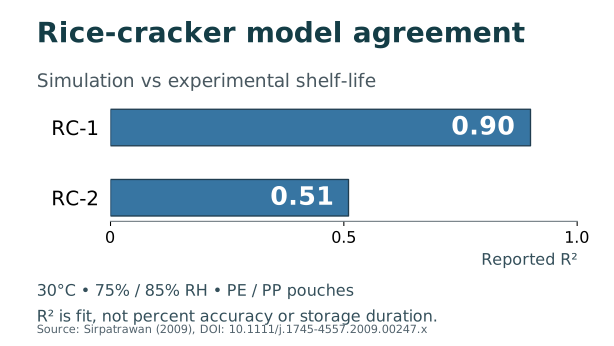
The 2009 packaged rice-cracker paper in Journal of Food Quality supports keeping product, packaging and moisture observations together; its model agreement is not a transferable shelf-life promise. The 2020 wheat-cracker study supports retaining ingredient-oil history and sensory/laboratory records. Use methods and acceptance criteria suitable for the actual product and sales market.
Start with the snack and the issue
Tell us the snack type, target market and whether the main problem is sweetness, finish, seasoning coverage, crunch or a changed oil note. Add any known base, puffing route, oil/seasoning and package information. We can clarify the sweetener sample direction and the comparison together. A completed workbook, full formula or finished stability study is not required for first contact. Add packaging requirements, estimated quantity, required documents and sample needs as the supply and quotation scope becomes clear.
Useful optional details for a puffed rice sample discussion
- Current or sucrose control
- Rice or starch base and puffing method
- Seasoning oil and oil contact
- Package, seal and headspace
- Moisture or water activity method
- Rancid odor and selected oxidation method
- Storage and opening condition
- Sweetness and aftertaste
Common questions
Does this scorecard calculate an overall pass score?
No. The download provides blank control/candidate fields for one checkpoint. Define methods, scale anchors and criteria before scoring. Blank is not zero, and a preferred flavor does not erase an unresolved package or storage requirement.
Can a pack opened at day 0 remain an unopened storage control?
No. Use separately identified sealed units for later unopened-pack checkpoints. Keep an after-opening arm with its own opening, exposure and reclosure protocol if that use condition is part of the question.
Are moisture content and water activity interchangeable?
No. Record each selected method and its actual result. Retain the moisture reporting basis and units and the aw measurement temperature/method. A crunch observation cannot fill a missing laboratory value.
Does the pouch material name prove oxygen or moisture protection?
No. Keep the actual package version, supplier/test data and conditions. Oxygen and water-vapor transmission are different properties; seal appearance, seal testing and headspace measurements should also remain distinct.
Can the figure tell me how many days my rice snack will last?
No. It shows model-agreement statistics from two published rice-cracker products. R² is not percent accuracy or a storage duration, and the chart supplies no shelf-life limit for your formula or package.
Does an odor note or a single PV result establish a food-safety conclusion?
No. Keep the observation and method-linked result with product, storage and package identity. Quality troubleshooting, safety assessment and any applicable legal decision have their own requirements; the sheet has no automatic approval.
Do I need to fill the Excel file before asking for samples?
No. Download it directly without email if useful. Start with the product, market and issue, then add known oil, seasoning, package, quantity, document and sample requirements as the project is clarified.
