
Read this guide in
CHEESECAKE FORMULATION GUIDE
Reduced-sugar cheesecake: compare sweetness, set and water release
Evaluate sweetness, set, slice hold and refrigerated water release separately when choosing a sweetener for a reduced-sugar cheesecake.
For a reduced-sugar cheesecake, write the sample brief around the real product form and keep four decisions separate: sweetness, gel or set formation, slice integrity, and water release during the agreed chilled window. A sample may match sweetness while its body or water balance changes. Approval belongs to the defined formula, process, package and target market.
This guide helps dessert manufacturers and development teams prepare a sweetener inquiry for Hengliyuan. Choose an ingredient or blend direction using the actual cheesecake base and process; retail pack sweetness is not a finished-dessert formulation instruction.
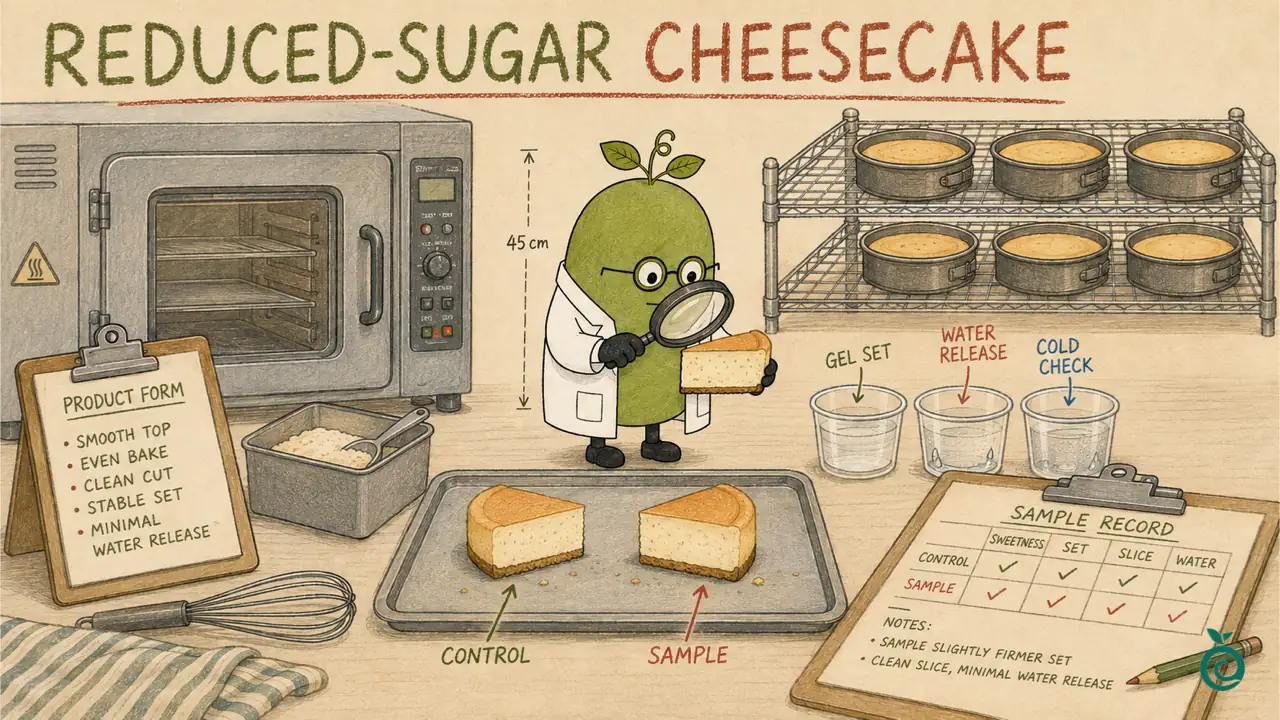
One sample needs four separate answers
The illustration keeps sweetness, set, slice and water-release notes separate because an acceptable tasting does not settle the other results. Match every observation to the same control, product form and defined checkpoint. Its ticks, slice appearance and 45 cm scale are scene props, not recorded factory measurements or pass/fail criteria.
What should be fixed before the first sample?
Start with the product, not the ingredient name. State whether it is baked or unbaked, the cheese and cream base, crust or no crust, fruit or chocolate additions, the current control and the intended sweetener form. Add the serving and storage conditions and the main question the sample must answer. A baked cheesecake and a cold-set cheesecake do not build structure in the same way; a fruit-topped slice and a plain filling also bring different water and handling questions. For an initial discussion, share the information you have rather than waiting for every packaging or purchasing detail.
Why can sweetness pass while set or slice hold changes?
Sugar contributes more than sweetness in a dessert system. The Food Standards Agency's cheesecake guidance describes roles in bulk, mouthfeel, texture and the binding of free water. Matching sweetness alone does not replace those functions alongside the dairy solids, cream, fat, crumb and setting process. Keep the sensory result, physical set and cut slice as separate observations. The cited colored-cheesecake study measured viscosity of its separate fillings and other observations in a specific layered formulation. It is not a direct measurement of syneresis in our cheesecake samples and supplies no universal water-release or slice-hold limit. Use a source only for the product and measurement it actually reports.
How should the sample matrix separate the observations?
Keep the control beside the candidate and use four separate result rows. Record the actual formula or sample code and the addition with its unit. A fixed-addition comparison and a comparison matched to a sweetness target answer different questions; mark which one you used.
| Result | Record against the same control | What this observation does not settle |
|---|---|---|
| Sweetness and finish | Serving condition, onset/peak/finish, sourness balance and unwanted aftertaste. | A sweetness match does not establish set, slice hold or water balance. |
| Gel or set | Setting route, agreed observation or instrument method, condition and time; firmness or flow notes. | A firmer sample is not automatically preferred or acceptable. |
| Slice integrity | Cut method and portion, center hold, edge break, filling movement and crust lift at the defined serving condition. | A clean first cut does not establish later refrigerated performance. |
| Refrigerated water release | Where water appears, amount if measured, method/unit, pack, checkpoint and opening/cutting history. | A wet surface does not identify the cause, quantify syneresis or establish food safety. |
How should baked and no-bake routes be handled?
Write the setting route in plain language. For a baked product, record the bake method and cooling sequence used by the project. For a no-bake product, record the cold-set system and the relevant mixing, hydration or chilling steps. If gelatin, starch or another hydrocolloid is present, name it as part of the actual formula and method; do not copy a dose from a different dessert. Keep the setting system identifiable when comparing a sweetener change.
What should be checked after chilling?
Define the first comparison point after the agreed cooling or setting condition, then use refrigerated checkpoints that fit the project. Record actual time and temperature instead of treating a calendar day as the same condition for every sample. Keep package, portion, serving and cut methods comparable, and distinguish these sample histories.
| Sample history | Keep identifiable at each checkpoint |
|---|---|
| Stored uncut in the agreed package | Storage condition, package and seal, baseline and actual checkpoint. Where assessment is destructive, use an independent matched unit for the next unopened checkpoint. |
| Freshly cut for assessment | Time out of storage, serving condition, cut method and portion; record slice hold and water before further handling. |
| Previously opened or cut | When it was opened/cut, how it was covered, handling and exposure. Keep this record separate from unopened storage. |
| Filling, topping and crust interface | Location of surface drops, filling drainage or wet zones beside fruit or crumb. If a method reports water release, retain its method, unit and reporting basis. |
Do not turn repeated notes from the same cake into independent sample repeats. Visible water is a location and condition to investigate, not a diagnosis: compare the base, solids, fruit or acid system, setting process, package and sweetener change before choosing the next trial. This record does not assign a shelf life or a safety decision.
How should sweetener form and market review enter the brief?
High-intensity sweeteners and ingredients that supply bulk or solids play different roles. State whether the project needs concentrated sweetness, a bulk ingredient, a blend, a powder or a liquid; compare the complete supplied composition and the actual addition. Do not assume one-to-one replacement from the retail sweetness statement. Keep the finished-product label question separate from the sample result. For a U.S. allulose project, include the main sales states and the intended packaging claim in the review. FDA's allulose guidance addresses the Nutrition and Supplement Facts declaration; it does not by itself approve a sugar-related front-of-pack statement or the finished cheesecake. Proposed claims need review for the complete product and market before artwork is finalized.
Choose which Hengliyuan product direction to discuss
If your team needs a concentrated sweetening ingredient, start with the monk fruit extract specification. If the brief calls for a blend, compare the complete ingredients of the allulose and monk fruit option or the erythritol-based monk fruit series, with or without steviol glycosides. These are product directions to evaluate, not verified cheesecake solutions. Send the current formula context and one unresolved result so the sample request stays specific.
Turn the result into a useful next sample request
Start with the product, target market and the main result you want to improve. When available, add the control and candidate codes, complete base or formula revision, actual addition, setting process, pack and storage/serving conditions. Send the four result rows with the actual checkpoint and identify what changed. Packaging specifications, estimated quantity and required documents can be clarified as the project develops; you can contact us before the brief is complete.
Keep these details with the cheesecake comparison
- Baked or no-bake form and the actual setting system
- Control and candidate code, formula revision and actual addition with unit
- Sweetener identity, supplied form and carrier or bulk composition
- Separate sweetness, set, slice and water-release observations
- Actual checkpoint, temperature, serving and cutting conditions
- Pack and opening/cutting history; distinguish stored uncut and previously opened units
- Target market and intended label question; main sales states for a U.S. allulose project
- One main change and the question for the next sample
Common questions
Can a sample that tastes right be approved immediately?
Check the agreed set, slice and water-release requirements separately. An acceptable tasting does not establish physical performance, storage life or the finished-product label.
Discuss this requestIs visible water proof that the sweetener caused the issue?
No. Record where it appears and the actual storage, cutting and handling conditions. Keep the cause open while comparing the dairy base, solids, fruit or acid system, setting process, package and ingredient changes.
Discuss this requestCan two water-release percentages be compared directly?
Only when their methods and reporting bases match. Keep the sample preparation, separation or collection method, checkpoint, unit and denominator with each result. A photograph of surface water is not itself a measured percentage.
Discuss this requestCan one opened cake represent unopened refrigerated storage?
Keep its later observations as an opened or cut sample history. Where an unopened checkpoint uses destructive assessment, plan a separate matched unit rather than reopening the same cake and calling it unopened storage.
Discuss this requestCan a baked cheesecake result be reused for a no-bake product?
The base, setting route and process history need to match the new question. Keep the control and checkpoints tied to the actual product rather than carrying over an approval from a different structure.
Discuss this requestDoes allulose or monk fruit make the finished cheesecake low calorie?
The ingredient name is insufficient. The complete formula, serving basis, target market and the specific proposed claim need their own review. A sweetness or slice result is not a nutrition calculation or label approval.
Discuss this requestWhat can we send before the trial brief is complete?
Start with the cheesecake form, market and one problem to solve. Add the actual control, sample observations and conditions you already have. Packaging, quantities and documents can follow as the sample direction becomes clearer.
Discuss this request