
Read this guide in
BUYER NEEDS & OUR APPROACH
Helping a UAE buyer compare sweetener prototypes in coffee and tea
An anonymized application example: translating a buyer’s taste brief into prototype comparisons, sensory observations and the next development questions.
A UAE-based sweetener development team wanted a sugar-like experience in tea and coffee, with clear ingredient exclusions and a smaller sachet serving if the taste could be maintained. We used the brief to plan prototype comparisons and shared a preliminary sensory evaluation summary for the buyer’s review.
What the buyer wanted to compare
The brief went beyond sweetness strength. It asked for a clean taste, fast sweetness onset, minimal lingering aftertaste, no cooling sensation and good dissolution in hot drinks. The buyer also wanted to compare different prototype serving weights before choosing a packaging direction.
How we compared the prototypes
The evaluation compared the 2 g and 3 g sachet prototypes with a sucrose reference in coffee, tea and water under several temperature conditions. The record set out the serving amounts, beverage volume, presentation method and scoring scale. Sweetness, mouthfeel, clean taste, aftertaste, sweetness onset, sweetness progression and closeness to sucrose were assessed separately. This made the taste discussion more specific than a single overall preference.
| Test condition | What the preliminary record reports |
|---|---|
| Evaluation date | 10 October 2026. |
| Samples and comparator | One whole 2 g prototype sachet, one whole 3 g prototype sachet, or 10 g sucrose per 200 mL beverage. |
| Drinks and temperatures | Coffee, tea and water, each at ambient temperature, 3 °C and 40 °C. |
| Panel | Seven tasters: three sensory-lab PhDs, two local coffee association participants and two consumer tasters. |
| Repeated cups | Two cups for each sample, beverage and temperature combination: 54 cups per taster, 378 cups in the main evaluation. These are repeated observations within seven tasters. |
| Presentation | The sucrose reference was identified; prototypes were coded and served in randomized or alternated order, with water rinsing and about five minutes between cups. |
The comparator used for this record was 10 g sucrose in 200 mL. That is different from the separately discussed 5 g sucrose target. The two sachet prototypes are identified by their serving weights here; these data do not disclose their formulations or establish a universal sweetness factor.
What the rounded scores show
The two prototypes had the same rounded scores for six of the seven attributes. Sweetness onset was the exception: 3/5 for the 2 g prototype and 4/5 for the 3 g prototype. This is a difference in the reported onset score, not a measured difference in seconds. The summary uses a five-point scale where higher means better performance. Prototype values are aggregate panel averages rounded to whole points. Sucrose at 5 is the scoring anchor, not an independently calculated panel mean; it is therefore not plotted as a third measured series.
| Sensory attribute | 2 g prototype | 3 g prototype |
|---|---|---|
| Sweetness | 5 | 5 |
| Mouthfeel | 4 | 4 |
| Clean taste | 5 | 5 |
| Aftertaste cleanliness | 5 | 5 |
| Sweetness onset | 3 | 4 |
| Sweetness progression | 4 | 4 |
| Closeness to sucrose | 4 | 4 |
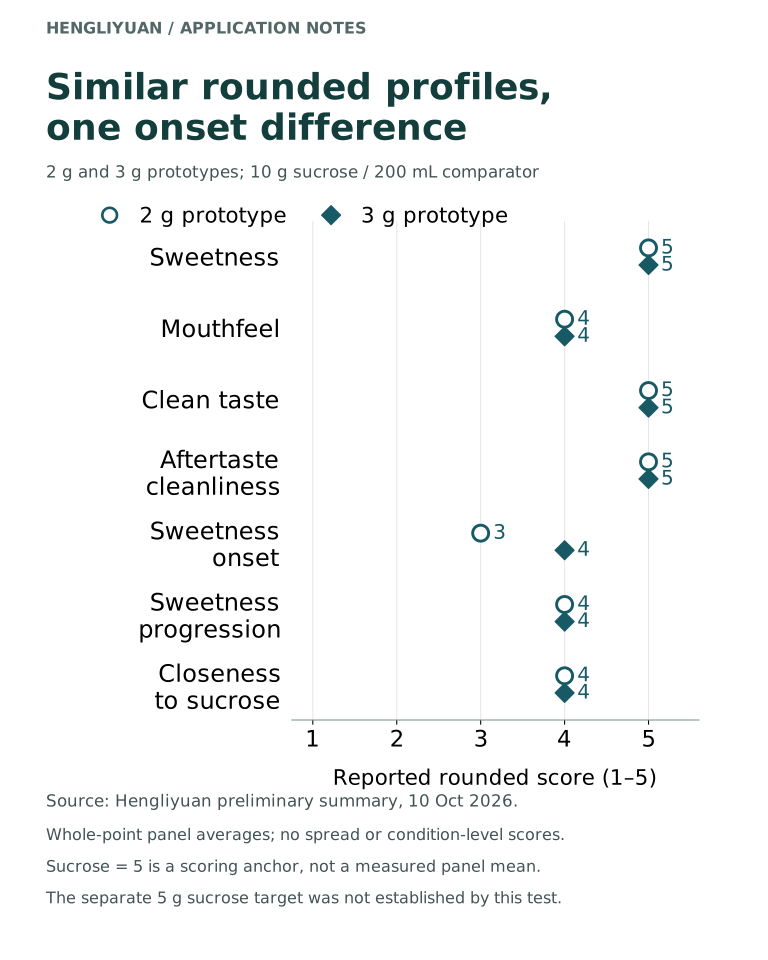
Source: the existing anonymized preliminary sensory summary, evaluation dated 10 October 2026. The summary does not provide unrounded means, spread, individual score sheets or separate result cells for each drink and temperature. No error bars or significance markers have been inferred.
How the findings shaped the next step
The preliminary rounded scores showed similar overall profiles, with a difference in sweetness onset. We shared the conditions, observations and interpretation with the buyer. Their follow-up focused on a further comparison against the original sugar-sweetness target, possible improvements to onset and physical samples for their own evaluation. The discussion therefore linked the tasting observations to concrete development questions.
Keep the additional observations in their actual test context
The summary reports no cooling sensation, bitterness, pronounced monk-fruit off-note or clear change to the coffee or tea flavor under the tested conditions. After normal stirring in 3 °C water, no visible clumps, bottom residue or sediment were observed. Dissolution time was not measured, so this observation is not a timed dissolution specification. An additional 200 mL iced milk coffee with one 2 g sachet per person received especially positive feedback. It was an informal serving check without a parallel 3 g or sucrose comparison, so it is separate from the main comparison above. The 378-cup total is not a panel of 378 independent people, and the rounded scores do not constitute a statistical equivalence test. Participation by coffee association tasters does not constitute association certification or endorsement.
Use the result to plan the next comparison
The next useful question was whether the selected prototype met the original sugar-sweetness target in the buyer’s own drinks. A further comparison should state that target explicitly, keep the actual beverage and serving conditions identifiable, and record the final prototype and sample specifications. Assess sweetness onset separately from total sweetness and lingering aftertaste. A smaller sachet is worth comparing when it meets the intended taste target; the result above alone does not select the final sachet weight. Keep the sample version, commercial dose and the buyer’s preparation method with the next feedback.
Discuss your own drink and taste target
Start with the drink, final sales market and the taste characteristic you want to improve. If you have already tested a sample, add its ID, actual serving amount and the difference you noticed. You do not need a completed score sheet or a full proprietary recipe for the first discussion. This example shows how Hengliyuan turns a brief into a comparison, shares the observations and identifies the next development question. Sample quantities, the selected formula, packaging and supply arrangements are discussed for each project.
Common questions
What did this preliminary comparison test?
It compared whole 2 g and 3 g prototype sachets with 10 g sucrose per 200 mL in coffee, tea and water at ambient temperature, 3 °C and 40 °C. The 5 g sucrose target discussed separately was not established by this comparison.
Discuss blend prototypes and application samplesWas the 3 g prototype better than the 2 g prototype?
Its rounded sweetness-onset score was 4 rather than 3; the other six rounded scores matched. The summary does not provide unrounded values or variability and does not establish a statistically superior or equivalent product.
Discuss blend prototypes and application samplesIs sucrose at 5 a measured panel average?
No. It is the scoring reference anchor. The prototype values are rounded aggregate panel averages, so the chart shows the two prototype series and explains the sucrose reference separately.
Discuss blend prototypes and application samplesDoes the record prove instant dissolution or coffee association approval?
No. It reports no visible clumps or residue after normal stirring in 3 °C water, without measuring dissolution time. Participation by coffee association tasters does not constitute certification or endorsement.
Discuss blend prototypes and application samplesCan we use the record to choose our own final sachet size?
Use it to frame a comparison, then test the selected prototype against your stated sugar target in your actual drink and serving conditions. Start with the product and taste problem; a complete recipe or score sheet is not required to discuss the next sample.
Discuss blend prototypes and application samples