
Read this guide in
ALLULOSE IN BAKERY
Allulose for Baking: Browning, Moisture & Sample Testing Guide
Test allulose in baking without judging doneness by color alone. Compare cooled texture, moisture, water activity and packaged storage against a sugar control.
Allulose can change browning before the rest of a bakery formula reaches its target. Our view: do not choose the formula from surface color or the first warm bite. Compare the cooled product and its packaged storage performance with the original sugar control.
Separate the jobs you need to replace: sweetness, ingredient mass, spread, texture and moisture behavior. Allulose may cover part of that work, while monk fruit or stevia can help adjust sweetness. Neither the ingredient name nor a good first bake establishes a universal replacement ratio or shelf life.
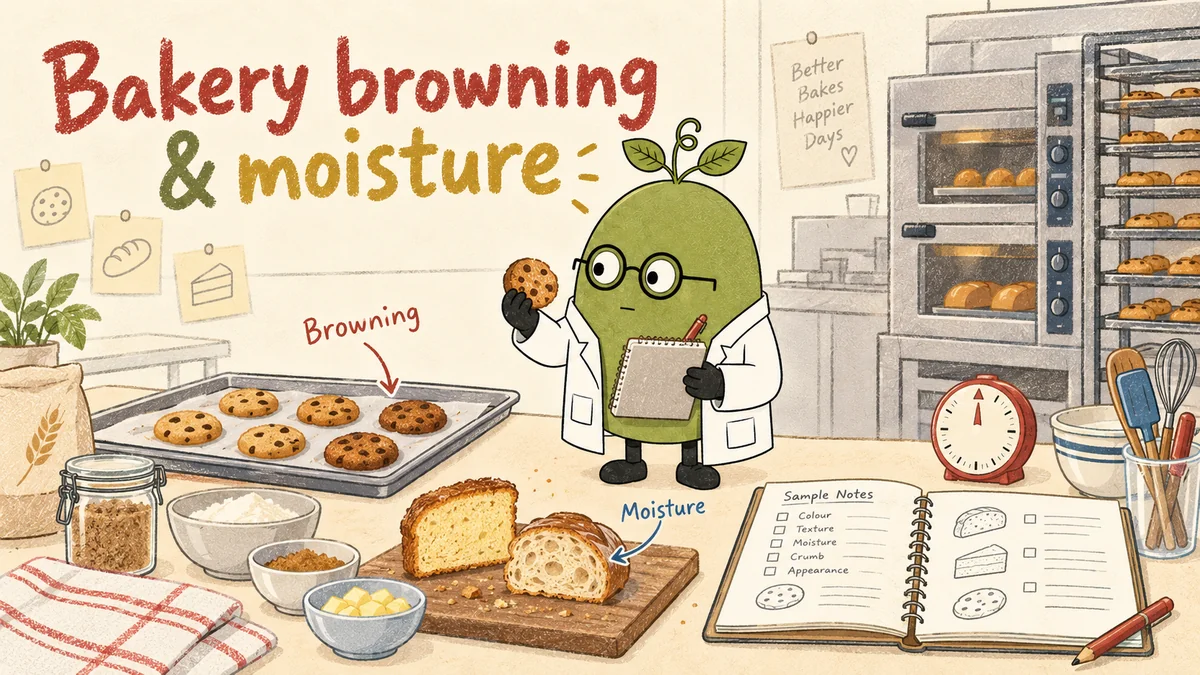
Sugar does more than sweeten
Cookies, bars, cakes, fillings and baked snacks depend on sugar for color, structure and moisture control. Replacing sweetness without replacing function can change spread, bite, browning and eating quality.
Why allulose changes bakery trials
Allulose is often considered when buyers want more browning, humectancy and a rounded sugar-like profile than a pure high-intensity sweetener can provide. It should still be tested at bench scale because browning can move faster than expected.
Combine sweetness and function separately
A practical bakery system may use allulose for part of the sugar-like function and monk fruit or stevia for sweetness lift. The best direction depends on target sweetness, label rules, cost, process temperature and desired texture.
Separate the observations in a controlled bake
Compare the current sugar formula with an allulose direction under a documented process. Record ingredient form, actual dose, added water, dough preparation, portion mass and dimensions, tray position, oven settings and cooling conditions. First identify the difference; then give a process or formula adjustment its own sample code. Changing the sweetener, water and bake program together makes the cause harder to identify.
- Water activity and moisture content: USDA explanation
- Controlled allulose–stevia bake trials and mass-loss calculation
| Observation | Keep the comparison consistent | What it does not establish |
|---|---|---|
| Surface color | Same lighting and defined bake checkpoints | Internal doneness or cooled texture |
| Spread and dimensions | Same initial portion mass and shape; measure after cooling | An acceptable texture by themselves |
| Bite or snap | Same cooling time, sample temperature and evaluation method | Measured moisture or shelf life |
| Moisture content | Same sampling and analytical method | Water activity |
| Water activity (aw) | Record measurement method and temperature | Complete shelf-life validation on its own |
| Packaged storage | Intended packaging, recorded conditions and checkpoints | A universal allulose storage limit |
Moisture content and water activity are different measurements. A softer bite is not a moisture assay, and measured moisture cannot be substituted for water activity. Keep these records separate and use the complete product’s process, packaging and storage assessment for shelf-life decisions.
Check market and label status
Allulose rules are market-specific. FDA’s final guidance is dated October 2020. It describes enforcement discretion for excluding allulose from Total Sugars and Added Sugars and using 0.4 kcal/g in U.S. nutrition labeling pending rulemaking. Allulose remains part of Total Carbohydrate. This does not establish the label, claims or market access of every finished bakery product; review the complete formula for its destination.
Supplier brief for bakery projects
Start with your target market and product idea. Share any known packaging specification, estimated quantity, required certificates/documents and whether samples are needed; we can clarify the remaining details together. Add process temperature, target sugar reduction, current formula benchmark and texture goal.
Cookie trials: compare colour, crunch and storage softening
Compare a control and the proposed allulose formulation using a documented dough preparation, portion size and baking programme. Record the baking conditions and appearance at the chosen checkpoints; do not infer internal texture from surface colour. After a consistent cooling procedure, compare bite or snap using the same evaluation method. For storage, pack the samples in the intended packaging and record the time and environment of each repeated check. If the product has a filling, include the assembled cookie in the storage comparison. Keep colour, bite and measured moisture results as separate observations. If one result misses the product target, review the formula or process variable that the trial was designed to test, then compare the revised sample with the control again. These observations help select a formulation; they do not establish a universal allulose dosage, bake time or shelf life.
Review note
Reviewed October 16, 2026. Confirm material documents and destination-market requirements. Trial observations guide formulation choices; they do not establish universal bake settings, ingredient dosage or shelf life.
Common questions
Can allulose help bakery browning?
It can support browning in some bakery systems, but buyers should test color development carefully because process, dose and product type change the result.
Discuss a bakery sweetener trialShould I shorten baking time if an allulose cookie turns dark sooner?
Do not use color alone as the endpoint. Record the original process and check the product’s required internal and cooled attributes. Test any time or temperature adjustment as a separately identified change, then reassess texture and packaged storage.
Discuss a bakery sweetener trialCan monk fruit or stevia replace all sugar in bakery?
They can replace sweetness, but not all of sugar's bulk, browning and moisture functions. A blend or formula adjustment is usually needed.
Discuss a bakery sweetener trialAre moisture content and water activity interchangeable?
No. Measure and record them separately using suitable methods. Surface color, soft texture and baking mass loss do not replace either measurement or the complete product’s shelf-life assessment.
Discuss a bakery sweetener trialIs allulose accepted in every market?
No. Buyers should confirm the target market's current ingredient, label and nutrition rules before using allulose commercially.
Discuss a bakery sweetener trialWhat should bakery buyers send before sample discussion?
Start with your target market and product idea. Share any known packaging specification, estimated quantity, required certificates/documents and whether samples are needed; we can clarify the remaining details together.
Discuss a bakery sweetener trial