
Read this guide in
Hengliyuan applications and selection
Allulose–Stevia Blends: Sweetness, Taste, and Cost in Use
Allulose-stevia blends: how a higher sweetness level can lower cost in use, plus checks for bitter aftertaste and baking performance.
For allulose–steviol glycoside blends, increasing sweetness and reducing the amount needed to reach the same sweetness is one way Hengliyuan explores lower cost in use. Bitter aftertaste and lingering sweetness must remain acceptable to the customer, and final costs should use the dosage confirmed in trials.
Customers can choose a blend close to sugar in sweetness or discuss a higher-sweetness option. First clarify whether equal-weight sugar replacement is needed and what other functions allulose must perform in the target food.
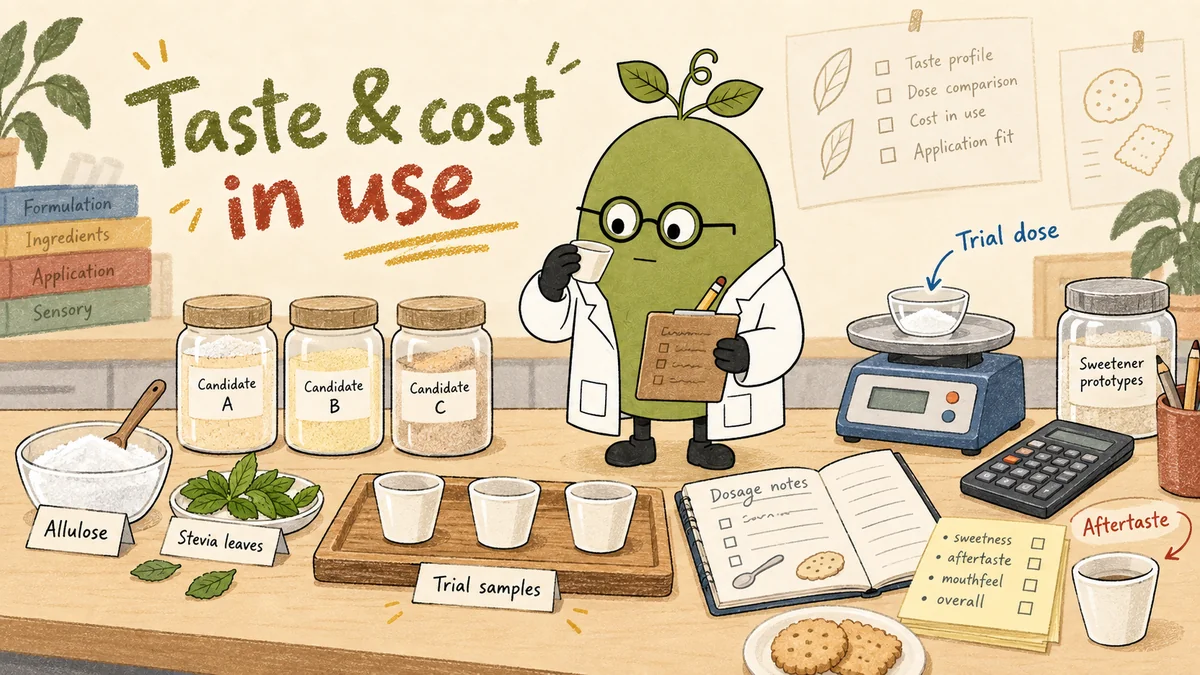
Bitter aftertaste? First compare the stevia ingredients
In Hengliyuan’s actual ingredient selection and tasting, some conventional stevia ingredients have a bitter aftertaste, while two enzyme-converted steviol glycoside ingredients used had only mild bitterness. Customers seeking to improve bitter aftertaste can therefore compare different stevia ingredients to see whether a replacement better meets the taste target. This experience applies to the ingredients actually tasted; it does not mean all enzyme-converted stevia is free of bitterness. Each ingredient must still be tested in the customer’s food as part of the allulose blend. Hengliyuan recommends giving separate feedback on sufficient sweetness and acceptable aftertaste. Insufficient sweetness calls for discussing how to supplement it; adequate sweetness with a pronounced bitter aftertaste calls for comparing stevia ingredients and proportions, rather than repeatedly changing only the overall dosage.
How do you assess whether an ingredient change works?
Keep the original sample as a control, use the same target food and adjust the new option to similar sweetness before tasting. For tea drinks, keep the tea base and other ingredients constant; for coffee, keep the coffee and milk formula constant. Focus on three points: whether initial sweetness meets the target, whether bitterness after swallowing is reduced, and whether the original tea, coffee or other flavors remain balanced. If the drink itself is bitter, also compare it with the original drink rather than attributing all bitterness to stevia. Record the replacement ingredient, changes in proportions and actual dosage in each round to guide the next adjustment.
How can a higher-sweetness formula reduce cost in use?
When adjusting these blends, Hengliyuan can increase sweetness to reduce the quantity needed for the customer’s target sweetness, potentially lowering cost in use. Compare the price per kilogram alongside sweetness relative to sugar, then verify the required dose in the application. For an initial arithmetic screen, ingredient cost to provide the sweetness of 1 kg of sugar = blend price per kilogram ÷ the assumed sweetness multiple relative to sugar. This assumes that multiple applies at the intended use level; it does not establish a trial dose. The following hypothetical prices compare two options, each providing the sweetness of 10 kg of sugar.
| Comparison | 1× sweetness formula | 5× sweetness formula |
|---|---|---|
| Price per kilogram (hypothetical) | CNY 20 | CNY 50 |
| Quantity for equal sweetness (theoretical) | 10 kg | 2 kg |
| Sweetener cost | 10 × 20 = CNY 200 | 2 × 50 = CNY 100 |
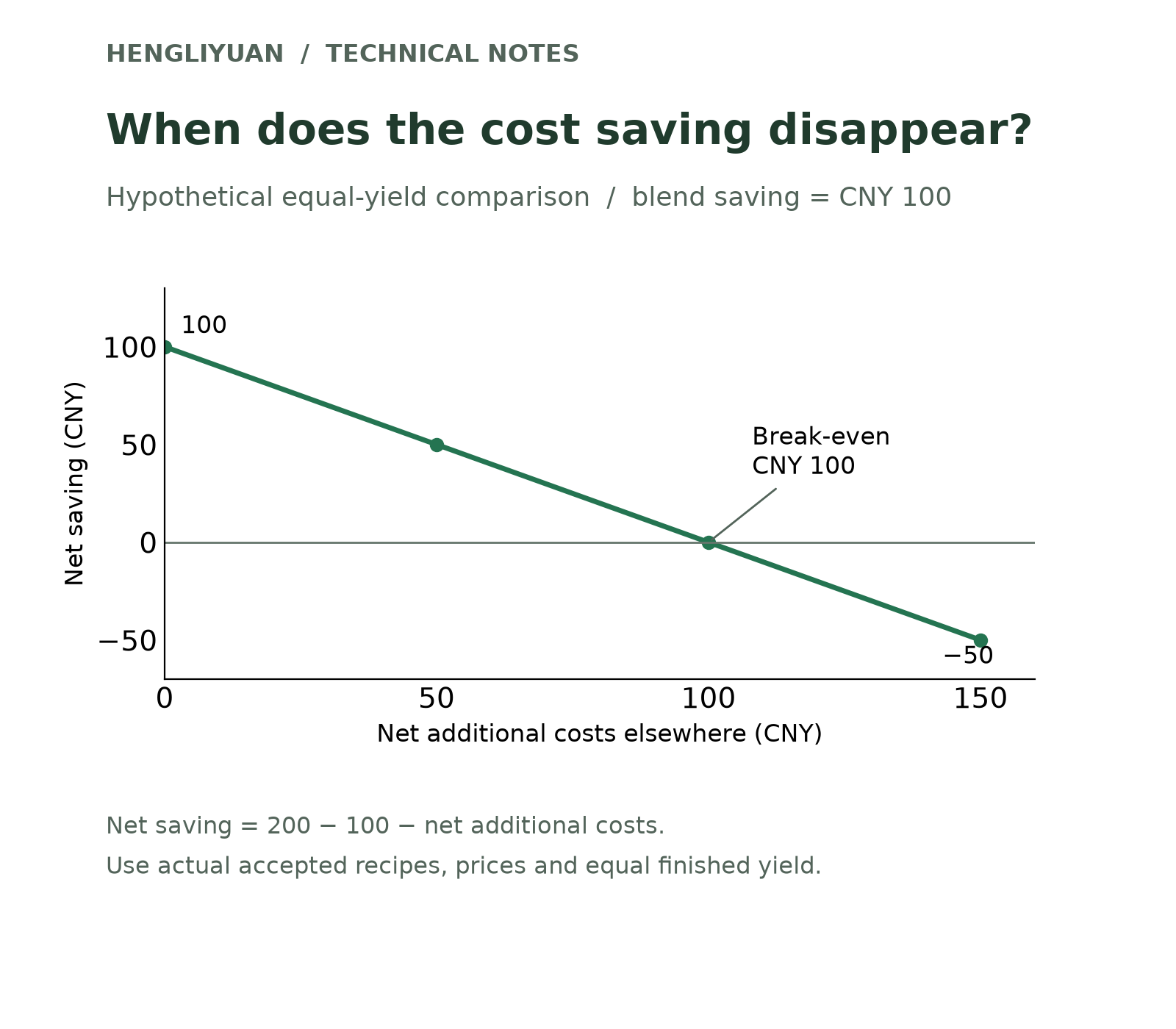
In this example, the 5× formula costs more per kilogram but requires less product. Equal sweetness costs CNY 100, saving CNY 100 versus the 1× formula. This is a calculation example, not a Hengliyuan quotation or recommended dosage. Calculate actual costs from the confirmed quotation and trial dosage. Higher-sweetness formulas are not cheaper at every price: the reduction in dosage must sufficiently offset the unit-price difference. Reassess initial sweetness and aftertaste when increasing sweetness. If a lower dosage brings unacceptable bitterness, continue adjusting the stevia ingredient and proportion. Once taste meets requirements, calculate the final cost per kilogram or serving of finished product. Sweetener cost per kilogram of finished product = sweetener quantity per batch (kg) × purchase price (CNY/kg) ÷ finished batch weight (kg). Use the same currency and delivery terms when comparing. Include corresponding costs if the change also requires adjustments to other ingredients.
Check whether the saving survives the complete formula
In the example above, the blend cost falls from CNY 200 to CNY 100, leaving CNY 100 of potential saving for the comparison. If the higher-sweetness route adds CNY 100 in net costs elsewhere, that saving disappears. Compare the same quantity of acceptable finished product before deciding that the new route costs less. The blend quantity also falls from 10 kg to 2 kg: 8 kg less blend enters the recipe. That does not automatically mean adding 8 kg of a bulking agent. Decide which functions and finished yield must be retained, adjust the recipe where needed and test the result.
| Cost or trial input | Keep the comparison on the same basis |
|---|---|
| Accepted sweetness and aftertaste | Use the dose that passes the same product target; record the specific stevia ingredient and blend revision. |
| Blend price and dose | Use the same currency, delivery scope and units. The 1×/5× example is not a quotation. |
| Changes elsewhere in the recipe | Include the net change in all other ingredients, including any water, bulk or texture adjustments. |
| Processing and usable yield | Include relevant changes in handling, processing or losses; use the same quantity of acceptable finished product. |
| Final comparison | Report blend-only cost and complete-formula cost separately so a material saving is not mistaken for a total saving. |
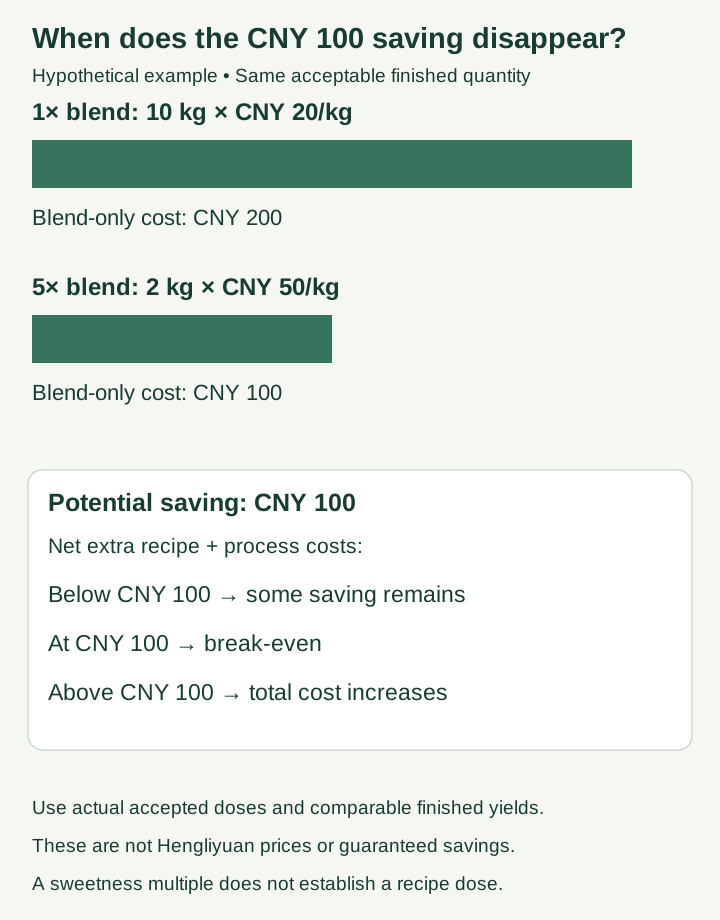
For equal finished batch size, net saving = original blend cost − candidate blend cost − net additional costs elsewhere. In this illustration, that is CNY 100 minus the net additional costs. If finished yields differ, first convert each complete cost to the same finished-product basis. This arithmetic does not establish which formula tastes better or whether extra ingredients are needed. Use the accepted trial, actual quotation and production requirements to fill in the numbers.
For baking, retain the functions required of the base
Besides sweetness, allulose participates in the Maillard reaction and influences browning and texture in baking. If blend sweetness is increased to reduce dosage, also check whether the actual allulose quantity changes. After sweetness and aftertaste are acceptable, baking trials must still assess browning, crumb structure and texture after cooling before calculating the complete formula cost. Beverage trial results cannot replace baking validation. Hengliyuan can help select stevia ingredients and adjust allulose blend proportions for the application, while providing full ingredient names, ingredient proportions, target sweetness and finished-product specifications. Customers with existing samples can describe the specific aftertaste issue and cost target to determine the next trial direction together.
A commercial sauce example: allulose with stevia
Samlip’s October 12, 2026 announcement describes two Pig in the Garden low-sugar dipping sauces, chipotle and garlic, made with allulose and stevia extract. The company says the products contain no added sucralose, acesulfame K or aspartame. This is a public example of the combination being used in sauces, alongside the beverage and bakery applications discussed here. It is not a Hengliyuan customer case. The announcement does not disclose the blend ratio, stevia grade, allulose assay or comparative sensory results. It therefore cannot supply a recipe or a cost calculation for another sauce. For a similar project, compare candidate blends in the actual tomato, garlic or emulsion base at the agreed sweetness. Record acidity, solids, viscosity, processing and aftertaste before comparing cost at the accepted dose. Reducing the sweetener dose can also change the solids supplied by allulose.
How Hengliyuan makes the corresponding blend
Hengliyuan makes its allulose-based sweetener blends by high-speed powder mixing, which distributes the powdered ingredients in the selected formula. This is a common powder-mixing method. Confirm blend uniformity, particle size and application performance against the selected specification and sample.
Review note
Reviewed October 16, 2026. Factory taste observations apply to the ingredients actually evaluated. Cost figures are hypothetical arithmetic, not quotations or measured savings. The dated commercial sauce example retains its original source and scope.
Common questions
Can a blend with a higher price per kilogram cost less in use?
Yes, if a lower confirmed dosage offsets the higher unit price at the same finished-product sweetness target. Use the actual quotation and trial dosage; a higher-sweetness blend is not automatically cheaper.
Discuss taste and cost targetsHow do I calculate sweetener cost per kilogram of finished product?
Multiply the sweetener quantity used per batch by its purchase price per kilogram, then divide by the finished batch weight. Use the same currency and delivery terms when comparing candidates.
Discuss taste and cost targetsWhat should I do when sweetness is sufficient but the aftertaste is bitter?
Compare the specific stevia ingredients and their proportions in the same product base. Keep the original sample as a control and taste at similar sweetness instead of changing only the overall dosage.
Discuss taste and cost targetsAre all enzyme-converted stevia ingredients free of bitterness?
No. The ingredient observations in this article apply to the materials actually tasted. Confirm aftertaste for each selected ingredient and blend in the intended food or beverage.
Discuss taste and cost targetsCan beverage cost and taste trials establish bakery performance?
No. A lower blend dosage can also change the amount of allulose in a bakery formula. Check browning, crumb structure and cooled texture before comparing the complete formula cost.
Discuss taste and cost targetsDoes the 5× example mean I should use one-fifth as much in my recipe?
No. That quantity follows from the assumed sweetness multiple in the arithmetic example. Confirm the actual dose and taste in your product, then check the functions and finished yield affected by using less blend.
Discuss taste and cost targetsHow much extra cost would cancel the saving in this example?
CNY 100 in net additional costs would cancel the CNY 100 blend-only saving, provided both routes make the same quantity of acceptable finished product. Include recipe and relevant process changes; if yields differ, compare cost per kilogram of acceptable finished product instead.
Discuss taste and cost targets