
Read this guide in
Liquid ingredients
Monk Fruit Juice Concentrate: Specifications, Batch Data, and Storage
Compare monk fruit juice concentrate using Brix, batch COA, dilution conditions and storage instructions, then choose a sample for the actual beverage.
When buying monk fruit juice concentrate, asking only about concentration is not enough. Brix, mogroside V content, pH and turbidity measure different properties and cannot replace one another.
One confirmed batch of Hengliyuan's LHX-N02 concentrate had a Brix reading of 56.84 °Bx and mogroside V content of 2.86%. Both figures can be correct: the first is a refractometric concentration reading, the second is mogroside V measured by HPLC. A reading of 56.84 °Bx does not mean 56.84% mogroside V or sweetness 56.84 times that of sucrose.
Colour and appearance are application observations, while instrument readings must retain their measurement conditions. The illustration contrasts dark and pale samples beside a refractometer and pH meter; it supplies no measured comparison or colour specification.

Choose a flavour or decolorized concentrate first
Hengliyuan offers monk fruit flavour juice concentrate and decolorized monk fruit juice concentrate as two product options. If retaining monk fruit flavour matters, start by evaluating the flavour concentrate. If the finished drink has a colour target, ask about the decolorized concentrate and test its appearance in the actual formula. Share the beverage base, desired flavour, colour target and processing conditions when requesting samples. Decolorized does not mean colourless or flavourless; neither product name establishes sweetness or dosage. Confirm specifications, packaging and batch documents for the selected product. The LHX-N02 batch figures below explain how to read that model's report. They are not specifications for either product linked here.
Reading a specification sheet through batch data
These data concern LHX-N02 concentrate, batch LHX-N02-26040601, reported on 11 April 2026. The specification column gives the requirements in that document; the result column gives this batch's test results. They do not mean every batch will have identical values.
| Test | Specification in the product document | Result for this batch | Interpretation |
|---|---|---|---|
| Mogroside V, HPLC | <3.0% | 2.86% | Content of the individual component mogroside V, not total mogrosides |
| Brix | 55.0–60.0 °Bx | 56.84 °Bx | Refractometric concentration reading; does not replace mogroside V testing or sweetness evaluation |
| pH | 4.5–5.5 | 5.16 | A test value for the ingredient, not the formulated beverage's pH |
| Turbidity, 0.5% solution | ≤20.0 NTU | 0.302 NTU | Measured in a 0.5% solution; must not be reported as undiluted concentrate turbidity |
| Total plate count | ≤100 CFU/mL | <10 CFU/mL | Keep the result as less than 10, not zero |
| Yeasts and moulds | ≤20 CFU/mL | <10 CFU/mL | Report the stated result; it does not mean sterile |
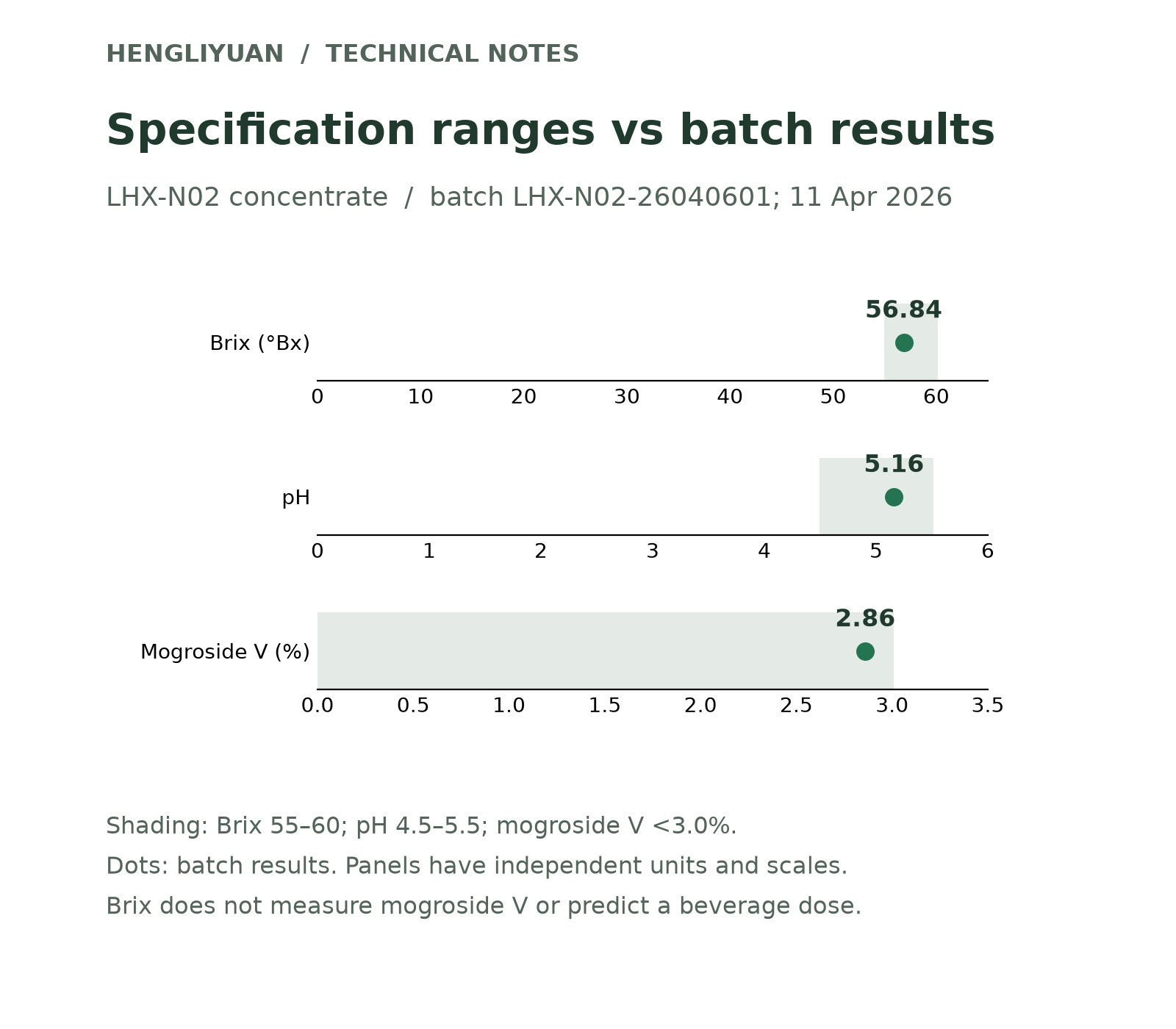
This also shows the difference between a specification range and a batch result. The Brix specification is 55.0–60.0 °Bx; this batch measured 56.84 °Bx. Check both the agreed range and the actual supplied batch's result.
Brix, mogroside V and total mogrosides are different measures
Brix is a liquid ingredient's concentration reading. Mogroside V content measures a specific component, while total mogrosides is the sum of the mogrosides included in the test. Here, 2.86% specifically refers to mogroside V, not 2.86% total mogrosides. Brix of 56.84 °Bx alone cannot establish total mogrosides or beverage dosage. List these measures separately when comparing concentrates. Ask the supplier for missing results rather than substituting another measure. For another supplier report, keep the product code, batch, method, unit and reporting basis with each result. Ask for the relevant temperature, sample preparation and dilution conditions before treating two readings as comparable. A similar Brix figure does not establish the same composition, flavour or accepted dose.
Read turbidity and appearance together with test conditions
The turbidity here is 0.302 NTU, but the tested material was a 0.5% solution. Omitting that condition would misrepresent a diluted sample's behaviour as that of undiluted concentrate. An ingredient's result under specified test conditions does not guarantee the same behaviour in tea infusions, juice drinks or other formulations. Use the intended base and dosage, observing colour, cloudiness and visible sediment. For a new report, confirm what its dilution percentage means and how the test sample was prepared. Keep observations of the supplied concentrate separate from measurements on a diluted sample; record the actual preparation when checking appearance in the finished drink.
Comparing concentrate and juice powder costs in use
Concentrate is liquid; juice powder is dried, and whether it contains a carrier must also be confirmed. Equal purchase weights do not imply equal monk fruit content or practical performance. First bring both options to the same beverage target, then record actual dosages: Ingredient cost per beverage batch = delivered unit price (CNY/kg) × actual quantity used (kg). Use quantities confirmed in trials, rather than calculations based only on Brix or mogroside V percentage. Compare fruit aroma, aftertaste, colour and production handling as well as sweetness. Keep the same final beverage quantity and accepted comparison target, and record concentrate or powder mass separately from any prepared stock liquid. For a quotation in another currency, use that currency consistently for both options; do not mix prices with different delivery-cost coverage. Include any carrier, added water and changed handling steps in the wider formulation comparison.
State storage duration together with conditions
The documentation for this model lists:
| Storage conditions | Documented storage duration |
|---|---|
| 0–4℃ | 24 months |
| Ambient temperature | 12 months |
These durations apply under different conditions. Do not retain only “24 months” and omit 0–4℃. The ambient-temperature entry has no stated upper temperature here, so it does not establish suitability for transport at any high temperature. These periods cannot be used directly as shelf life after opening. Confirm storage, transport and post-opening requirements against the selected product, packaging and actual supply documents.
How Hengliyuan helps beverage customers select samples
Customers can describe their planned beverage, desired monk fruit flavour and filtration, heat-treatment or other processing requirements. Hengliyuan uses this to help select concentrate specifications and samples. Test in the actual tea infusion, juice drink or other base. Record dosage; compare sweetness, aroma, aftertaste, colour and visible changes. Include heat treatment or storage in the evaluation when required for the finished product. After sample approval, confirm the specification, corresponding batch COA, packaging, quantity and delivery terms. This article's data explain specifications but do not replace the documents for a later order's actual supplied batch. Keep the sample code and lot with the trial result. State whether the request concerns the flavour concentrate, decolorized concentrate or a specification still to be selected, so the sample and documents refer to the same material. You can start with the beverage type, target market and main question while the full formula, quantity or pack plan is still undecided.
Common questions
Does higher Brix always mean more mogroside V?
No. Brix and the mogroside V assay measure different properties. Keep the named assay, method and reporting basis with its batch result; Brix alone does not establish mogroside V content or the beverage dose.
Discuss this requestDo all Hengliyuan concentrates contain 2.86% mogroside V?
No. That is the result for LHX-N02 batch LHX-N02-26040601 in this example. Other specifications and supplied batches need their own documents; do not copy this result into another product’s purchase specification.
Discuss this requestIs 0.302 NTU the turbidity of undiluted concentrate?
No. It is the reported result for a 0.5% solution. Preserve that condition, and confirm the preparation and dilution basis when comparing another report. It does not guarantee the same appearance in a finished tea or juice drink.
Discuss this requestCan this concentrate be stored for 24 months?
The model documentation lists 24 months at 0–4℃ and 12 months at ambient temperature. Keep each duration with its condition and follow the selected supply documents. Neither entry establishes an opened-pack period or suitability for any high-temperature transport route.
Discuss this requestDo the batch figures describe both flavour and decolorized concentrates?
No. The two product options must be evaluated against their own selected specifications and batch documents. The LHX-N02 example explains how to read one report; it does not supply specifications for both linked products.
Discuss this requestDoes a microbial result below 10 mean the concentrate is sterile?
No. Keep the reported result as below 10 CFU/mL for the stated test item. It is not zero and does not establish sterility or the shelf life of a finished beverage.
Discuss this requestWhat should the first concentrate inquiry include?
Start with the beverage type, target market, desired flavour or colour and main sample question. Add the intended process, current sample code, document needs, quantity and packaging when known. A complete proprietary formula is not required for the first discussion.
Discuss this request