
Read this guide in
HOT AND COLD DRINK GUIDE
Monk Fruit Sweetener for Coffee, Tea and Cocoa Drinks
Testing monk fruit sweetener in coffee, tea, cocoa and milk tea: hot/cold taste, aroma, solubility and packaging notes for drink brands.
Coffee, tea and cocoa drinks are simple to name but difficult to sweeten well. Bitterness, roast notes, tannins, milk base, cocoa solids, temperature and serving style all affect how monk fruit sweetener is perceived.
Start with a control and the actual prepared drink. Keep hot/iced tasting, consumer powder preparation and manufactured RTD processing as separate checks; a good result in one does not settle the others.
The Doctor illustration groups tea, coffee, cocoa and hot/iced sample cups. The drawn ticks and flavour notes show what to compare, not measured sensory results or a guarantee that one blend suits every drink.
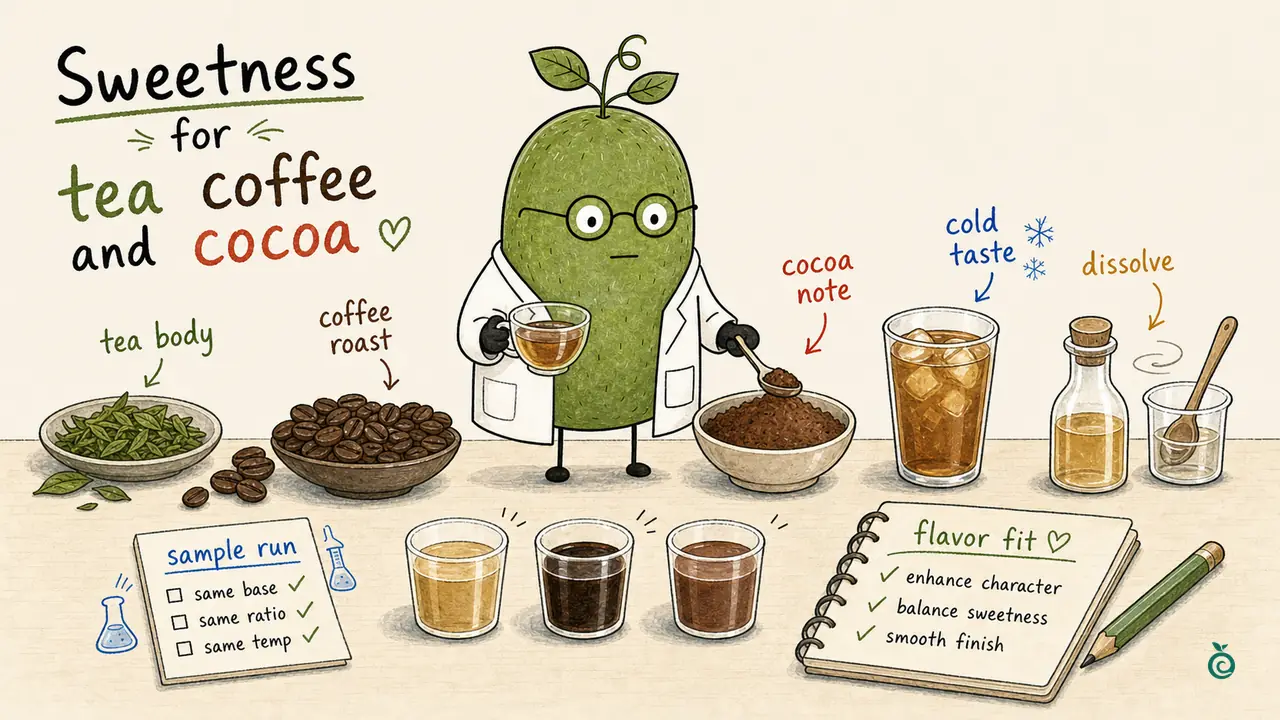
Separate serving, preparation and RTD process checks
A sweetener direction that tastes balanced in hot coffee may feel different in iced tea, cold brew, cocoa powder or milk tea. Test the product at the serving temperature buyers expect consumers to use.
| Check | Record the actual conditions | What the result addresses |
|---|---|---|
| Hot or iced sensory comparison | Prepared base, sweetener addition, serving temperature, ice/dilution and tasting checkpoint | Taste in that specific drink and serving condition |
| Consumer powder preparation | Full mix mass, liquid amount and preparation temperature, mixing method and serving temperature | The proposed preparation instructions and the drink they produce |
| Manufactured RTD product | Formula version, process, package, batch and storage checkpoint | The processed and packaged product; separate from a freshly mixed cup |
Preparation temperature and serving temperature are different records. A powder can be mixed hot and tasted cold; an iced drink can change as ice melts. Keep those histories with the sample code so a temperature comparison does not quietly become a dilution comparison.
Bitterness and aroma need attention
Coffee roast notes, tea tannins and cocoa bitterness can expose sweetness gaps or lingering notes. Review aroma release, aftertaste, sweetness timing and whether a blend direction is needed.
Milk and plant bases change the result
Dairy, oat, soy, coconut and creamer systems can round sweetness or create new mouthfeel questions. Test the sweetener in the final base, not only in black coffee or plain tea.
Make one comparison for each actual base
Record coffee extraction or tea brewing, cocoa preparation where used, water, milk type, actual sweetener mass and serving temperature. Test hot and iced versions separately and document ice dilution. Code samples and compare sweetness onset, bitterness, aroma and finish. Keep a physical note for particles or sediment instead of treating every visible change as a taste result. Use the RTD process guide when the product will be manufactured and stored.
| Drink | Keep identifiable | Compare separately |
|---|---|---|
| Black coffee | Coffee/roast, extraction, prepared base and actual sweetener addition | Coffee character, bitterness, sweetness timing and finish |
| Plain tea | Tea type, brewing method, water and brewing history | Tea character, bitterness/astringency and lingering sweetness |
| Milk or plant-base coffee/tea | Exact base or creamer, other ingredients and preparation | Flavour balance and mouthfeel in that complete recipe |
| Cocoa drink | Cocoa type, liquid base, full powder mix and mixing history | Cocoa flavour and bitterness; physical clumps or settling in a separate note |
| Iced version | Base, ice added, preparation-to-tasting delay and any measured dilution | Taste at the defined checkpoint rather than an unrecorded melting stage |
Powders need mixing checks
For instant coffee, milk tea powder, cocoa powder and sachets, record the full drink-mix mass separately from the sweetener ingredient. Weigh the actual scoop portion, then record liquid amount, preparation temperature, mixing tool and operation. Also measure the serving temperature; a kettle setting is not the temperature of the drink being tasted. Keep floating powder, remaining clumps, bottom material and perceived grittiness as separate observations. Observe the undisturbed drink at a stated checkpoint before re-mixing, then record the re-mixing method and what remains. A visible deposit alone does not identify which component caused it or quantify solubility.
Use the existing coffee and cocoa trial records
For coffee, the coffee/fruit workbook provides paired control and candidate fields for the base, actual addition, preparation, tasting conditions and next decision. Mark fruit-only fields as not applicable for a coffee trial. For cocoa, the dedicated cocoa record keeps undisturbed settling, re-dispersion and tasting in sequence. Both files are free to download without an email address; use the record matching the test you are running.
Retail and foodservice packaging differ
Single sticks, sachets, jars, cafe bulk bags and RTD bottles create different cost, filling, label and storage questions. Packaging specification should be shared before final quotation.
Send the drink condition and the next question
Start with the drink type and base, the candidate sample and what you want to change: for example, the sweet finish at the same target sweetness, or clumps under the proposed consumer mixing method. Send the control comparison and the conditions you know. A complete private recipe and settled packaging order are not required for the first discussion. For a quotation, add the selected ingredient or blend, target market, net weight or serving format, expected quantity and required files when available. Keep each SKU and serving instruction with the accepted sample version. A hot-cup result is useful feedback; a manufactured RTD product still needs its own process, packaging and storage evaluation.
Common questions
Do hot and iced drinks automatically need different sweeteners?
No. You can start by comparing the same candidate in both relevant serving conditions. Keep the actual addition, base, temperature and dilution identifiable, then decide whether one direction meets both targets. Approval for one condition does not establish the other.
Discuss this drink trialHow do I separate an ice-dilution effect from a temperature effect?
Record ice added and the delay before tasting. When you need to isolate temperature, compare otherwise matched samples at defined temperatures without an unrecorded change in dilution. A later, more diluted cup is not the same comparison as a freshly chilled one.
Discuss this drink trialDoes a cocoa deposit mean the monk fruit ingredient failed to dissolve?
A deposit alone does not identify its source. Record the complete mix, preparation and standing conditions, then observe clumps, settled material and what changes after the recorded re-mixing step. Keep the physical finding separate from sweetness and aftertaste.
Discuss this drink trialWhat if the drink is sweet enough but the finish is too long?
Keep the base and serving conditions fixed and compare the candidate with the intended sweetness target. Record peak sweetness and the finish separately. Simply lowering the addition can also change the sweetness level you were trying to preserve, so identify both results in the feedback.
Discuss this drink trialCan I discuss a private-label drink sweetener before packaging is decided?
Yes. Start with the drink, actual base, intended serving method and the problem you want to solve. Packaging, quantity, document needs and the quotation can follow once the sample direction and instructions are clearer.
Discuss this drink trial