
Read this guide in
FUNCTIONAL BEVERAGE GUIDE
Monk Fruit Sweetener for Prebiotic Sodas and Functional Drinks
Compare monk fruit sweeteners in the complete prebiotic soda or functional drink. Record fibre, acid, carbonation, serving dilution and packaged-product checks.
For prebiotic sodas and functional drinks, our starting point is the complete beverage and its intended serving conditions. Choose the monk fruit direction against the fibre, acid, flavour and other ingredients already in that drink, then compare sweetness and finish at the target serving condition.
For these drinks, sweetness is only one part of the formula. Acids, fibers, botanicals, minerals, caffeine, tea, fruit flavors and processing conditions can all change how monk fruit sweetener tastes.
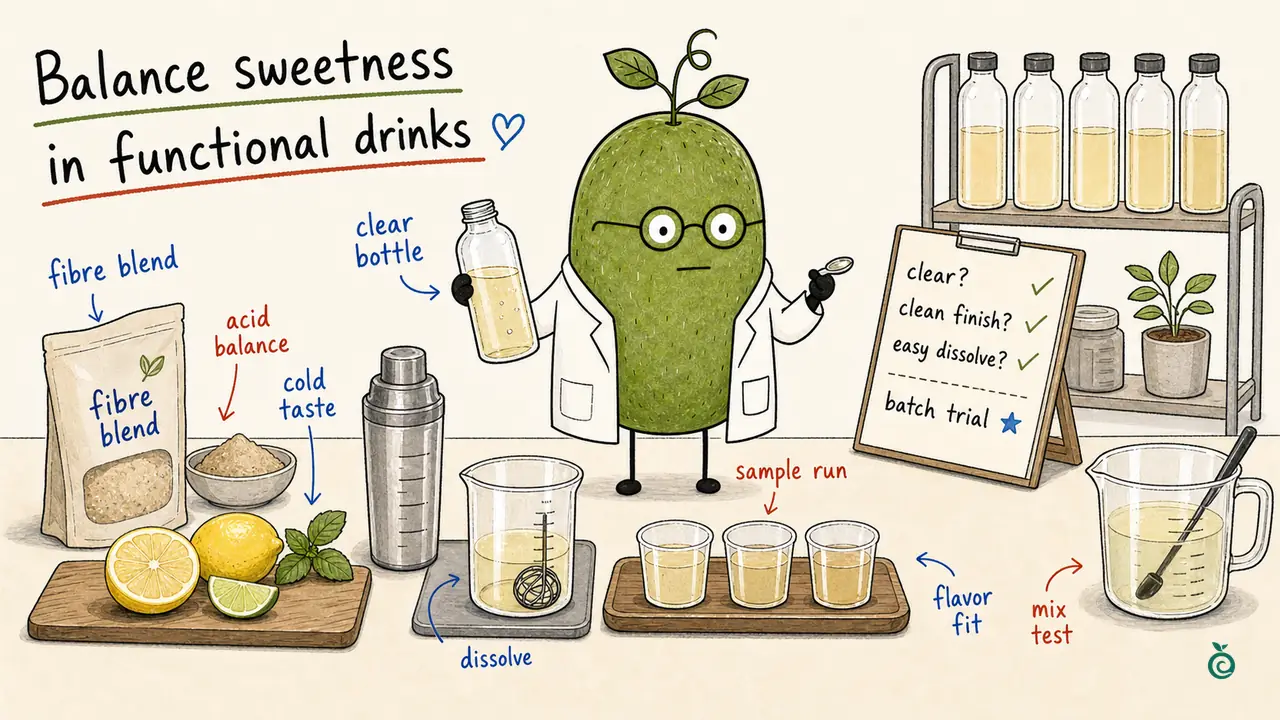
The Doctor illustration groups fibre, acid, cold tasting and mixing checks around sample bottles. The drawn clear bottles and ticks are illustrative prompts, not measured clarity, dissolution or taste results.
Fix the product format and serving conditions first
Confirm whether the sample is an ingredient, a dry mix, a concentrate or a finished drink. Record the exact extract or blend, carrier where present, actual addition and the basis used to report it. An ingredient amount per sachet and an amount per litre of prepared drink describe different things. Keep the current base as the control and use the same intended serving instructions when comparing candidates. If you change the fibre, acid, flavour or process as well, preserve a separate formula version so the result can be traced.
| Product format | Set before comparing taste | Keep as a separate check |
|---|---|---|
| Carbonated ready-to-drink soda | Base/formula, package, serving temperature, carbonation conditions and time after opening | The processed packaged product at its storage checkpoint |
| Still ready-to-drink beverage | Actual base, serving portion and temperature | Processing, filling, package and storage observations |
| Drink powder or hydration stick | Full mix and sweetener amounts, water per serving, mixing operation and serving temperature | Powder handling, filling and intended-pack storage |
| Syrup or concentrate | Concentrate identity, actual dilution and any ice or carbonated water used | Concentrate handling and the diluted finished drink |
Watch fiber and acid interactions
Prebiotic fibers, fruit acids and botanical extracts may add sourness, bitterness, body or dryness. Monk fruit sweetener should be tested in the complete drink so the sweetness level balances the real ingredient system.
| Part of the formula | Keep identifiable | What to compare in the complete drink |
|---|---|---|
| Fibre ingredient | Supplier/product or grade, actual addition and preparation history | Body, dryness and any visible change alongside taste |
| Acid system | Acid identity and addition; actual pH and measurement conditions when known | Sweet-sour balance at the same serving conditions |
| Botanical or tea ingredients | Specific extract/base, actual addition and preparation | Their flavour character, bitterness/astringency and the sweet finish |
| Mineral or caffeine ingredients | Ingredient identity and actual addition in the formula | Unwanted notes and aftertaste at the intended serving dilution |
| Sweetener ingredient | Extract grade or full blend composition, carrier and actual addition | Initial sweetness, peak and finish; physical findings logged separately |
Use a fixed-addition comparison when the question is how two supplied materials behave at the same stated amount. Use a separately recorded sweetness-matched comparison when the question is flavour balance at the same target sweetness. Do not silently change the dose and call it the same trial.
Separate clarity, dispersion and sweetness
Set the appearance target for the actual product: clear or intentionally cloudy. Record the mixing operation, preparation temperature, serving temperature and elapsed time, then inspect clumps, haze, foam and settled material as separate observations. A clear water sample does not settle the behaviour of a complete fibre or botanical drink. Observe an undisturbed pack or retained sample before re-mixing, then record the operation and what changes. Appearance alone cannot identify the material in a deposit or quantify solubility. Keep these findings separate from sweetness and aftertaste.
Prebiotic drink sample checklist
Record the fiber ingredient and grade, complete acid and flavor base, sweetener identity, actual dose and intended serving dilution. Keep carbonation and the time after opening fixed for tasting. Compare sweetness, sourness, body and finish, then inspect the pack before remixing at planned storage points. A fiber or sweetener name does not establish a prebiotic, digestive or sugar-free claim for the complete beverage; keep those reviews separate from the formulation comparison.
For carbonated samples, use matched serving portions and the same handling and delay from opening to tasting. A comparison made after different opening or standing histories leaves more than the sweetener changed. Record whether a sample was served as packaged or deliberately degassed; keep that treatment consistent within the comparison.
Take the selected direction into the packaged product
A fresh bench drink is useful for selecting a taste direction. For an RTD product, retain the formula version and evaluate the intended process and package, then compare retained samples at defined storage checkpoints. Include unopened packs and, where relevant, a separate after-opening use check. For powder, record the proposed consumer preparation method as well as powder storage and packaging conditions. For syrup, keep concentrate storage separate from the observation of the prepared drink. Agree physical, sensory and other finished-product acceptance checks with the responsible technical team; a short taste test alone does not establish commercial shelf life.
Decide between ingredient supply and OEM
Some buyers only need a monk fruit sweetener blend for their own beverage factory. Others need drink powder sticks, sachets, syrups or private-label finished products. The supply path changes packaging, MOQ and lead time. Confirm the supply responsibility for ingredient development, blending, filling and finished-product packing before comparing quotations. Keep the accepted sample version and preparation instructions with that scope.
Start with the drink and the question for the next sample
Hengliyuan can discuss monk fruit extract, sweetener blends and OEM directions for functional beverages based on application, sample testing goal, packaging plan and export document needs. For the first discussion, share the format, flavour, base or functional ingredients you can identify, intended serving dilution and the main issue: for example, a long sweet finish or material settling after the planned preparation. A complete private formula and settled packaging order are not required to start. Add market, packaging, quantity and document needs as the sample direction moves toward quotation.
Common questions
Does monk fruit make a soda prebiotic?
Monk fruit is being selected here for sweetness. A sweetener or fibre ingredient name does not establish a prebiotic or digestive claim for the complete drink. Keep the evidence and target-market claim review separate from the taste and process comparison.
Discuss this drink trialCan I use one dose for a powder, concentrate and RTD drink?
There is no universal amount across those formats. Identify the supplied extract or blend and record its actual addition, then state the water volume or dilution that produces the served drink. Compare at the intended serving condition before selecting the sample direction.
Discuss this drink trialCan I change the fibre and sweetener in the same trial?
You can test a reformulated product, but give it its own formula version and record every change. If you need to understand the sweetener difference, compare candidates in an otherwise matched base. A result with multiple changes cannot isolate the sweetener effect.
Discuss this drink trialHow do I make a carbonated-soda taste comparison fair?
Use the same base, serving temperature, portion, carbonation conditions and handling. Keep the delay from opening to tasting consistent and record whether the sample was served as packaged or degassed. Different opening histories leave another variable in the comparison.
Discuss this drink trialDoes haze or sediment mean the monk fruit sweetener failed?
Appearance alone does not identify the source. Check the intended appearance of the complete beverage, the full ingredient system and the preparation and standing conditions. Observe before re-mixing, record what changes after the stated operation, and keep the physical finding separate from the taste score.
Discuss this drink trialDoes passing a fresh-cup taste test settle a packaged-drink project?
It selects a taste direction under those conditions. The intended processing, filling, package and storage checks still need their own results, along with the relevant finished-product acceptance review. Keep RTD storage, concentrate storage and prepared-drink observations distinct.
Discuss this drink trialCan we discuss an OEM direction before every packaging detail is fixed?
Yes. Start with whether you need an ingredient, drink powder, syrup or finished-drink direction, plus the base, intended serving and the main sample question. Confirm the supply responsibilities, packaging, quantity, market and required documents as the quotation scope develops.
Discuss this drink trial