
Read this guide in
PLANT-BASED BEVERAGE MATRIX
Plant-Based Functional Beverage Sweetener Matrix Guide
Sweetener guide for plant-based functional beverages: monk fruit, stevia and allulose directions for oat, soy, chickpea and hibiscus drinks.
Plant-based functional drinks often fail when the sweetener is chosen in isolation. The base may bring beany notes, starch, fiber, color, acidity, sediment or astringency before the sweetener is even added.
This guide helps beverage buyers build a first sample matrix for chickpea, oat, soy, almond, hibiscus, botanical, tea-fruit and other plant-based drinks using monk fruit, stevia, allulose-supported or custom natural sweetener blends.
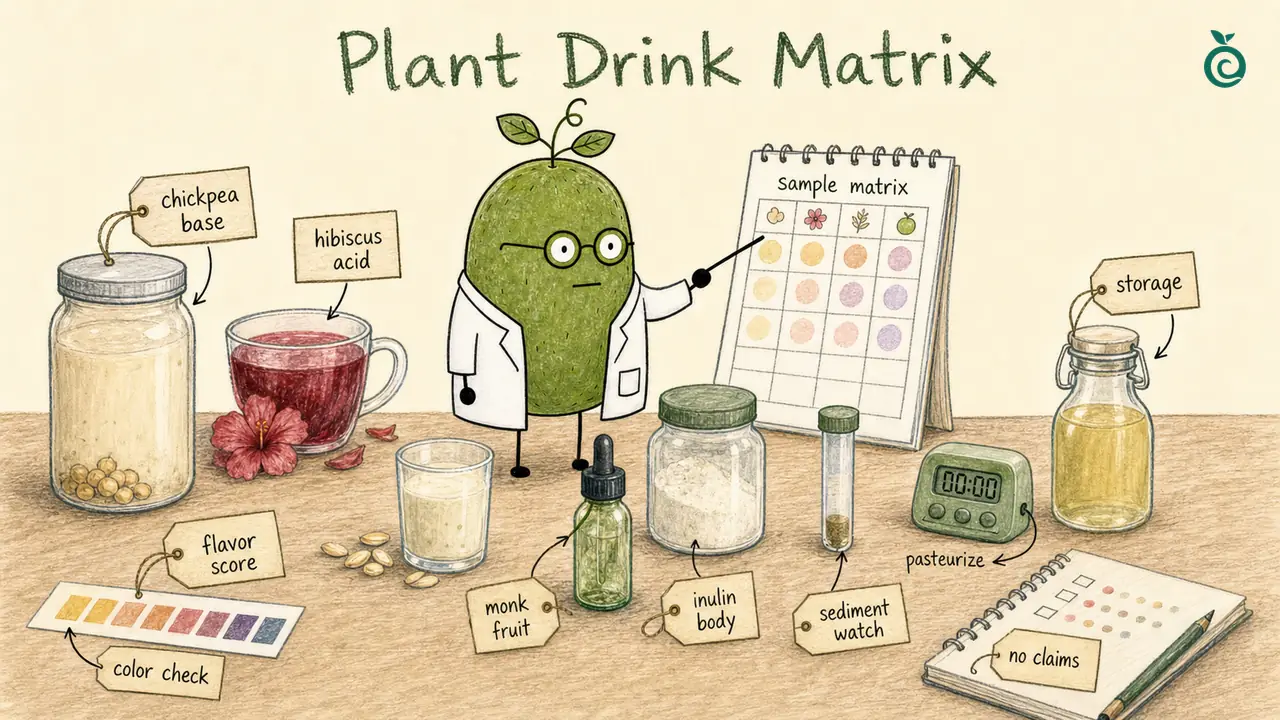
Read the illustration as the whole drink system
Keep the plant base, acid and flavor, sweetener, body and physical observations connected in the sample record. The drawn matrix, colors, dropper and timer illustrate variables to consider, not test results, a specified ingredient form or a validated heat-treatment and storage schedule.
Start with the plant base
Name the real base before discussing the sweetener. Chickpea, soy, oat, almond and botanical extracts differ in protein, starch, fiber, fat, color and background flavor. Those differences can change sweetness, bitterness, body and sediment.
Treat acid, color and sweetness as one matrix
Hibiscus, citrus, tea and berry directions can hide some notes but expose others. Study acid, flavor, sweetener and body in the same drink. For a diagnostic comparison, retain an unchanged control and make one planned change; for a mixture design, record every changed proportion and the total formulation basis. Do not attribute several simultaneous changes to the sweetener dose alone. Do not approve a sweetener only because it tastes clean in water.
Build a sample matrix that can answer a question
Choose the comparison that resolves the current problem, then combine promising directions in a separate candidate. These are planning lanes, not a required number of trials, a recipe or a fixed release protocol.
| Comparison | Keep identifiable | Question to record |
|---|---|---|
| Reference drink | Actual base, formula, ingredient lots, process, package and serving condition | What sweetness, plant notes, body and physical behavior are present before the change? |
| Sweetener direction | Same base, acid/flavor, process and serving basis; record material identity and actual addition | How do onset, finish, bitter/licorice/cooling notes and plant flavor change? |
| Acid or flavor direction | Identified sweetener candidate and actual addition; record each planned acid/flavor change | Does the change help the intended flavor while retaining acceptable sweetness and finish? |
| Body or support direction | Identified candidate and changed solids/support ingredient; keep preparation and observation conditions | What happens to body, grit, sediment, separation and re-dispersion, independently of taste? |
| Combined candidate | Full formula and all changes, compared with the retained reference | Does the selected combination still work, rather than each component only working separately? |
| Process and package confirmation | Reference and candidate under the intended process, pack and actual observation points | Do taste and physical findings persist under those conditions; what validation remains? |
Record observations before any planned shaking or re-dispersion, then record the operation and result separately. A fresh taste result cannot replace later physical, microbiological or shelf-life work. If more than one variable changes, keep the combination identifiable rather than assigning the whole result to one ingredient.
Use monk fruit carefully
Monk fruit can lift sweetness in plant-based and botanical drinks, but the dose has to fit the flavor system. Too much sweetness lift can leave a slow finish or make plant notes more obvious. Stevia or Reb-type options need the same real-base testing.
Plan body and sediment support
If sugar is reduced, the drink may taste thin or show more sediment. Inulin, fibers, stabilizers, hydrocolloids or allulose-supported routes may be considered where they fit the market and label plan. They should be tested for viscosity, settling, color and shelf storage.
Published mixtures show why a water test is insufficient
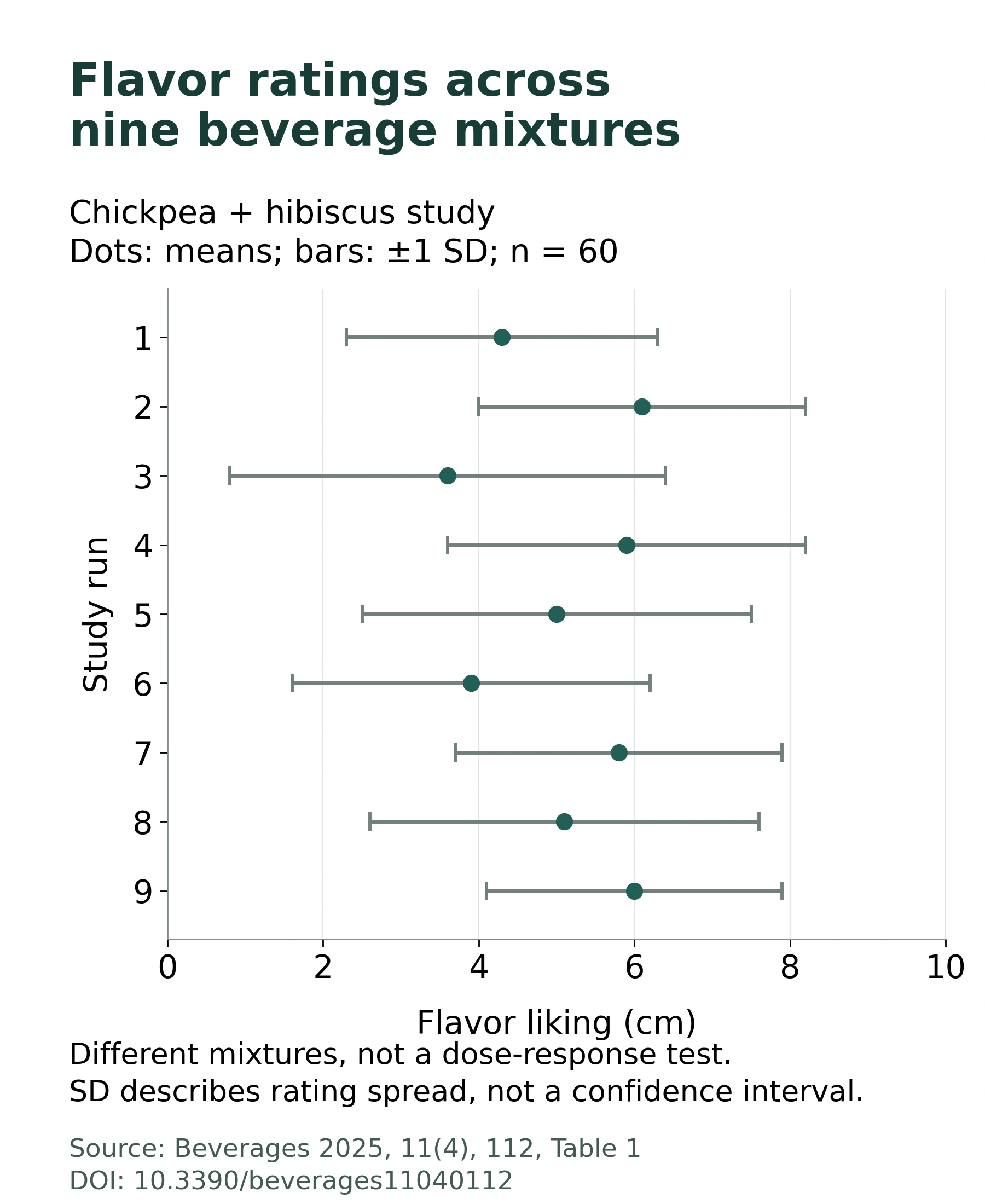
A 2025 chickpea-hibiscus study fixed chickpea beverage at 66.5% and inulin at 2%, varying the other ingredients. Table 1 reports flavor ratings from 60 local volunteers. Its supermarket monk-fruit material has no reported extract assay; its recipe percentages are not extract dosing instructions.
| Study run | Mean (cm) | SD (cm) |
|---|---|---|
| 1 | 4.3 | 2.0 |
| 2 | 6.1 | 2.1 |
| 3 | 3.6 | 2.8 |
| 4 | 5.9 | 2.3 |
| 5 | 5.0 | 2.5 |
| 6 | 3.9 | 2.3 |
| 7 | 5.8 | 2.1 |
| 8 | 5.1 | 2.5 |
| 9 | 6.0 | 1.9 |
Keep the plant base visible in the sample matrix
Oat, soy, chickpea and hibiscus bases do not create the same flavor or physical system. Record protein, oil, solids, acidity, process and serving condition for each base, then compare the sweetener direction within it. A result in one base is a reason to test another, not proof of transfer. Separate sweetness and aftertaste from sediment or emulsion observations, and retain one clear control for each application.
Keep functional language separate
A plant-based beverage can be positioned around ingredients, flavor and sugar reduction, but antioxidant, immunity, gut, weight or disease language needs market-specific evidence and regulatory review. Supplier pages should not turn a formulation paper into a health claim.
Start with the base, market and problem to solve
Send the plant-base drink, final sales market and the main issue: plant notes, sweetener finish, thin body, sediment or another concern. Add an existing formula or material identity if available. We can then clarify an ingredient or blend sample direction; packaging, quantity, document needs, processing details and quotation can follow as the project becomes clearer.
Common questions
Can I transfer a successful sweetener dose from oat drink to soy or chickpea drink?
Use it as a candidate to test, while keeping the new base identifiable. Protein, fat, starch, acidity, flavor and process differ. Compare it with a reference in the actual drink; the same addition does not guarantee the same sweetness, finish or physical behavior.
Discuss this requestShould acid and sweetener be changed in the same trial?
They belong in the same development plan. For diagnosis, keep a reference and identify the intended change. If using a mixture design or a combined candidate, record all changed proportions and interpret the combination; do not assign its whole result to one sweetener.
Discuss this requestDoes a standard-deviation bar prove that one mixture is better?
It describes the spread in the reported ratings, not a confidence interval or a significance test by itself. A higher average alone does not establish a universal preference, and overlapping bars do not settle a statistical comparison.
Discuss this requestCan allulose or a support ingredient solve sediment automatically?
Treat it as a formulation direction where the market and label plan permit it. Record the actual composition and process, then assess sweetness, body and physical behavior separately. A clean taste result does not establish emulsion stability or absence of sediment.
Discuss this requestShould the matrix be repeated after the intended heat treatment?
Compare the retained reference and candidate under the intended process, package and serving conditions. Keep actual time/temperature and observation points with the findings. A bench result before processing is not evidence of the finished product's shelf life.
Discuss this requestDoes a pleasant plant-based drink justify a functional or health claim?
Taste acceptance and formulation observations answer different questions from a health claim. Review any functional, nutrition or health wording for the finished formula and final market, with the evidence appropriate to that claim.
Discuss this requestWhat can I send before the formula and quantity are final?
Start with the plant base, intended product, final sales market and the problem you want the sample to answer. Include known ingredients, process or sample preferences. Packaging, documents, quantity and the final offer can be clarified next.
Discuss this request