
Read this guide in
SAUCE AND CONDIMENT GUIDE
Monk Fruit Sweetener for Sauces, Dressings and Condiments
Compare monk fruit in the complete sauce, dressing or glaze. Keep acid, salt, body, processing and food-use checks separate before choosing a sample.
Sauces, dressings and condiments are difficult sugar-reduction products because sweetness is only one part of the eating experience. Acid, salt, viscosity, flavor release, heat process and package format all matter.
This guide is for buyers developing low-sugar sauce, salad dressing, glaze, marinade, syrup-like condiment, dipping sauce or private-label condiment projects with monk fruit sweetener.
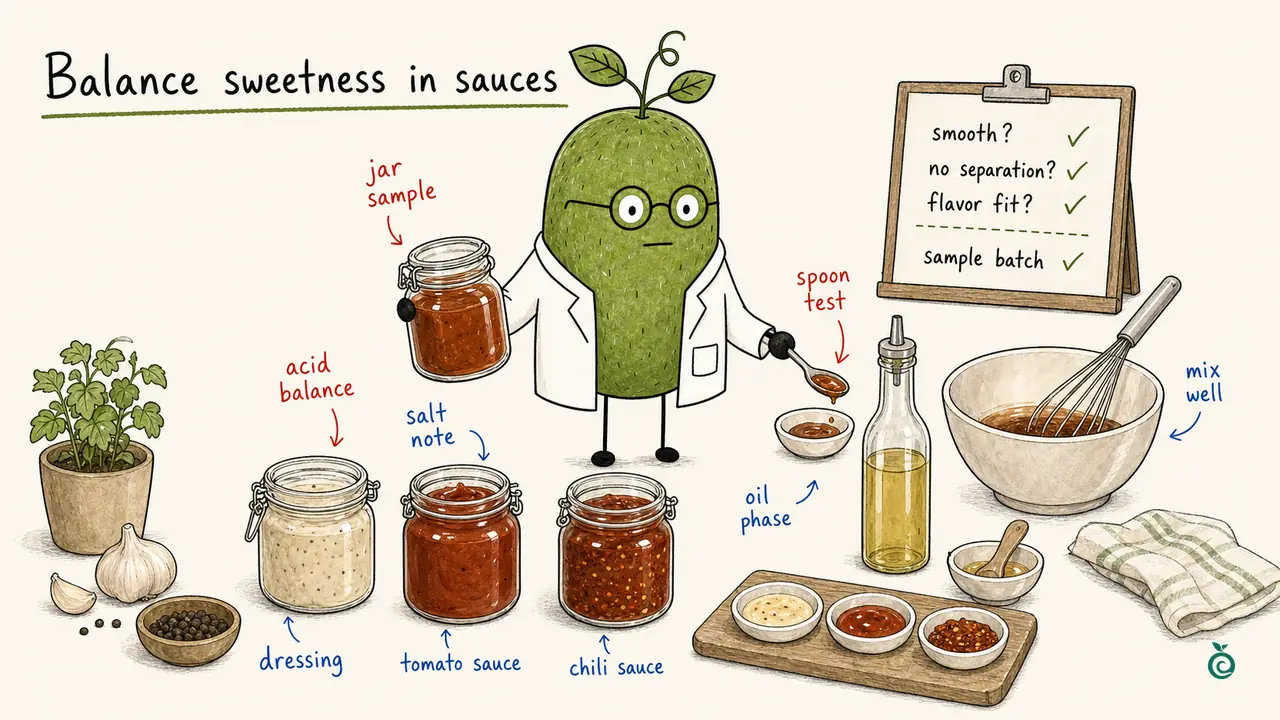
The Doctor illustration brings together dressing, tomato and chilli sauce with acid, salt and oil-phase checks. Its ticks are illustrative, not measured stability or taste results. Compare the finished sauce both on its own and in the intended food use, under the same preparation and serving conditions.
Define the sauce format first
A pourable dressing, thick glaze, dipping sauce, marinade, syrup-style condiment and foodservice sauce all need different sweetness strength, body, acidity and processing assumptions.
| Sauce use | Keep comparable | Observe separately from sweetness |
|---|---|---|
| Pourable dressing | Full recipe, mixing operation, portion and serving condition | Pouring and the undisturbed sample before re-mixing |
| Dipping sauce | Sauce amount, food used for comparison and serving temperature | Spoon/dip behaviour and the sauce on the actual food |
| Glaze or coating sauce | Application amount, food and the recorded cooking or glazing operation | Coverage, cling and the result after the intended application |
| Marinade or cooking sauce | Complete sauce, actual food-use and cooking record | Taste and appearance of the prepared food, separately from the sauce alone |
Keep the control and candidate sample codes with the exact use condition. If the recipe, food or preparation changes as well as the sweetener, identify the combined change as a new trial version.
Balance acid, salt and sweetness together
Monk fruit may taste clean in one base and too lingering in another. Salt, vinegar, fruit acid, soy notes, spices and heat can change how sweetness is perceived. Record the actual base and extract or full blend, carrier where present and the actual addition. State whether the comparison uses the same ingredient amount or a matched target sweetness. Keep acid, salt and other recipe changes visible instead of silently adjusting them while judging the sweetener.
Body and viscosity still need a plan
Sugar can contribute body and gloss in sauces. If sugar is reduced sharply, buyers should check whether the formula still pours, coats, clings, mixes and looks acceptable after storage. Keep a pouring or spoon observation separate from an instrument viscosity result. For a measured specification, name the method, sample preparation, temperature and reporting units. Compare the samples under the same conditions, including their handling before the reading.
Teriyaki, BBQ and caramel sauce trials
For teriyaki sauce, keep salt, soy ingredients and the intended cooking or glazing step comparable. Record sweetness-salt balance and coating behavior separately; a water sweetness result does not describe the sauce. For BBQ sauce, compare acidity, smoke or spice character, viscosity and heat history with the current control. Removing sugar may change body and surface behavior as well as taste, so define those observations before replacing it. For caramel-style sauce, distinguish caramel flavor from the physical effects of sugar cooking. Record the complete solids, fat or dairy system and heating route. A high-intensity sweetener can provide sweetness but does not recreate every color, texture or browning function by itself.
Processing can change the final taste
Heat treatment, pH, emulsification, oil phase, cooling, storage and retort or hot-fill conditions may affect flavor balance. Test the sweetener in the process the product will actually use. Keep the recipe and measured process record with each sample. When checking before and after heating, identify the temperature at evaluation and record any reduction or change in final batch quantity. Then evaluate the intended food use as its own named condition. A changed result with several changed conditions cannot identify the sweetener as the cause.
Packaging affects commercial fit
Bottles, sachets, foodservice pouches, jars and bulk packs create different viscosity, filling and shelf-life questions. Packaging specification should be shared before final quotation. Keep the actual container or serving format with the sample version and filling observations. Record unopened storage checks separately from use after opening; those are different sample histories.
Start with the sauce and the question for the next sample
Tell us the sauce type, the base ingredients you can identify, the current sweetener or sample code and the main taste, texture or use problem. Add the intended food use and process or measurement notes when available. A complete private recipe and a settled packaging order are not required for the first discussion. For a quotation, confirm the selected ingredient or blend, target market, packaging specification, expected quantity, documents and sample requirements as the project develops. Keep the accepted sample version and its evaluation conditions with that supply request.
Common questions
Can monk fruit extract replace sugar syrup gram for gram in a sauce?
Do not use equal mass as a general substitution rule. Extract supplies concentrated sweetness, while the removed sugar or syrup can also affect mass, body and other formula functions. Identify the extract or blend and record the complete reformulated sauce, including any replacement ingredients.
Discuss this sauce trialHow do I compare sweetener candidates without confusing acid and salt changes?
Keep the same base and state the comparison goal: fixed ingredient addition or matched target sweetness. Record each actual addition and any change to acid, salt or other ingredients. If several factors change, retain the result as a comparison of those full recipe versions.
Discuss this sauce trialCan I compare a warm spoon sample with a chilled finished sauce?
Treat them as different evaluation conditions. For a matched comparison, use the same preparation, sample handling, temperature and method. Keep the before/after-processing question separate from a change in serving or measurement temperature.
Discuss this sauce trialShould I taste a dipping sauce or glaze only on its own?
Also assess the intended food use. Keep the sauce portion, food and preparation or cooking conditions identifiable. Taste or spoon behaviour on its own does not settle coverage, cling or flavour balance on the prepared food.
Discuss this sauce trialDoes visible separation prove the monk fruit ingredient caused it?
No. Record the complete recipe, mixing and processing history, package, storage checkpoint and whether the sample was disturbed. Describe the undisturbed result before re-mixing and record what changes afterward. Appearance alone cannot identify the cause.
Discuss this sauce trialCan I ask for a sauce sweetener sample before the pack size and quantity are fixed?
Yes. Start with the actual sauce, base, intended use and specific taste or texture question. Include the sample and process notes you know. Packaging, expected quantity, market and document needs can be confirmed as the sample direction moves toward quotation.
Discuss this sauce trial