
Read this guide in
REDUCED-SUGAR JAM GUIDE
Reduced-Sugar Jam Formulation: Why Sweetness Is Not Enough
Buyer guide to testing reduced-sugar jam sweeteners: Brix, pH, acidity, pectin set, viscosity, water activity and storage in a real fruit matrix.
A reduced-sugar jam can taste sweet and still fail the product brief. When sugar is removed, the team may also change soluble solids, pectin behavior, water control, spreadability, fruit acidity and storage texture. A high-intensity sweetener can restore perceived sweetness, but it does not automatically restore those physical functions.
This guide is for jam brands, fruit-preparation buyers, bakery filling developers and private-label teams comparing monk fruit, stevia, allulose-supported or erythritol-free directions in the real fruit system. The useful first question is not only "Is it sweet enough?" but "Does the finished jam still behave as required?"
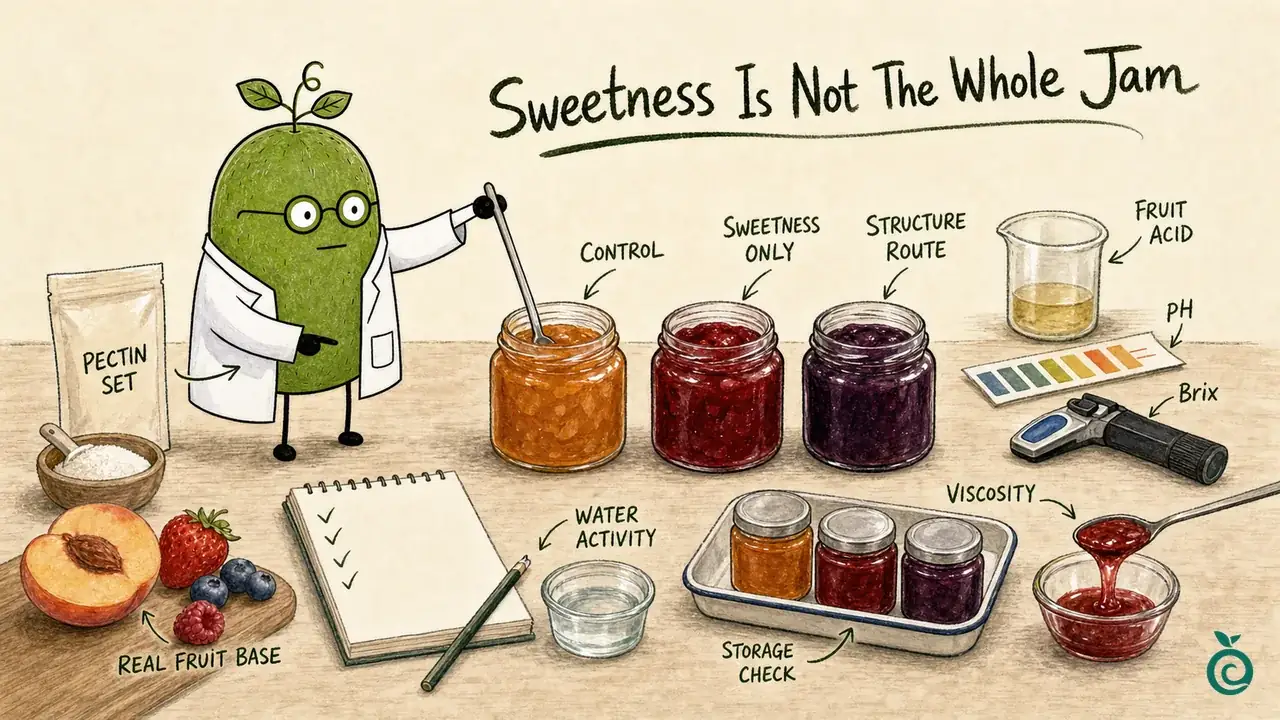
Compare the whole jam, not just the sweetness
Compare the control, sweetness-only and structure-adjusted samples in the same actual fruit base. The drawn pH strip, refractometer, spoon and water dish illustrate separate checkpoints; a dish does not measure water activity, and spoon flow is not an instrument viscosity result. The ticks and jar colors are illustrative, not factory measurements or an approval.
Start with the finished jam, not a water sample
Name the product before choosing a sample route: spoonable retail jam, squeeze spread, yogurt fruit base, bakery filling, topping, glaze or bulk fruit preparation. Fruit type, pulp level, particle size, target use, filling temperature and storage condition change the acceptance target. A water sweetness screen can narrow options, but it cannot approve a jam texture or fruit-flavor balance.
Sugar was doing more than adding sweetness
In jam, sugar contributes soluble solids and changes how water interacts with pectin and fruit solids. It also affects body, gloss, acidity perception and the way the product holds on a spoon or spreads across a surface. Keep the sweetness target and the physical work of the removed sugar identifiable in the same brief. A concentrated sweetener, a bulk ingredient and a complete blend are different sample directions; compare the supplied composition and actual addition, rather than treating their names as interchangeable.
Keep sweetness and structure in separate sample routes
A useful first matrix keeps the current or sucrose control, a partial-reduction sample, a sweetness-only sample and a structure-adjusted sample. Name the main question for each route before mixing, and retain the full formula revision when more than one variable changes.
| Route | Question it answers | Keep identifiable |
|---|---|---|
| Current-formula control | What is the existing sweetness, spread and use performance? | The actual fruit base, formula, process, pack and assessment condition. |
| Partial sugar reduction | What changes when part of the current sugar is removed? | The amount and basis of reduction; record any simultaneous sweetener or process change. |
| Sweetness-only direction | Can the selected sweetener restore the intended taste in this fruit system? | Actual grade, supplied composition, addition and sensory target; physical acceptance remains a separate result. |
| Structure-adjusted direction | Does the revised solids or structuring system address the observed physical gap? | Actual pectin, starch, calcium, fiber or bulk changes and process; do not attribute a combined change to the sweetener alone. |
The sweetness-only route shows what happens when the formula mainly restores taste; the structure-adjusted route tests the added response for solids, pectin, starch, calcium, fiber or another approved body direction. Do not call the best-tasting sample a formula pass until its use, package and storage target are checked.
Check the actual pectin system before changing the sweetener
Keep the pectin identity and supplier instructions with the formula. The Cargill fruit-application guide distinguishes high-methoxyl, amidated low-methoxyl and conventional low-methoxyl pectins, with different application and calcium-response considerations. A familiar ingredient name is not enough to carry the same dose, acid timing or process into a different sugar level. Record which physical function the project needs: spoonable set, squeeze flow, fruit suspension, pumping, dairy mixing or filling performance after baking or freezing. Choose the next trial for that use; the lowest-sugar or firmest jar is not automatically the right product.
Use Brix as a method-specific result
Keep the refractometer reading, pH, titratable acidity, viscosity or flow, set, water activity where relevant and visible water release as separate records. Note the actual method, unit, temperature and sample history. The instrument-maker Brix guide explains why the reference relationship and measurement technique matter: a mixed fruit formulation reading does not directly establish sugar content or sweetness. Use the existing jam quality scorecard for the detailed measurement fields and separate baseline, post-bake and post-freeze-thaw records. This formulation guide helps choose what to change; the scorecard keeps the resulting observations comparable.
Treat storage as part of the first decision
Define a baseline and later checkpoints for the actual package, storage and use. Record elapsed time, temperature, opening history and the observation method, rather than copying a standard day calendar from another project. Keep independent batches and repeated readings from the same jar distinguishable. Repeat the relevant spread, viscosity, water-release, color, fruit-flavor and sweetness-finish checks. A retail jar, yogurt fruit base and bakery filling can need different use trials. The finished-product microbiological, heat-process and shelf-life review remains part of the project; a satisfactory first tasting does not settle those decisions.
What the apple-jam study does and does not establish
The 2024 apple-jam study used a defined Gloster apple system, a specified steviol-glycoside composition and amidated pectin. It selected 0%, 30%, 50% and 80% substitution levels for the detailed storage work. Those percentages describe substitution of the study's added sugar, not sweetener dosage or the sugar content of a finished jam. The storage observations were made initially and after three and six months under the paper's specified conditions. Treat this as an example of a formulation-specific test design, not a six-month shelf-life claim for our ingredients or your product. The study's stevia composition is not automatically equivalent to the grade supplied for a new project.
Turn the result into a focused sample discussion
Start with the fruit product, target market and the main taste or physical problem. Add the control and candidate codes, formula changes, supplied sweetener grade, actual addition, process and observations you already have. Mark the intended use and the condition at which the result must hold. Packaging, estimated quantity, documents and sample needs can be clarified as the project develops. For an allulose-supported direction, identify the intended country and finished-food use before selecting the route; a U.S. project should also state its main sales states and proposed packaging claim for review. The sample result and the finished-product label decision are separate. You can contact us before the full technical or purchasing brief is complete.
Common questions
Can monk fruit or stevia replace sugar in reduced-sugar jam?
They can support sweetness. The actual fruit system still needs its own plan for solids, pectin set, water control, spreadability and storage. Compare the selected supplied grade in a current-formula control.
Discuss this requestWhy can a reduced-sugar jam taste sweet but feel too thin?
Matching taste does not restore every physical function of the removed sugar. Check the fruit solids, complete formula, pectin system and process before deciding whether the next change should address sweetness or structure.
Discuss this requestCan the old pectin dose stay unchanged?
Keep the actual grade and supplier instructions identifiable. A new sugar level, calcium condition, acid timing or process can change the question the trial must answer; carrying over the name and dose alone is insufficient.
Discuss this requestDoes the same Brix result prove the same sugar content?
No. Keep the instrument, method, reference basis and temperature with the reading. In a mixed formulation, matching refractometer Brix does not directly establish matching sugar content, sweetness or water activity.
Discuss this requestDo the apple study's substitution percentages specify a stevia dose?
No. They describe replacement of added sugar within that study's defined formula. They are not dosage percentages for stevia in another product or the finished jam's sugar declaration.
Discuss this requestShould allulose be used in every jam market?
Check the ingredient identity, intended country, finished-food use and proposed label for the actual project before choosing this direction. Include the main sales states for a U.S. allulose project. A successful sample does not replace that review.
Discuss this requestWhat can we send before the brief is complete?
Start with the fruit product, market and the main issue you want to improve. Send the control, grade, actual addition, process and observations you have. Packaging, quantity, documents and sample needs can follow as the direction becomes clearer.
Discuss this request