
Read this guide in
SWEETENER COMPARISON
Monk Fruit vs Stevia: Which Is Better for Your Product?
Monk fruit vs stevia: compare taste, aftertaste, applications and specs. Buyer guide to choosing between monk fruit extract and stevia for food formulation.
Neither monk fruit nor stevia is better in every formula. The right choice depends on the exact ingredient specification, target sweetness, aftertaste, product base, process, target market and cost in use. A water tasting or a plant name alone cannot predict the result in a finished beverage, dairy product, protein powder, tabletop sweetener or baked food.
For a fair decision, compare matched-sweetness samples in the same real base. Test monk fruit, stevia and, when useful, a blend direction while keeping the process and serving condition unchanged.
The Doctor illustration places monk fruit, stevia and a blend beside several food applications. Its colours, bowls and sample cards are illustrative, not recorded sensory rankings or a production recipe. Compare the actual commercial materials in the same real product and keep the measured observations with their sample codes.

Start with the exact material specifications
“Monk fruit” may mean a standardized extract, juice concentrate, juice powder or a finished blend containing carriers and other sweeteners. “Stevia” may refer to different steviol glycoside compositions, including products built around Reb A, Reb D or Reb M. Two retail sweeteners may also contain erythritol, allulose, fiber or maltodextrin. Keep the material code, formulation or specification revision and sample batch with the comparison. A stevia grade designation and a monk fruit assay describe different compositions; neither number alone establishes equal sweetness or the right substitution amount.
| What you are comparing | Check before testing | Why it matters |
|---|---|---|
| Monk fruit ingredient | Mogroside basis, concentration, carrier, full composition and batch COA | Two monk fruit products may not have the same sweetness or taste profile |
| Stevia ingredient | Total and individual steviol glycosides, purity, production route, carrier and batch COA | Different glycoside profiles can behave differently |
| Finished sweetener blend | Full ingredient list, sweetness multiple, serving size, bulk system and intended use | The result belongs to the whole blend, not one highlighted ingredient |
Which tastes better: monk fruit or stevia?
There is no universal winner. Either ingredient can show delayed sweetness, lingering sweetness, bitterness, astringency or other side notes depending on its specification, dose and food matrix. Published yogurt and protein-beverage studies found that preference and temporal sensory performance changed with the base and formulation. Instead of asking which plant “has no aftertaste,” record sweetness onset, peak, duration, short finish, lingering note, aroma interaction and mouthfeel in the intended product. Coffee, citrus drinks, dairy, whey protein and bakery should not share one taste conclusion.
What the cited sensory studies actually compared
The studies support product-specific comparison. Their materials, panels and methods are not Hengliyuan product specifications or instructions for a new formula.
- Parker et al.: consumer acceptance in protein beverages
- Chadha et al.: yogurt temporal sensory profile and liking
| Study | Comparison context | Useful lesson for this decision |
|---|---|---|
| Parker et al., 2018, protein beverages | Matched-sweetness vanilla whey drinks; temporal methods and 150 consumers in the acceptance test | Consumer segments responded differently; a selected blend in that base is not a universal ratio |
| Chadha et al., 2022, yogurt | 50 panelists; three intakes with temporal sensory assessment and liking | The study reported different astringency/bitterness patterns across the sweetened yogurts; first-intake impressions need not tell the whole story |
These are two separate studies, not a pooled ranking of monk fruit and stevia. Keep preference, sweetness intensity and the method used to measure temporal sensations distinct when planning your own comparison.
Which one fits different applications?
High-intensity sweeteners mainly provide sweetness. They do not automatically replace every physical role of sugar.
| Application | What to compare |
|---|---|
| Clear, acidic or flavored beverages | Solubility, clarity, sweet–acid balance, aroma, minerals, heat process and storage checkpoint |
| Coffee, tea and cocoa | Interaction with bitterness, roast notes, astringency, dairy or plant-protein additions and finish |
| Dairy and protein products | Protein flavor, acidity, mouth coating, repeated-sip aftertaste and storage observations |
| Bakery | Sweetness plus the separate need for bulk, moisture, structure and browning after sugar reduction |
| Powders and tabletop products | Dispersion, blend uniformity, flow, measuring, carrier, serving size and packaging |
Can monk fruit and stevia be used together?
Yes. A blend can be tested when one ingredient alone does not deliver the desired sweetness timing, finish, ingredient direction or cost in use. However, a published ratio is not a universal formula. A 2018 whey-protein beverage study identified blend directions for that specific base; a tea, yogurt or fruit drink still needs its own comparison. Keep a current or sugar-containing control. Compare monk fruit, stevia and a blend at the same target sweetness, then change one main variable at a time. Keep a blend mass ratio separate from its sweetness contribution. Record the exact grades and their actual additions, plus any other changes in the full recipe; a ratio without those identities is not a transferable product specification.
A practical comparison test
1. Fix the real product base, process, serving temperature and package. 2. Define the current control and target sweetness. 3. Prepare coded samples using the exact commercial specifications being considered. 4. Record sweetness onset, peak, duration, aftertaste, aroma and mouthfeel. 5. Add application checks such as clarity, sediment, texture, browning or powder flow. 6. Advance only the best one or two directions into process, package and storage validation. A sample result answers a defined formulation question. It does not prove universal performance, shelf life, safety or market authorization. Record the accepted addition of each commercial material and any stock or carrier used to prepare it. Keep the evaluation method and desired direction fixed across candidates. If the dose, base or preparation changes, give the comparison a new version and identify the changed conditions.
Compare accepted dose and cost in use
Price per kilogram does not settle this comparison. First select candidates that meet the same finished-product target under the same evaluation conditions. Then compare their accepted additions and quotations on the same currency, delivery and packaging basis. For the ingredient line, cost per batch is the accepted addition in kilograms multiplied by its comparable price per kilogram. Keep any additional carrier, bulk replacement, processing or yield change visible rather than calling this one ingredient line the complete production cost. Compare the result on the same amount of acceptable finished product; do not substitute an assumed sweetness multiple for the measured accepted addition.
You do not have to run the first screening alone
Send Hengliyuan your product type, current formula or control, target sweetness, ingredients to include or avoid, process, target market and package format. Our sensory lab can prepare several directions—monk fruit, stevia and, where useful, blended options—and screen them for sweetness timing, aftertaste and initial fit with your product base. We then send the more suitable candidates to your team for a second round in the real product, process, package and storage conditions. Your feedback becomes the basis for the next adjustment. This reduces random trial-and-error, while your team retains responsibility for finished-product validation. To begin, send the product base, current sample or control and the specific taste issue. Add the target sweetness, ingredient restrictions, process and market when known; a finalized order quantity is not needed for the first discussion. Confirm packaging, quantities, required files and the chosen sample version as the project moves to quotation.
Claims and market rules still need separate review
Neither ingredient name makes a finished product automatically sugar-free, zero-calorie, suitable for a medical condition or authorized in every country. Review the complete formula, carrier or bulking system, serving size, food category, intended use and current target-market rules. The U.S. FDA distinguishes certain highly purified steviol glycosides, monk fruit extracts, crude stevia materials and individual GRAS-notice conditions. For EU projects, check the current Union List and the exact food category: steviol glycosides have defined additive identities and conditions of use, while the 2019 EFSA opinion on the evaluated monk fruit extract concluded that the available toxicity database was insufficient to reach a safety conclusion for the proposed additive uses. These references do not approve a supplier specification or finished formula. The dated EFSA opinion concerns the evaluated material and proposed additive uses; it is not a current status statement for every monk fruit material. Check the current route for the exact composition and use before carrying a previous market decision into a new project.
Common questions
Is monk fruit healthier than stevia?
That cannot be decided from the plant name alone. Health and nutrition questions depend on the exact ingredient, dose, full formula, serving size, consumer context and evidence for the intended claim. Keep those questions separate from which sample tastes better in a product.
Discuss this comparisonWhich tastes better in a beverage?
Compare the exact specifications at matched sweetness in the same beverage base, with acidity, flavour, minerals, process and serving conditions identifiable. Record onset, finish and application checks. Neither the plant name nor a result in another food establishes the better choice.
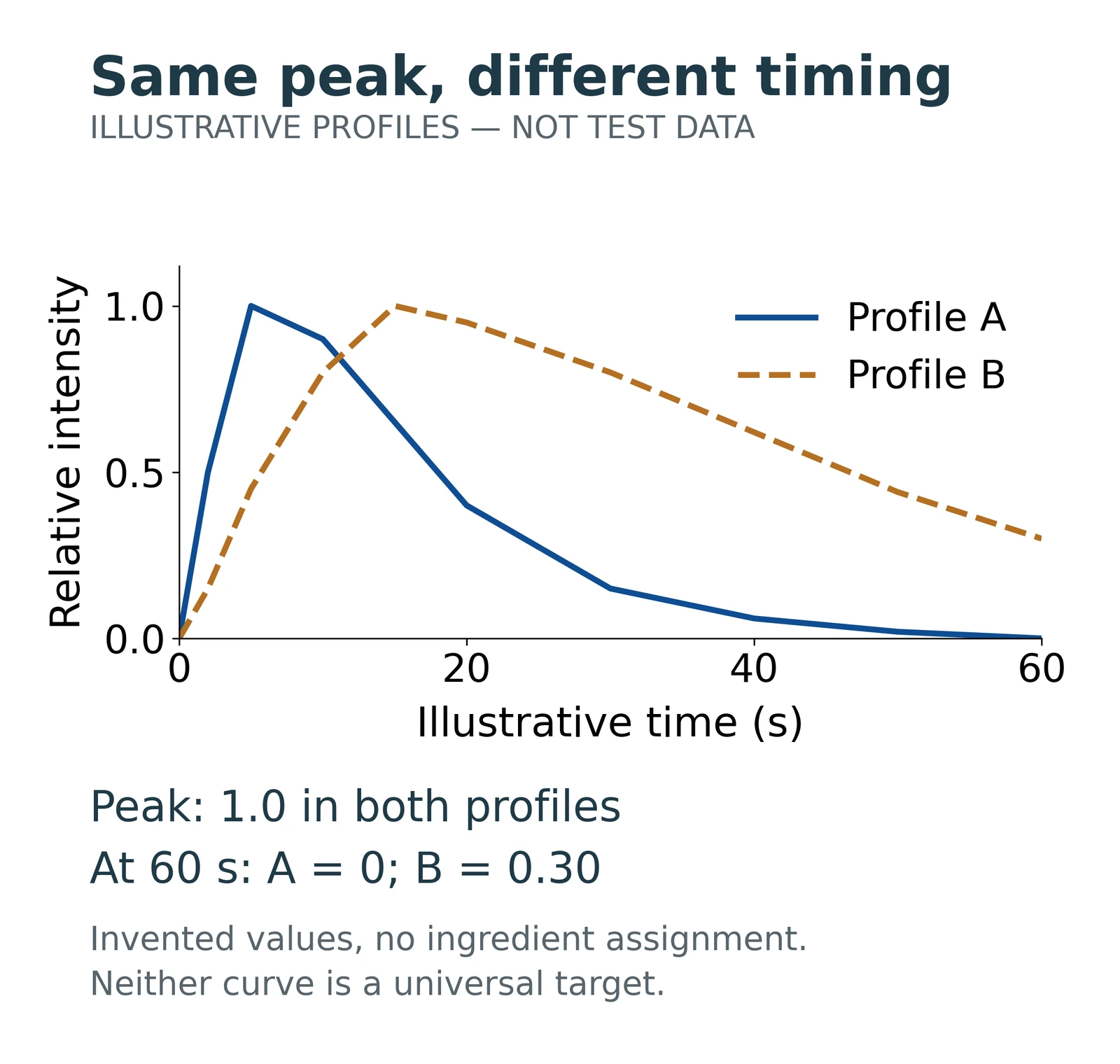
Discuss this comparisonDo the two plotted profiles show monk fruit versus stevia results?
No. Profiles A and B are invented teaching curves with equal peaks and different timing. They represent neither ingredient nor a Hengliyuan blend. Use the figure to identify what to record, and keep actual sample results under your agreed tasting method.
Discuss this comparisonCan I copy a published monk fruit and stevia blend ratio?
Treat it as a study-specific direction, not a universal formula. Identify both materials and their actual additions, the complete base and the target sweetness. Test a blend alongside the individual candidates and control in the product you plan to make.
Discuss this comparisonDoes a lower price per kilogram mean the cheaper option?
No. Compare candidates after they meet the same product target, using their accepted additions and quotations on the same cost basis. Record other carrier, bulk replacement, processing or yield changes separately before comparing cost for the same amount of acceptable finished product.
Discuss this comparisonCan a successful tasting settle the finished-product label and market route?
No. Confirm the exact material, full composition, food use and target-market requirements separately. A sensory result, foreign reference or historical opinion does not approve the selected finished formula, claims or artwork.
Discuss this comparisonWhat starts a monk fruit and stevia sample discussion?
Send the real product base, current sample or control and the taste issue to improve. Add target sweetness, ingredient restrictions, process and market when known. Packaging, order quantity and required files can be clarified as the sample direction develops.
Discuss this comparison