
Read this guide in
BEVERAGE BLEND GUIDE
Monk Fruit Stevia Blend for Beverages: Formulation, Ratio and Sample Guide
Plan monk fruit and stevia beverage trials by exact grades, mass ratio and actual dose. Compare sweetness timing, aftertaste and processing before selecting a blend.
For a monk fruit–stevia beverage blend, choose the exact ingredient grades and the taste target before choosing a mass ratio. There is no universal starting ratio established by this guide: assay, carrier, beverage base and actual dose all affect the comparison. The useful question is which selected blend gives the intended sweetness and finish in your drink.
This guide is for brands developing RTD drinks, flavored water, tea, coffee, electrolyte drinks, functional beverages and drink powders that need a cleaner sweetness profile before requesting samples.
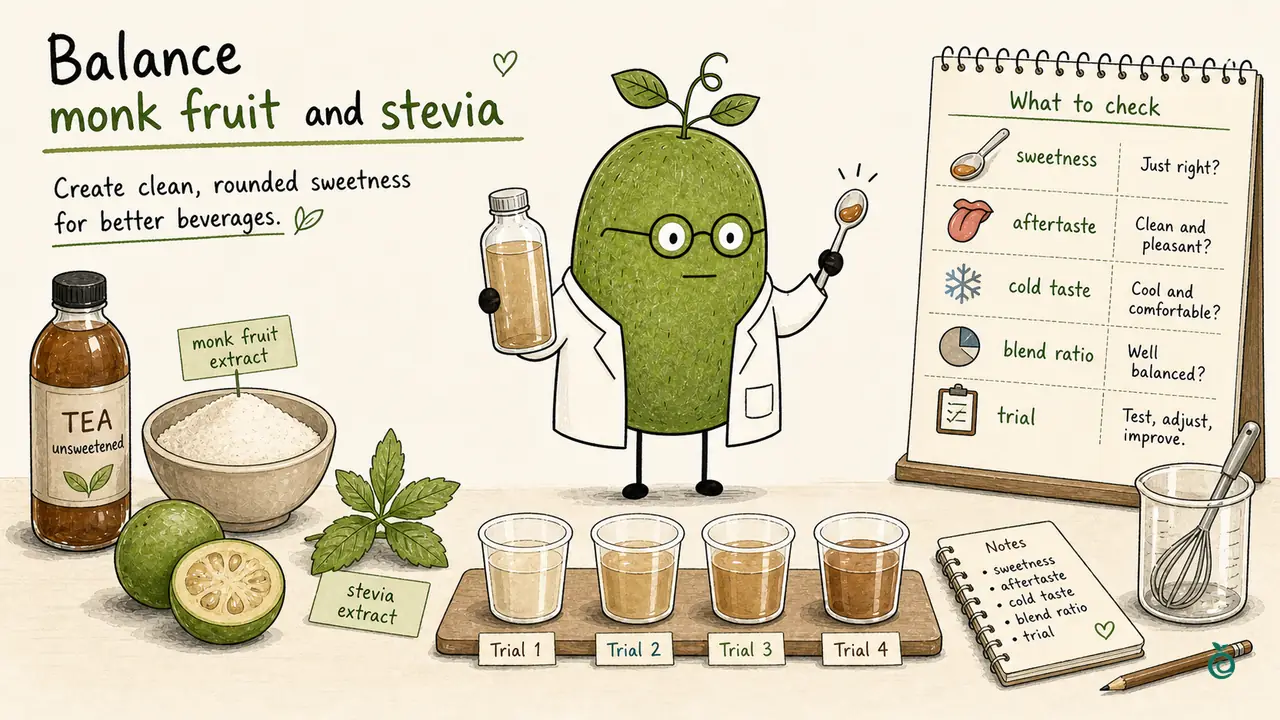
The Doctor illustration shows coded trial cups and separate sweetness, aftertaste, cold-taste and ratio checks. Its colours and tick marks illustrate the evaluation plan; “clean, rounded sweetness” is a development goal rather than a measured result or a promise for every blend.
Do not judge the blend in plain water only
Monk fruit and stevia can taste different once acid, tea solids, coffee bitterness, minerals, botanicals, flavors or carbonation enter the formula. The useful test is the real beverage base.
Starting blend ratios for trial
Use a weighing record until there is a verified application recommendation for the selected extract grades. A mass ratio does not describe the ratio of perceived sweetness: two powders with different assay, carriers or glycoside composition can have very different sweetness at the same weight. “Monk fruit” and “stevia” are therefore not complete material identities. Record the exact product name, batch, assay basis, carrier and specification before planning a comparison. Keep a current-formula or sucrose control and prepare separately coded monk-fruit-led, stevia-led and balanced directions. The labels describe the screening objective, not a published recipe. Choose actual weights with the application team from current supplier guidance and verify them in the real drink. A COA confirms measured batch items; it should not be treated as a dosage recommendation unless that advice is explicitly supplied with the application information. No public company-confirmed RTD starting dose is established by this guide. For each trial, record both ingredient masses and total batch mass. If the two extracts arrive as a premixed blend, request the full ingredient statement and the available composition or supplier version reference. This allows the team to repeat the accepted trial and compare quotations for the same material. Keep a carrier-only or solids comparison where that is necessary to explain a mouthfeel or clarity change. After the first equal-sweetness screen, change one ingredient contribution at a time and retain the previous code. Ask whether the adjustment improves the specific defect: slow onset, a bitter tail, thin body or lingering sweetness. Increasing total sweetness can hide one problem while making another worse. Taste the next candidate at the same serving temperature, carbonation and dilution, and record what changed rather than declaring that the new ratio is universally better.
| Trial direction | Monk fruit grade / batch / mass | Stevia grade / batch / mass | Total batch / carrier | Sensory and stability note |
|---|---|---|---|---|
| Current control | Record if used | Record if used | Record full base | Benchmark |
| Monk-fruit-led screen | Application-team agreed mass | Application-team agreed mass | Record all solids | Complete after test |
| Stevia-led screen | Application-team agreed mass | Application-team agreed mass | Record all solids | Complete after test |
| Balanced direction | Application-team agreed mass | Application-team agreed mass | Record all solids | Complete after test |
Compare sweetness timing, not just the peak
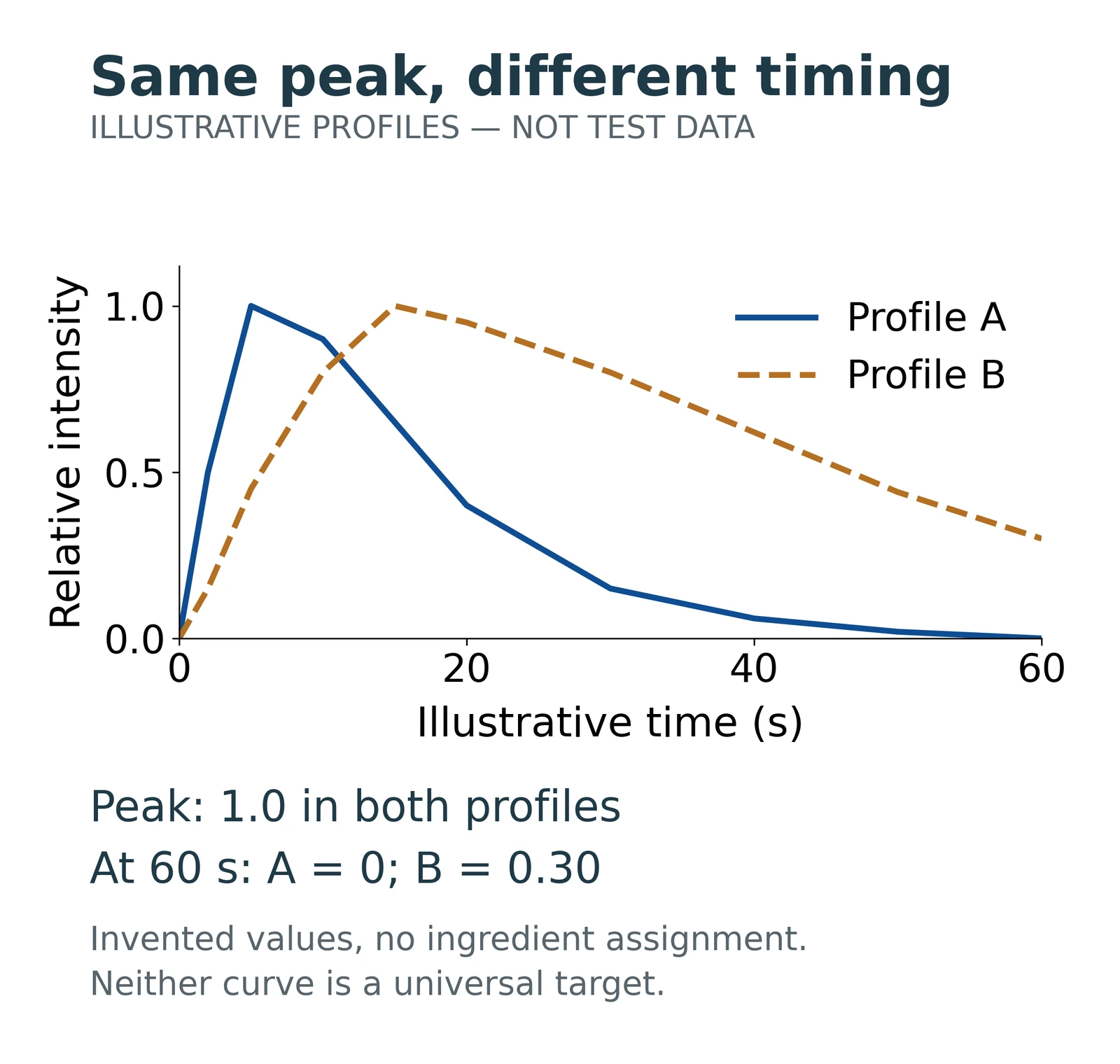
Buyers should compare onset, peak sweetness, sweetness drop-off and lingering aftertaste. A rounded curve can matter more than the strongest sweetness level on paper. Define what those observations mean for the beverage: whether sweetness arrives quickly enough, fits the main flavour and fades at the intended point. Compare coded samples at the same serving temperature, carbonation and dilution, with an agreed intake and tasting sequence. Keep the assessor and sample references with the observations. The two profiles below are invented examples to explain the difference between peak and timing. They are not labelled as monk fruit, stevia or an actual blend, and neither curve is presented as the better target.
Use blend trials to reduce trade-offs
Monk fruit may support a fruit-origin natural sweetener direction, while stevia can help sweetness intensity and cost in some formulas. The balance depends on flavor system, dosage and market expectations. Compare cost only after each candidate meets the same finished-drink target. Use the accepted ingredient amount for the same finished batch quantity and quotations on consistent units, currency and delivery terms. A stevia-containing blend is not automatically the lower-cost option at its effective use level.
Check solubility and storage taste
For ready-to-drink and powder applications, test clarity, cold-water mixing, sediment, pH, heat process if used and taste after storage. A sample that tastes good on day one still needs stability review. Keep mixing observations separate from quantitative solubility results. Record the sample preparation and test conditions; clarity, visible residue and sensory preference answer different questions. The complete formula needs investigation when something changes.
Monk fruit stevia blend checks after processing
Prepare samples using the process intended for the product. For an RTD drink, record the addition point, mixing, measured heat history where applicable, fill and cooling. For a powder, record premix order, blending and reconstitution. The same acceptable water sample does not establish either route. Keep an unprocessed comparison only when it helps isolate a process effect, and label it clearly. At the agreed storage checkpoints, inspect the container before shaking and record haze, sediment and any color change. Then repeat the coded tasting in the actual serving condition. A deposit needs investigation of the complete formula and material identity; a sweetness difference needs review of preparation and dosage as well as the extract ratio. Send the supplier separate physical and sensory records. Before a quotation is finalized, match the selected blend version to the specification, ingredient list, batch documents, packaging and target-market intended use. A sensory preference is one part of that approval. The launch decision also needs the complete product’s safety, process and shelf-life work.
| Check | Ready-to-drink route | Powder route |
|---|---|---|
| Preparation record | Addition point, mixing, actual heat history if used, fill and cooling. | Premix order, blending and the intended consumer reconstitution method. |
| Undisturbed appearance | Haze, sediment or colour at the agreed pack/storage checkpoint. | Powder condition and prepared-drink appearance at the agreed checkpoints. |
| Serving comparison | Matched tasting temperature, carbonation and dilution. | Actual dose, liquid quantity, preparation and drinking temperatures. |
| Decision record | Keep the physical result and coded tasting separate, linked to the same blend version. | Keep dry-product, reconstitution and taste observations distinct, linked to the same blend version. |
Where a heat-process effect is being assessed, compare samples at the same tasting temperature. Choose the actual product’s process and storage checkpoints; this table does not prescribe processing limits or a shelf life.
Confirm label and document needs early
Ingredient wording, certificate needs and local label rules can differ by market. Share target market and product type before final blend, packaging and quotation discussion. Match the selected blend version to its complete ingredient declaration, current specification and the relevant batch documents. A certificate or COA for one ingredient or product does not establish every statement for a different finished blend. Review the intended wording for the actual product and market before using it on a label.
Move from trial to supplier inquiry
Start with the beverage base, sweetness target and the specific taste issue: onset, a bitter note, lingering sweetness or another defined problem. Add the intended market and process when known. A base description and the problem are enough to begin a sample discussion; the first contact does not require a complete proprietary formula. As the direction becomes clearer, confirm the selected grades or premix version, packaging, estimated quantity, required documents and sample needs. Keep the accepted trial linked to the specification and quotation rather than quoting an undefined “monk fruit and stevia” combination.
Common questions
Can monk fruit and stevia be used together in a beverage?
Yes, a blend is a sample direction to evaluate in the actual drink. Select the ingredient grades and composition, then compare dose, sweetness timing, flavour and the intended process. A blend is not automatically better than one ingredient.
Discuss this requestWhat monk fruit-to-stevia ratio should I start with?
Use application guidance for the selected grades and record both actual ingredient masses. This guide establishes no universal starting ratio or RTD dose. Keep the product names, batches, assay basis and carriers with each trial so the chosen direction can be repeated.
Discuss this requestDo equal ingredient masses mean equal sweetness contributions?
No. Different assays, glycoside compositions and carriers can change sweetness at the same ingredient weight. A mass ratio records what was weighed; it does not establish a ratio of perceived sweetness.
Discuss this requestAre the sweetness curves measured monk fruit and stevia results?
No. Profiles A and B are invented teaching examples with the same peak and different timing. They represent neither ingredient nor a Hengliyuan blend. Record actual sample onset, peak and finish under an agreed tasting method.
Discuss this requestCan a good water tasting approve an RTD drink or powder mix?
No. Use the actual beverage base and the intended route. RTD work includes the relevant process and packaging; powder work includes blending and consumer reconstitution. Keep appearance and storage observations separate from the coded tasting.
Discuss this requestDoes adding stevia guarantee a lower cost?
No. Compare candidates after they meet the same finished-drink target, using their accepted ingredient amounts and quotations on consistent terms. Price per kilogram or the presence of one ingredient alone does not establish cost in use.
Discuss this requestWhat information starts the sample discussion?
Give the beverage base, sweetness goal and the taste issue to improve. Add the market and intended process when known. Packaging, estimated quantity, documents and the selected blend version can then be clarified before confirming the sample and quotation.
Discuss this request