
Read this guide in
SYRUP SWEETENER TESTING
Sugar-Free Coffee and Soda Syrup Sweetener Blend Guide
Sweetener blend guide for sugar-free coffee syrup, soda syrup and concentrates: dosage, dilution tests and label checks.
A sugar-free syrup is not only sweet water. In coffee, soda, mocktails and flavored beverage bases, syrup affects sweetness timing, body, viscosity, flavor release, acid balance and how the drink feels after repeated sips.
This guide helps beverage brands, cafe syrup makers, private-label teams and ingredient buyers compare allulose, monk fruit, stevia and natural sweetener blends before requesting samples.
Define the syrup and the drink it will serve
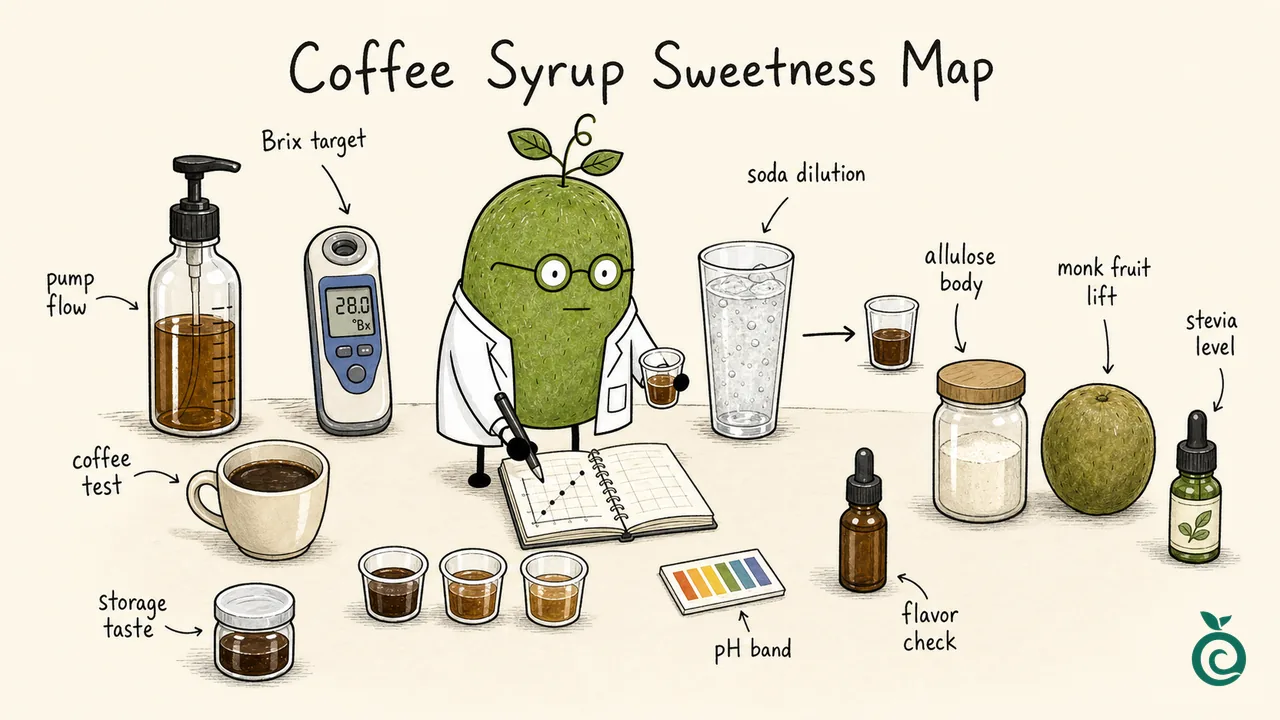
Start with the actual use: hot coffee, iced latte, soda concentrate or another flavored drink. A bulk ingredient, a sweetener blend and a finished flavored syrup are different purchase requests. Identify which material you need, the intended market and the taste or handling problem before choosing a blend. Our recommendation is to judge the sample at its intended serving dilution. Keep a separate record for the concentrate: appearance, pouring or pump delivery and storage can matter even when the diluted drink tastes right.
Choose bulk and sweetness together
Allulose can be useful where a sugar-like sweetness curve or body matters and the intended market permits its use. It is less sweet than sucrose, so a project may need additional sweetness or a separate texture adjustment. Monk fruit and stevia can supply sweetness at low use levels, but increasing them will not automatically restore syrup body or the flow of the original sugar syrup. Compare the identified commercial ingredient, including its grade and any carriers. Test the target flavor separately: a result in vanilla coffee does not approve a citrus soda or another base. Follow onset, peak and finish over repeated sips, including bitterness, cooling or an unwanted lingering note. The existing beverage-blend guide includes an explicitly illustrative timing comparison; it is not measured performance of a particular material.
Write the dose and dilution so another person can repeat them
For a defined mixed drink, ingredient mass equals syrup mass multiplied by that ingredient’s documented mass fraction in the syrup. Divide by the final mixed-drink mass to calculate its final mass fraction. This is a mass balance, not a sweetness prediction or an approved formula. State how ice and other additions enter the test; a liquid measurement and a total containing unmelted ice are not interchangeable.
| Record | Make the basis explicit |
|---|---|
| Commercial sample | Material name, grade or blend version, lot and documented composition; do not substitute Brix for an ingredient mass fraction |
| Dilution notation | State syrup:water or syrup:finished drink and weight or volume. Record all additions and the final serving amount. |
| Pump delivery | Weigh the delivered syrup under the intended conditions. Record pump identity, temperature and variation across repeated deliveries; do not assume each pump equals the same mass. |
| Finished-drink dose | Record actual syrup mass per serving and the final mixed-drink basis. Volume-to-mass conversion needs the applicable density, not an assumed 1 mL = 1 g. |
Use the existing allulose syrup guide for a worked, clearly hypothetical weight-dilution example and its trial record. Its example inputs are not a Hengliyuan syrup specification or a recommended use level.
Brix is a process reading, not proof of sugar content
The Brix scale is based on sucrose in water. In a multi-ingredient syrup, a refractometer result does not selectively measure allulose, identify every dissolved ingredient or establish perceived sweetness. Mettler Toledo’s technical guidance also shows that Brix values obtained by different measurement methods can differ for samples other than pure sucrose solutions. Record the instrument, method, sample temperature and preparation with the reading. A product-specific specification may use Brix as a useful check value, but keep it separate from documented ingredient content, total solids, viscosity and the finished product’s sugar claim. Do not approve a new blend by matching the old syrup’s Brix alone.
Compare the drink formats you actually plan to sell
Choose the relevant rows rather than requiring every project to run every drink. Use a coded control and identified candidates at an agreed serving and sweetness target. Keep the base, preparation and tasting conditions matched where possible, and record unavoidable differences.
| Use case | Conditions and observations to retain |
|---|---|
| Hot coffee | Coffee and extraction, syrup mass, serving amount and tasting temperature; compare aroma, sweetness timing, bitterness and body |
| Iced milk coffee | Coffee, dairy or plant base, syrup mass, ice and mixing; define when the comparison is made so changing dilution is visible |
| Sparkling beverage | Base and flavor, syrup mass, acidity, temperature, carbonation and mixing; separate foam or gas-loss observations from sweetness impressions |
| Concentrate before dilution | Appearance before remixing, crystals or deposits, clarity, color, pouring and pump delivery at the recorded temperature |
Compare the same intended serving after storage as well as when freshly prepared. Set criteria for the actual drink; an attractive concentrate or a clean water test does not decide the final flavor balance.
Separate taste, physical storage and product validation
Cold mixing, heat history, acidity, flavors, preservation and packaging belong in the project brief. They do not establish a universal process for every syrup. Record the actual conditions and distinguish a sensory screen from the product-specific safety, process and commercial shelf-life work. A pH reading, a preservative choice or hot filling alone is not a complete validation.
| Check | Record for the control and each candidate |
|---|---|
| Fresh sensory screen | Defined drink and serving conditions; onset, peak, finish, bitterness, flavor and mouthfeel |
| Concentrate storage observation | Actual package, temperature, duration and unopened or opened state; photograph appearance before remixing and record deposits separately |
| Drink after syrup storage | Prepare the same dilution and serving conditions; compare flavor and physical changes with the fresh record |
| Decision and further validation | Which criteria were met, the next variable to change, and the separate product-specific validation still required. Do not turn screening dates into a shelf-life promise. |
Check market and label direction before packaging
Ingredient permission, product category, ingredient statement, nutrition declaration and front-of-pack claims are separate checks. FDA’s October 2020 allulose guidance addresses specified U.S. Facts-panel treatment under enforcement discretion; it is not global permission or automatic approval of a zero-sugar claim. For a new U.S. allulose or allulose-blend project, include the primary sales states separately from the buyer’s address and shipping destination. Hengliyuan keeps zero-sugar wording out of new packaging drafts pending qualified U.S. review; sugar free and no added sugar are not automatic substitutes. Provide the category, channel, formula, serving size and proposed wording for that review as they become available.
Start the sample request with the actual drink and problem
Tell us the intended market, drink format, flavor and the problem you want to solve: for example, a bitter finish, too little body or inconsistent pump delivery. You can start the discussion before a full formula or finished test sheet is available. Add the known dilution and serving basis, commercial ingredient or blend direction, processing, package, estimated quantity and whether you need samples. Include required certificates or documents; availability must be checked against the selected material. For a quote comparison, use the actual acceptable dose per finished serving and consistent quote terms, rather than comparing ingredient prices per kilogram alone.
Technical references and scope
Mettler Toledo’s Brix guidance supports the distinction between a sucrose-based measurement scale and the results from different methods in other samples. It does not provide an allulose syrup calibration, sweetness score or finished-product claim approval. The dilution example and illustrative sweetness-time profiles are linked from the existing guides; neither is a factory trial result. The formulation and testing recommendations here express Hengliyuan’s development approach. The FDA reference is the October 2020 guidance, and the U.S. packaging-review practice follows our current project workflow. Confirm the actual ingredient, category and market requirements before commercial launch.
Common questions
Is 100% allulose enough for a sugar-free coffee syrup?
First establish what 100% describes: the supplied ingredient or the sweetener portion is not the same as the allulose concentration in a finished syrup. Confirm its form and mass fraction. A project may still need sweetness or texture adjustment and testing in the actual drink, subject to market and label review.
Discuss this requestCan monk fruit or stevia be used in syrup?
They can supply sweetness as part of a suitable system. Use the identified commercial material and test its onset, finish and flavor fit in the intended drink. A successful water sample does not approve every coffee, milk base or soda flavor.
Discuss this requestDoes matching Brix mean matching sugar or sweetness?
No. Brix is based on a sucrose-in-water scale, and method and composition matter in other samples. A mixed-syrup reading does not identify allulose content, establish sweetness equivalence or approve a sugar-free claim. Keep the specification and method with the result.
Discuss this requestIs a dilution ratio enough to reproduce the drink?
Only when its basis is clear. Specify syrup:water or syrup:finished drink, weight or volume, all additions and the final serving basis. Record the actual syrup mass and how ice is handled at the comparison point.
Discuss this requestCan we use pump count instead of weighing the syrup?
Pump count describes the dispensing action; it does not establish the delivered mass. Measure the intended pump and syrup under the recorded conditions, then check delivery consistency. Use the measured dose for the drink comparison.
Discuss this requestShould every project test hot coffee, iced latte and soda?
Select the formats you plan to sell. Keep the base, preparation and serving conditions matched within each comparison, and evaluate distinct bases separately. There is no need to make an unrelated drink solely to complete a generic checklist.
Discuss this requestDoes a stored sample establish shelf life?
A defined storage screen can show changes in appearance, dispensing or taste. It does not by itself establish product safety or commercial shelf life. Keep the actual packaging, processing and conditions in the separate product-specific validation plan.
Discuss this requestWhat should buyers send before requesting syrup sweetener samples?
Start with the market, actual drink, flavor and the problem to improve. Add known dilution, serving, ingredient restrictions, process, packaging, quantity and document needs. A full formula or completed spreadsheet is not required for first contact; new U.S. allulose projects also need the primary sales states for label review.
Discuss this request