
Read this guide in
LIQUID DROPS OEM
Private Label Liquid Sweetener Drops OEM Guide
A buyer guide to private-label liquid monk fruit sweetener drops: carrier, dosage, bottle, label, shelf life and quotation steps.
Liquid sweetener drops look simple on the shelf, but a buyer brief for private-label drops needs more than a bottle size and flavor name.
Use this guide when planning monk fruit drops, stevia drops or broader natural sweetener liquid drops for coffee, tea, beverages and tabletop use.
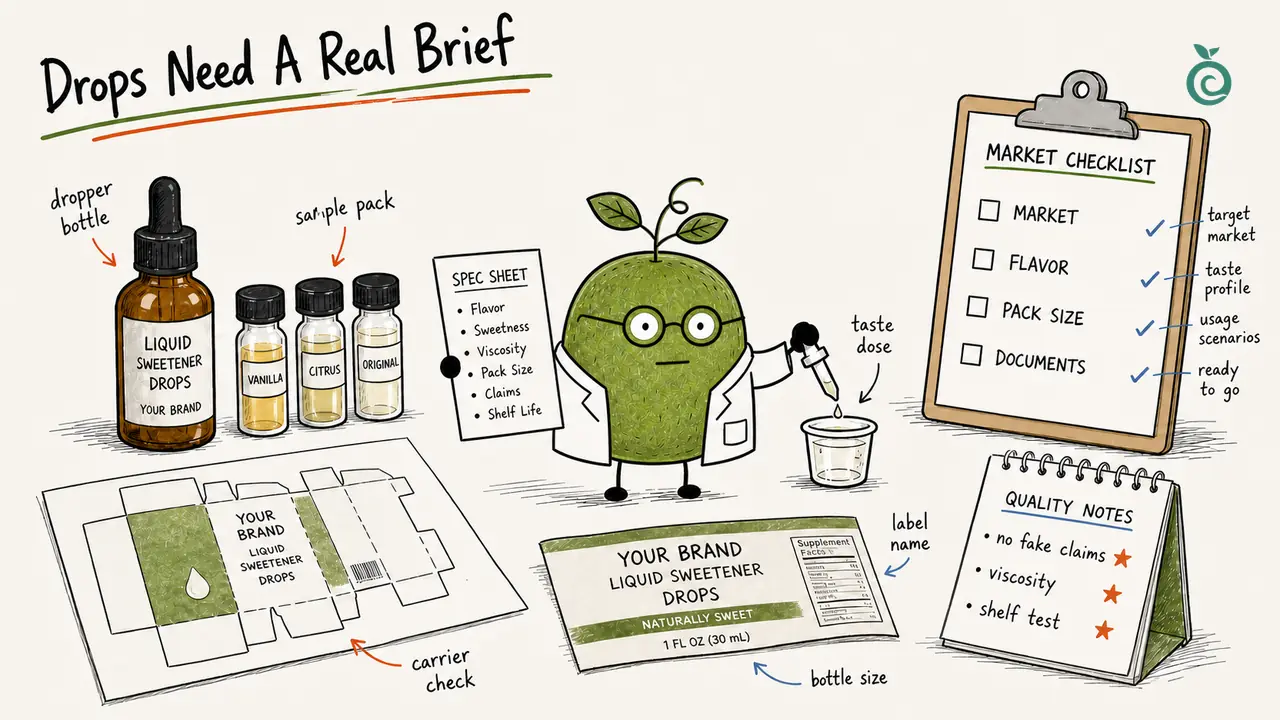
Review the liquid, dispenser and market together
Assess the liquid, dispensing pack and market documents as one project. The pictured 30 mL pack, flavors and label panels are illustrative placeholders, not confirmed specifications or approved artwork. The checkmarks do not establish claims, regulatory status or shelf life.
Define the use case first
A coffee drop, tea drop, water enhancer, tabletop sweetener and foodservice bottle may need different sweetness strength, drop count, flavor direction, serving size and label wording. Start with how the consumer will actually use the product.
Confirm sweetener identity and carrier
Buyers should decide whether the direction is monk fruit, stevia, a monk fruit stevia blend, an allulose-supported system where suitable, or another natural sweetener blend. The carrier affects viscosity, taste, serving size and ingredient declaration.
Test dosage in real drinks
Do not approve a liquid drops sample only in plain water. Test it in the intended drink, such as hot or iced coffee, tea or a milk-based drink. Record sweetness onset, aftertaste, mixing and the number of drops needed for the target serving. Repeat the drop-count check with the proposed bottle and nozzle before treating it as a product specification.
Check preparation and dispensing through the bottle's use
Follow the selected product's preparation instructions; do not assume every liquid needs shaking or that a fixed drop count transfers between bottles. Compare the first servings, servings after the prescribed mixing and servings near the end of the bottle. Record the bottle, nozzle, fill level, serving temperature and actual dispensed amount. If sweetness or bitterness changes, send that record for formulation and packaging review rather than treating another consumer's drop count as a specification.
Keep the dispensing basis beside the taste result
We do not use another bottle’s drop count as the specification for your product. Keep the following details with each comparison so a taste change can be reviewed against the liquid and pack actually used.
| Check | Record with the result | What the record helps distinguish |
|---|---|---|
| Liquid identity | Blend/sample version, batch, carrier and prescribed preparation | A liquid change from a dispensing change |
| Dispenser | Bottle and nozzle or dropper version, filling method, tilt or squeeze operation | A changed opening or user action from a change in sweetness strength |
| Bottle stage | Fill level and first, middle or near-empty servings under the same stated procedure | A repeatable serving from a change during bottle use |
| Dispensed amount | Drop count and, where measured, collected mass with weighing method and units | An actual addition from an assumed fixed drop size |
| Drink basis | Drink ingredients, serving amount, temperature and mixing | A coffee, tea or milk-base effect from the liquid itself |
| Taste | Initial sweetness, lingering sweetness, bitterness, other aftertaste and the comparison used | Taste quality from dispenser output; assess both before approval |
| Storage and opening | Storage conditions, opening date and observation time; separate unopened and in-use records | A short taste check from evidence supporting the stated storage and use period |
If collecting and weighing several drops, report the collected mass divided by the drop count as an average for that liquid, dispenser and procedure. Do not turn that average into a universal drop volume or transfer it to another bottle. No fixed drops-per-milliliter conversion is assumed here.
Plan bottle and label together
Say whether the intended pack is a dropper or a squeezable bottle, and whether you will supply the bottle. Share the bottle and closure specifications so filling fit, seal, dispensing consistency and food-contact documents can be assessed before packaging is confirmed. Bottle size, label area, carton, tamper band, barcode and language version also affect the quotation.
Review shelf-life and documents
Ask which specification, COA, allergen statement, food-safety documents and any required halal or export files match the selected product. Confirm the proposed storage conditions, unopened shelf life and any after-opening directions, together with the supporting test scope. A raw-material COA or a fresh taste sample does not establish the finished liquid’s shelf life. Preservative and process information should correspond to the final blend and pack; review the local label before launch.
Use the ingredient reference at its actual scope
The FDA explanation for the United States says the agency has not questioned certain notifiers' GRAS determinations for highly purified steviol glycosides and monk fruit extracts under the intended uses described in those notices. This is not approval of every liquid blend, bottle label or claim. Match the actual ingredient identity and complete composition to the final market and review the finished-product label.
Begin with the drink and the dispensing question
Send the intended drink, final sales market and the issue you want to solve: taste, drop count, a bottle choice or an own-brand product. Add a known liquid direction or bottle specification if available. A finalized formula, packaging design or complete test report is not required to start. Next, agree a sample and dispenser comparison. A comparable final quotation should identify the liquid version, bottle and closure source, fill amount, label and carton scope, order quantity and required documents. Confirm the same version for the taste record, consumer directions and quoted pack.
Common questions
Can liquid sweetener drops be private label?
Yes. We can discuss the liquid direction, flavor, bottle and closure, label, carton, samples and quotation for an own-brand project. Start with the target drink and market; confirm the tested liquid and dispensing version before finalizing directions and the pack.
What should buyers test first?
Test in the intended hot or cold drink as well as any water comparison. Keep the drink amount, temperature, mixing, liquid version and actual addition with the sweetness and aftertaste record. Recheck dispensing in the proposed bottle.
Can monk fruit and stevia be blended in liquid drops?
They can be tested together for the intended sweetness and aftertaste. The selected materials, carrier, addition and drink base determine what needs to be compared; the ingredient names alone do not establish a finished flavor result.
How many drops equal one serving or one milliliter?
Use the amount established for the selected liquid, dispenser and procedure. Record drop count and actual dispensed amount where measured. A count from another bottle, or a collected-mass average, is not a universal volume conversion or consumer serving instruction.
Should every bottle be shaken before use?
Follow the preparation instructions for the selected product. Do not add a universal shaking rule. Compare dispensing at the stated preparation and fill stages, then report the liquid and pack details if sweetness or aftertaste changes.
Does a COA establish the shelf life of our bottled drops?
A material COA alone does not establish the finished bottle’s storage or use period. Check the final liquid, process, packaging and supporting test scope, including the distinction between unopened storage and after opening.
What details help prepare a quotation?
Begin with the target market, product idea and current question. Add any known bottle and closure specification, estimated quantity, documents and sample needs. The final offer should state the selected liquid and packaging version so changes in scope are visible.
