
Read this guide in
SOFT-SERVE VALIDATION
Soft-Serve Overrun, Draw Hold and Melt: Sweetener Testing Guide
Separate soft-serve overrun, draw shape, holding and melting in a controlled sweetener trial. Reuse a free comparison and overrun Excel calculator.
A soft-serve mix can taste sweet enough and still fail the next operating check. Overrun, draw state, holding time and melting are related, but they are not the same result.
This guide is for product developers and ingredient buyers comparing monk fruit, stevia, allulose-supported, erythritol-free or broader natural sweetener systems in dairy, plant-based and private-label soft-serve projects.
Sweetness is only the first gate
Our view is simple: match sweetness, then judge the operating result separately. Monk fruit or stevia can restore perceived sweetness without restoring the original solids, freezing behavior or air structure. A cone that tastes right at the nozzle can still lose its shape during service. A 2025 Wageningen model study examined ice content and the viscosity of the unfrozen continuous phase in relation to hardness and melting. Those are separate properties, and the study supports keeping separate measurements. It does not select a commercial soft-serve recipe, prove a winning sweetener or provide results for your machine.
Record overrun as an operating variable
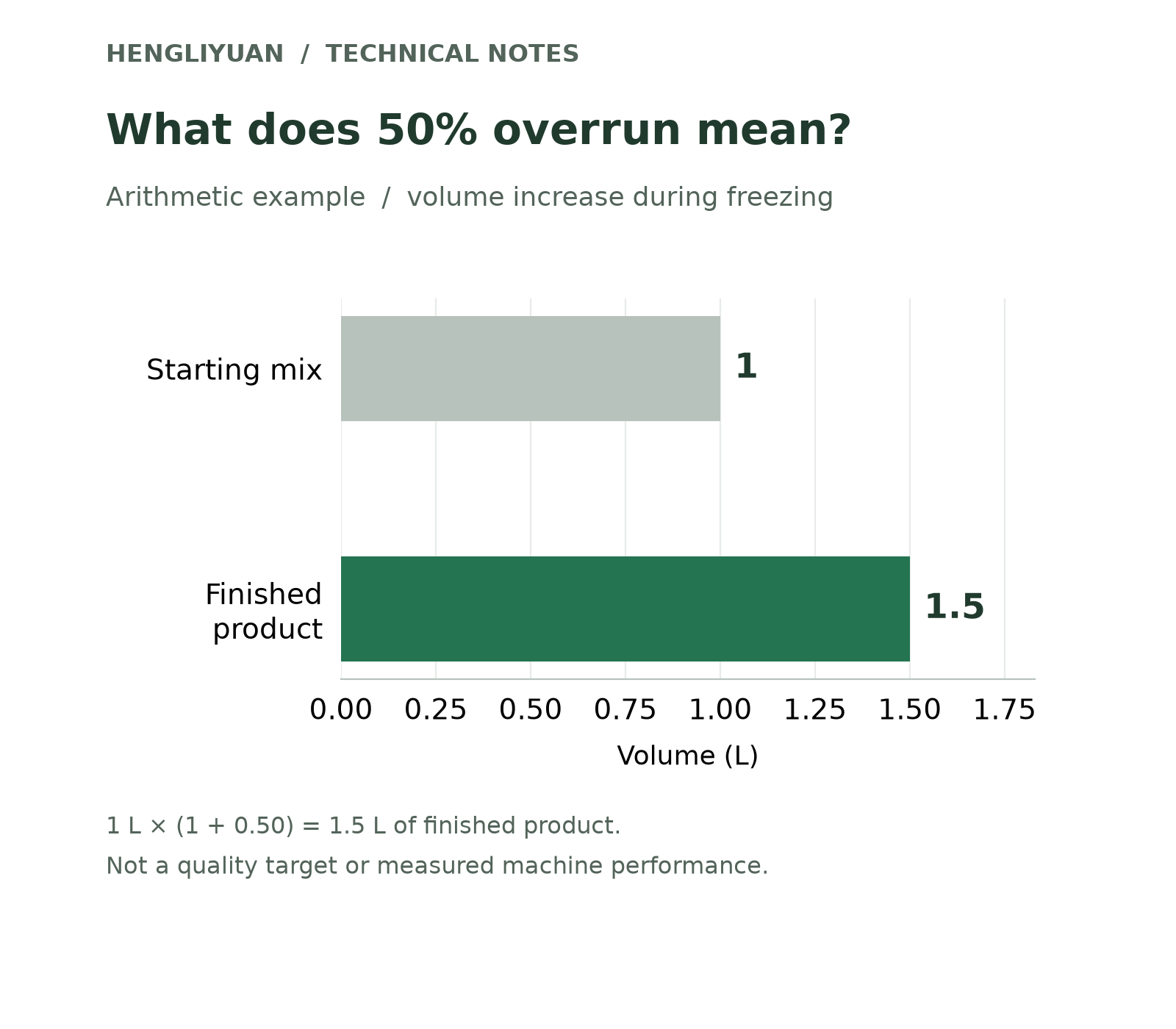
Overrun describes the air incorporated during freezing. As a simple arithmetic example, 50% overrun means one litre of mix produces 1.5 litres of finished product; it is not a universal quality target. Pump or gravity feed, mix viscosity, temperature, beater condition and machine settings can all change the observed value. Compare the same mix on the same machine before using the number to explain texture or serving cost.
Set the comparison before changing the sweetener
Keep a current or full-sugar control that represents the product you actually sell or are developing. A sweetness-only replacement helps reveal what sweetness adjustment leaves unresolved. A system trial can change bulk, body or viscosity as well, but record those changes together; it cannot isolate the effect of one ingredient. Use the same intended machine and comparison method. If a machine, preparation or setting has to change, label the result as a different operating condition rather than silently ranking it against the original run.
| Trial record | Keep identifiable | Why it matters |
|---|---|---|
| Control and candidate | Sample code, lot, formula revision, actual sugar system and every changed material or amount | A reformulated base is not a one-ingredient comparison. |
| Preparation and base | Dairy or plant base, actual powder/liquid preparation, mixing, standing, relevant treatment and mix temperature | Different preparation can change the material reaching the machine. |
| Machine and draw | Model, pump or gravity feed, settings, relevant hopper/cylinder context, measured draw temperature and sampling order | A displayed setting and measured product temperature are different records. |
| Portion and exposure | Portion mass or volume, shape, cup or cone, support/collection setup, actual temperature, clock start and planned observations | A different geometry or exposure can change the observed hold and melt. |
Use the actual mix as the overrun reference
For a suitable uniform product, weigh the same fixed volume of liquid mix and drawn soft serve, subtracting each container tare. Calculate overrun (%) = (net mix mass / net soft-serve mass - 1) × 100. Use each formulation's own mix reference and record the fill and leveling method; do not borrow the control's density for every candidate. The Guelph textbook describes equal-volume weighing and warns that inclusions such as nuts change what package weight tells you. Establish an appropriate sampling method before comparing particulate products. The free workbook below checks positive equal cup volumes and positive net masses; it cannot detect poor filling, collapsed air or an unrepresentative sample.
Give each draw, hold and melt result its own endpoint
Record the immediate draw before describing what happens later. Start the observation clock at a defined event, such as completion of dispensing, and retain the actual elapsed time. Choose checkpoints around the intended service question; 5, 10 and 20 minutes are possible planning examples, not a required schedule or universal acceptance limits.
| Observation | Record the method and result | Keep separate |
|---|---|---|
| Immediate draw | Measured product temperature, portion, nozzle/shape appearance, sampling time and visible defects | The machine setting, later shape retention and a subjective creaminess score. |
| Overrun | Equal cup volumes, tare and gross masses, each formula's mix reference, draw condition and calculated percentage | A target number, air fraction of the finished volume or a taste/quality ranking. |
| Timed shape hold | Same view/geometry and support, defined clock start, actual elapsed times and the observed change | First visible liquid and an unmeasured delivery result. |
| First drip and later collection | Define the first visible liquid endpoint; separately record collected mass at stated elapsed times and the starting sample mass | First drip is a time, not a melt rate. State whether collection is cumulative or per interval; report units and any percentage denominator. |
For a rate over an interval, keep both collection times and the mass change with the elapsed duration. If you express collected melt as a percentage, identify the starting sample mass used as the denominator. A sample that has not dripped by the last observation is recorded as not observed by that time, not as a zero-minute result or an unlimited hold claim.
Keep repeats and the service route recognizable
Record separate portions and runs so a repeat can be distinguished from another photograph of the same cone. Repeated observations of one portion show its history; they are not independent samples. If a measurement or tasting changes the portion, use a separately identified portion for the next comparison rather than treating the disturbed sample as untouched. Record waiting, packaging, loading, route, opening and arrival observations for an actual delivery comparison. A counter shape-hold test does not reproduce that route. Keep any chilled holding, heat-treatment and cleaning procedure within your validated operating and food-safety arrangements; this article supplies no universal service temperature, safe time or commercial shelf life.
Download the existing comparison and overrun Excel
Use the frozen-dessert worksheet to keep the control and candidate records together and calculate overrun from your own equal-volume measurements. It has 42 blank inputs, six formulas and 15 paired record fields. It checks missing inputs, unequal or non-positive cup volumes and non-positive net masses; a real zero-overrun result is retained. The file downloads directly without an email address or account. It is a comparison and overrun record, not an automatic machine qualification or a complete delivery-validation form. Attach the timed shape, collection and route observations with their sample codes when they need more space.
Choose the next trial from the defect you observed
A coarse draw, fast shape loss, early liquid and a slow-clearing sweet finish are different problems. Keep texture and temporal sweetness notes separate so the next sample addresses the actual defect. When several formulation or process variables changed together, describe the observed difference without assigning it to one sweetener. Use the existing controlled ice-cream trial guide for the ingredient comparison logic, then evaluate the soft-serve result on the intended equipment. A softer sample or higher overrun is not automatically a better product; judge it against the intended portion, eating quality and service route.
Send the product, market and main defect first
Start with the finished format, target sales market and the problem the next sample should solve. Add the base, known sugar system, preparation, machine, measured conditions and observations you have. A completed worksheet, every purchasing field and a finished test program are optional at first contact. For an allulose-supported or erythritol-free direction, include the proposed composition and label plan for market-specific review; include the main sales states for a U.S. allulose project. The sample discussion does not settle final food-use, label, process, shelf-life or delivery approval. The separate supplier brief covers quotation scope, packaging, quantity and included costs.
Common questions
Can a mix taste sweet enough but still draw poorly?
Yes. Perceived sweetness does not measure solids, freezing behavior, air incorporation or the condition at dispensing. Keep the sweetness result and actual machine observations separate.
Discuss this requestDoes higher overrun always mean better soft serve?
No. Overrun describes a volume increase relative to the mix. The intended portion, texture, taste and service conditions still need their own assessment.
Discuss this requestHow do we calculate overrun by weighing cups?
For a suitable uniform product, subtract each tare from the gross mass of equal fixed volumes of mix and soft serve. Overrun (%) = (net mix mass / net soft-serve mass - 1) × 100. Use each formulation's own mix reference and a suitable method for inclusions.
Discuss this requestIs 50% overrun the same as 50% air in the finished volume?
No. In the illustrated arithmetic, the added 0.5 L is compared with 1 L of starting mix. The 50% figure uses the starting mix as its denominator; it is not a universal quality target or measured machine performance.
Discuss this requestDoes first drip measure the melt rate?
No. First drip is a defined event and elapsed time. Later collection requires its own times, collected masses and setup; a rate also needs a mass change and time interval. State the denominator if you report a percentage.
Discuss this requestMust we test at 5, 10 and 20 minutes?
No. Those are illustrative planning checkpoints. Choose observations around the intended service question, keep actual elapsed times and temperatures, and agree acceptance criteria for that project rather than borrowing a universal time limit.
Discuss this requestDoes a short counter test prove delivery performance or shelf life?
No. Keep the actual package, waiting, route and arrival records for delivery. A short shape or melt observation does not establish food safety, commercial shelf life or a general delivery guarantee.
Discuss this requestMust the Excel or complete brief be finished before contacting Hengliyuan?
No. Send the product, target market and main defect, plus the base and machine information you have. The free worksheet and further packaging, quantity, document and sample details can follow.
Discuss this request