
Read this guide in
Hengliyuan application and selection
Stevia Aftertaste in Fruit Drinks: Sweetness Testing Guide for Beverage Makers
Compare stevia sweetness, bitterness and finish in the real fruit-drink base. See published peach-study data and download a free sensory record.
In fruit-flavoured beverages, steviol glycosides should not be assessed only by whether the beverage is sweet enough. Acidity, aroma, soluble solids, serving temperature and other sweeteners in the juice or flavour base can change sweetness onset, peak sweetness, bitterness and aftertaste.
A buyer does not need to select a particular steviol glycoside before requesting samples. Provide the beverage type, target market, requirements and desired sensory result, and Hengliyuan can propose samples for evaluation in the actual beverage.
Choose what the sugar reduction must preserve
Start with the current drink and the change you want to make. Full sugar replacement, partial replacement and a small sweetness adjustment create different formulation tasks. Agree which other sweeteners, ingredient-list directions and production routes are acceptable for the intended market before selecting the next sample.
| Project direction | Comparison question |
|---|---|
| Partial sugar replacement | How much of the original sweetness, fruit character, solids and mouthfeel does the proposed formula retain? |
| Full sugar replacement | What replaces the lost sweetness and relevant bulk or body, and how does the sweet–sour balance change? |
| A steviol glycoside preparation alone | Does the actual grade and addition meet the sweetness, bitterness, astringency and finish target? |
| A sweetener blend | What does each component contribute, and does the complete composition fit the product and market? |

Keep the actual fruit-drink base with the result
Record the fruit, juice, concentrate, pulp or flavor; juice content and dilution; soluble solids; and the acid system, including pH and titratable acidity where available. Retain other sugars or sweeteners, tea, fiber, protein, milk ingredients and minerals that form part of the product. Include carbonation, intended drinking temperature, actual heat or filling process, packaging and storage conditions. Our starting point is the complete drink. A useful orange-drink result is not automatically the peach, berry or lemon-drink result. If the fruit base, acid system or another relevant component changes, identify the new condition and compare again; increasing stevia is not the only possible response to a weak or unbalanced sweetness.
Identify the grade and route before comparing taste
Record the supplier product code, total glycosides and named glycosides separately, assay basis, declared production route and other supplied ingredients. Do not infer the route from the Reb M name or treat glucosyl steviol glycosides as the same identity as a named glycoside produced by enzymatic conversion.
- Read the original 2020 aqueous Reb A, D and M study
- Review stevia ingredient identities and available sample directions
| Sample direction | Identity and route to confirm | What the beverage trial must answer |
|---|---|---|
| A mixed leaf-derived preparation | The declared leaf-extraction route, full specification and glycoside composition | Does this exact preparation meet the intended sweetness, bitterness and finish target? |
| A high Reb A grade | Reb A assay, total glycosides, reporting basis and the offered grade's route | Does the actual addition give the required fruit balance and finish, rather than merely a higher assay number? |
| A Reb D or Reb M direction | The specific material, named glycoside composition and declared route; the name alone is insufficient | Which observations change in the actual drink at the agreed comparison basis? Public study results do not establish this grade's performance. |
| Glucosyl steviol glycosides (GSG) | The glucosylated material identity, GSG assay definition, other components and corresponding documents | Does the exact GSG preparation address the target issue? GSG90, SG90 and Reb M are not interchangeable offers. |
A 2020 aqueous consumer study compared 0.10% (w/v) Reb A, D and M with 14% sucrose. Its three glycoside additions were equal in concentration, not demonstrated equal in perceived sweetness. Reb D and M had lower bitterness than Reb A under those conditions, while lingering sweetness remained relevant. This was not a fruit-drink result or a test of Hengliyuan's grades.
Compare bitterness peak and duration separately
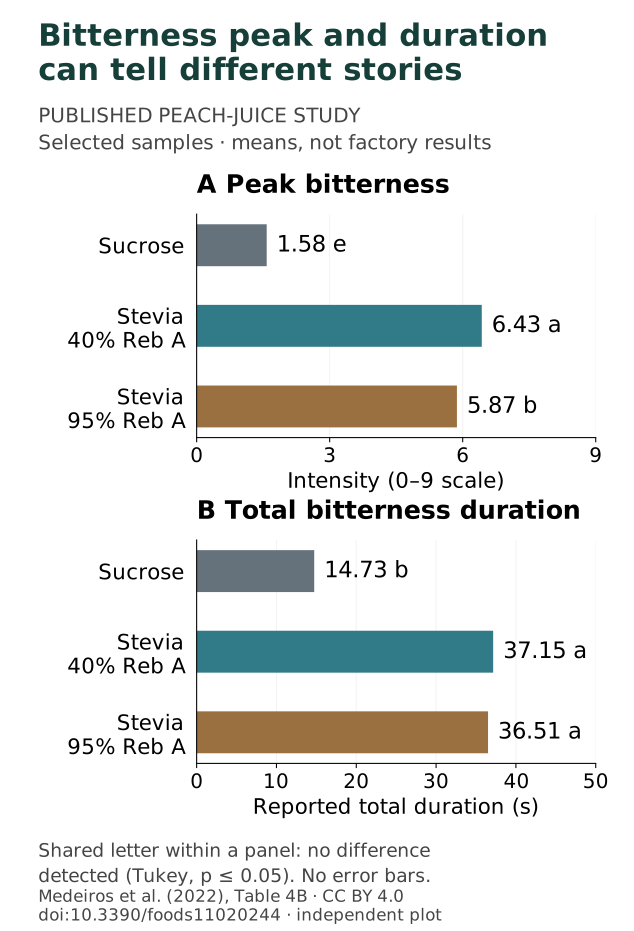
A lower bitter peak need not settle the finish question. The published peach-study comparison below separates the maximum bitterness intensity from the reported total duration; it does not reconstruct a continuous curve from those two parameters. The study used 13 trained time–intensity assessors with three repetitions, serving 50 mL at 10 ± 2 °C. The figure selects the sucrose control and both stevia extracts from six studied sweeteners. Shared Tukey letters within one metric mean no difference was detected at the stated threshold, not proof that two samples are equivalent; the displayed source table supplies no numerical error values for these bars.
Record sweetness, aftertaste and preference as different observations
Hengliyuan uses the sweetness-time idea to discuss when sweetness appears, reaches its peak and declines, and what remains afterward. Record sweetness and bitterness separately; a stronger peak, longer sweet finish and higher preference are different observations. A curve for another ingredient or base cannot supply the curve for your drink.
| Observation | Record separately |
|---|---|
| Sweetness onset | When sweetness becomes noticeable in the agreed tasting sequence, including any initial sweet–sour imbalance. |
| Peak sweetness | The highest perceived sweetness and whether it meets the agreed product target. |
| Fruit character | Whether the intended aroma and fruit impression remain appropriate in the complete drink. |
| Bitterness and astringency | The sensation, its intensity and when it appears; do not combine unlike sensations into one unexplained score. |
| Sweet and bitter finish | The observation at agreed checkpoints, with the time origin stated: in mouth, after swallowing or after spitting. |
| Overall preference | Whose preference was recorded and under which use condition, separately from descriptive intensity. |
Agree the sample volume, temperature, scale, time origin and checkpoints before comparing records. A few agreed checkpoints are a practical feedback method; they are not a continuous trained-panel time–intensity study. Do not invent a smooth curve by joining a few comments or apply the peach study's timing as a universal tasting protocol.
Keep the comparison question and actual addition explicit
Use the current drink or a defined sucrose formulation as the control. A fixed-addition comparison asks what the same stated amount does; a matched-sweetness comparison may require different amounts and other formula adjustments. Record the actual commercial material mass, batch basis and any dilution or compensating changes for every candidate. Change one main direction per round where practical, keeping other relevant conditions comparable. Use coded samples and a balanced or counterbalanced tasting order rather than always putting the same candidate first; retain the order and palate-cleansing method with the record. Keep base preparation, process, serving condition and checkpoint identifiable. If a sample misses the target, identify whether the issue is weak sweetness, bitter intensity, lingering sweetness, fruit balance, mouthfeel or preparation. Do not automatically raise the stevia addition when the main problem is elsewhere. Compare cost in use only after retaining the actual addition needed for the selected application.
Use a blend only for a defined formulation job
If the selected steviol glycoside preparation meets the drink target on its own, another sweetener is not required merely to make a blend. When a gap remains, state what the next component must do. Retaining some sugar may preserve relevant solids and sensory functions; another high-intensity ingredient can change sweetness without automatically restoring body. Assess erythritol's cooling, dissolution and crystallization in the actual system if it is a candidate. Evaluate the exact monk fruit composition and finish, or a sucralose direction, against the complete drink and intended ingredient list. For allulose, keep the intended market and proposed product claims with the material review. A familiar ingredient name or another study's blend ratio does not select the right formula or establish market permission.
Repeat the relevant checks after processing and storage
A freshly prepared sample is one checkpoint. Repeat sensory and physical observations after the intended process and at planned storage checkpoints in the relevant package. Retain sweetness, bitterness, finish, fruit character and sweet–sour balance alongside color, cloud, separation, sediment or another defect that matters to this product. Record the actual process, temperature and storage history with each observation. An immediate taste result or a general ingredient-stability statement does not establish shelf life. A favorable taste score also does not resolve microbiological, safety, ingredient-use or labeling requirements.
Use the existing free sensory record for sample feedback
The downloadable sensory record keeps one sample code, one person and one checkpoint together. Its 57 blank inputs cover context, six sensory dimensions, three separate review gates and the next action; it has no automatic total or ranking. Use the same agreed scale meanings across records and keep intensity, target fit and preference distinguishable. For several aftertaste checkpoints, keep separately identified records and the actual time origin. This worksheet is a feedback record, not a continuous time–intensity logger or a substitute for a designed sensory study. It downloads directly without an email address; filling it in is optional before contacting us.
Start with the fruit drink, market and main taste issue
Send the drink type or fruit base, intended sales market and the one issue the next sample should address. Share the current sweetener, desired sugar reduction, route or ingredient-list restrictions and sample observations you have. You can start before selecting a glycoside or completing a worksheet, document set or purchasing brief. Once the material direction is clearer, align the proposed composition, specification and sample identity, then discuss packaging, estimated quantity, documents and sample arrangements. Confirm the exact preparation, intended food category and current market requirements before label or launch decisions; a classification or taste result from another market is not that review.
Common questions
Why can the same stevia grade taste different in different fruit drinks?
Keep the actual fruit base, acid system, solids, other ingredients, preparation and serving condition with the result. A successful comparison in one drink does not supply the result for a changed base.
Request a stevia or GSG ingredient sampleDoes a higher Reb A percentage guarantee a shorter bitter finish?
No. In the cited peach study, the two stevia extracts had different bitterness peaks but their reported total durations shared a Tukey group. That does not prove equivalent duration or establish a result for another grade or drink.
Request a stevia or GSG ingredient sampleDoes the Reb A, D and M study prove which is best in fruit juice?
The cited 2020 study used aqueous solutions with equal glycoside concentrations, not demonstrated equal perceived sweetness across all candidates. It informs a comparison question; it does not select a finished fruit-drink formula or certify Hengliyuan materials.
Request a stevia or GSG ingredient sampleShould the dose stay fixed or should sweetness be matched?
Choose the question first. When matching sweetness, retain each actual addition and any dilution, bulk or other formula change; it is a different comparison from fixed addition.
Request a stevia or GSG ingredient sampleCan I use a few aftertaste checkpoints instead of recording continuously?
Agreed checkpoints can support practical sample feedback if time origin, scale and serving condition are stated. They are not a continuous time–intensity study, and sparse observations should not be presented as a measured smooth curve.
Request a stevia or GSG ingredient sampleIs partial sugar replacement always easier than full replacement?
It may preserve relevant sugar functions, but the useful route depends on the actual product target. Compare the complete formulas against a documented control rather than assuming one will pass.
Request a stevia or GSG ingredient sampleDoes the Excel record calculate a winning sample?
No. It has blank context and observation fields, separate review gates and no formula or automatic ranking. Keep the time origin and checkpoint identifiable; an unrecorded observation is not zero.
Request a stevia or GSG ingredient sampleMust I choose a grade and finish the worksheet before contact?
No. Start with the fruit drink, intended market and main taste issue. The grade, composition, specification, packaging, quantity, documents and sample arrangements can be clarified as the direction develops.
Request a stevia or GSG ingredient sample