
Read this guide in
SAMPLE TESTING
How to Choose a Sweetener Blend: Sensory Scorecard for Comparing Samples
Compare monk fruit, stevia and allulose blend samples with a sensory scorecard: sweetness curve, aftertaste, mouthfeel and fit.
Compare coded sweetener samples in the same product and score sweetness, aftertaste, mouthfeel, process and label fit separately. This page supplies a scorecard; the sample-testing workflow explains how to prepare the comparison and decide the next step.
Many sweetener sample decisions fail because the buyer only asks whether the sample is sweet enough. For commercial food and beverage products, the better question is whether the blend works in the real product, package and market.
Use this scorecard approach when comparing monk fruit, stevia, allulose, erythritol-free systems, tabletop sweeteners, beverage powders, RTD drinks, dairy-style products, bakery or snack applications.
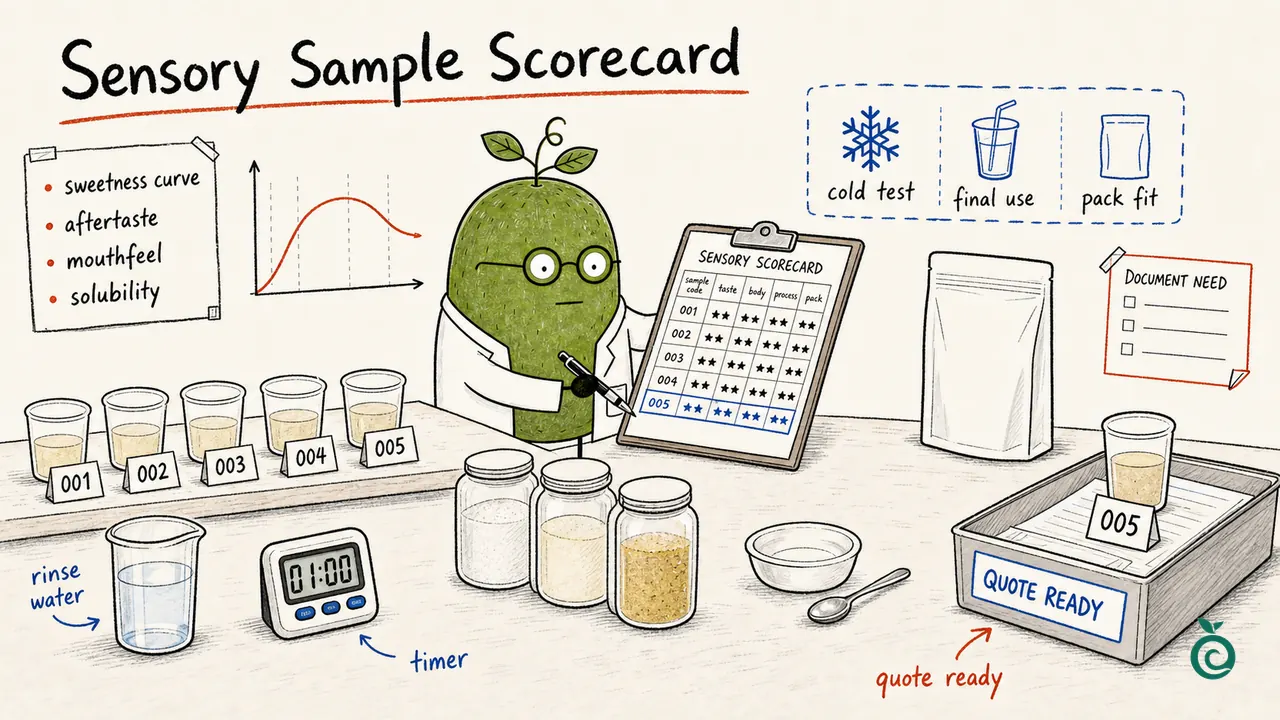
The Doctor illustration shows coded samples, individual notes and a later commercial handover. Its sample numbers, star ratings, 01:00 timer, selected cup and quote-ready label are illustrative, not test results, a ranking or a required tasting interval. A quotation still needs confirmation of the accepted material and relevant supply details.
Score in the final application
Water tasting is useful for screening, but the final decision should happen in the real formula. Tea, coffee, citrus drinks, protein powder, bakery, dairy, gummies and sauces can all change sweetness, bitterness, body and finish.
Use the same sample conditions
Prepare coded samples with the same serving size, water level, temperature, process condition and storage time. If one sample is tested cold and another is tested warm, the result is not a fair comparison. Record the actual commercial-material addition and any dilution or recipe changes. State whether the purpose is to compare fixed additions or adjust toward matched sweetness, and keep the actual addition for every coded sample. Those are different comparisons even when the base and serving condition are the same.
Use the scorecard or download the blank Excel record
Agree what the score means before panelists taste. An example scale is 1 = misses the agreed target, 3 = acceptable for another development round and 5 = meets the defined target. These are suggested anchors for a buyer record, not company test results. Keep descriptive notes beside the score; a number alone will not tell the supplier how to revise the sample. Weights should reflect the product decision. A dissolving powder may give preparation a higher weight; a chocolate spread may prioritize texture; a supplier shortlist may use document fit as a separate gate. Do not average a regulatory or safety failure into an otherwise attractive score. Define those non-negotiable items before using a weighted sensory comparison. The table below can be copied or printed. The free Excel record keeps the same six dimensions, with editable targets, scores, optional weights, observations and actions; ingredient, safety and document gates are recorded separately. No email is required.
| Dimension | Score (1–5) | Weight agreed before test | Observation / action |
|---|---|---|---|
| Sweetness curve | Enter score | Enter weight | Onset, peak and finish |
| Aftertaste | Enter score | Enter weight | Bitterness, cooling or linger |
| Mouthfeel | Enter score | Enter weight | Body and texture in the actual base |
| Solubility / preparation | Enter score | Enter weight | Method, particles and rest interval |
| Process fit | Enter score | Enter weight | Recorded heat and handling result |
| Packaging behavior | Enter score | Enter weight | Dosing, flow and storage |
Use one completed record per coded sample, panelist and checkpoint. Keep the trial/base revision, control code, preparation, serving condition, tasting sequence and pack or storage history identifiable. Inputs are blank, missing scores stay blank, and the workbook does not average, rank or approve samples automatically.
Separate target fit from intensity and liking
This suggested 1–5 scale records fit to an agreed target. It is not automatically a sweetness-intensity scale or a consumer-liking scale. Describe a stronger or longer sweet finish separately from whether that finish is wanted in the product. Agree the target wording and any weights before the comparison. Keep each person's notes and each observation checkpoint; do not replace an unrecorded dimension with zero or an attractive overall number. If you need a formal sensory study, agree its separate method and analysis rather than presenting this development record as a validated study.
Review decision gates outside the sensory score
Ingredient eligibility, required safety review and matching documents need their own status and evidence. A pleasant sample or a high target-fit score cannot close an unresolved gate. The Excel record uses blank status fields; record pass, review, fail or not assessed against the requirement you agreed.
| Gate | What to record | Next action |
|---|---|---|
| Ingredient / market fit | Selected composition, final market, requirement and review status | Identify the responsible review and unresolved condition |
| Safety / required review | Applicable product question, evidence and review status | Complete the required assessment separately from tasting |
| Required documents | Exact material/specification, requested file and review status | Match the file and version to the sample and proposed supply |
Turn feedback into supplier action
Useful feedback is specific: too sharp at the front, thin middle, bitter tail, slow dissolving, cloudy after storage, clumping in stick packs or weak flavor lift. That gives the supplier a path to adjust the next sample.
Use the notes to choose the next trial
Run the comparison with coded samples, the same preparation and a clear control. Do not tell the panel which sample is more expensive or which ingredient the supplier prefers. Record serving temperature and tasting sequence, and allow the team to describe both sensory and physical differences. A change in sweetness can make a flavor seem stronger or weaker, so keep the target sweetness visible in the notes. After tasting, separate repeated observations from one person’s preference. If the result is unclear, repeat the coded trial before changing the formula. An averaged score can hide a sharp aftertaste that matters to a particular market; retain the individual notes and the agreed acceptance criterion. Use one main adjustment for the next revision so the outcome remains interpretable. For storage and processing, repeat the same scorecard at the planned checkpoints and add the batch and package history. A score after immediate preparation cannot be reused as an end-of-life score. Photograph relevant physical changes and keep the time and method beside each result. When a candidate passes, preserve its version and connect it to the supplier specification, documents and quotation. The sample-testing workflow covers that handover sequence.
Use this before OEM packaging
For private-label jars, pouches, stick packets and retail boxes, the sweetener should also be checked for powder flow, clumping, serving consistency, label direction and pack appearance before production artwork is locked.
Connect sample choice to quotation
Start the discussion with the coded sample, actual base and preparation, observation and the adjustment you want to explore. The notes you already have can begin the next sample conversation; final quantity or finished artwork is not required. For a matching quotation after the material direction is accepted, confirm its formula or specification reference, final sales market, pack, estimated quantity and required files. Record any further sample question. A tasting preference alone does not define the material or finished pack being priced.
Common questions
Should the final sweetener decision be made in water alone?
Use water as an initial screen if helpful, then evaluate the real food or drink under the intended preparation, serving and checkpoint conditions. Keep that condition with the sample code so a water result is not reused as a finished-product result.
Discuss sample feedbackDoes a score of 5 mean the sample tastes most intense?
In the suggested template, 5 means it meets the agreed target. That is a different question from sweetness intensity or overall liking. Define the target before testing and retain descriptive notes on onset, peak, finish and any unwanted character.
Discuss sample feedbackWhat should I do with a missing score or an unused weight?
Leave it blank and record why the observation is missing or not applicable. Agree any weights before the comparison. The downloadable record has no automatic totals or ranking, so missing entries do not silently become zero or approval.
Discuss sample feedbackCan a good sensory score compensate for a failed ingredient or safety gate?
No. Keep ingredient/market fit, required safety review and matching documents as separate gates with their own status and evidence. Record unresolved actions even if the sample tastes acceptable.
Discuss sample feedbackCan fixed-addition and matched-sweetness results go on the same comparison?
Label them as different purposes and retain the actual addition of each material, any dilution and other recipe changes. Use the same base and recorded conditions for the comparison intended; do not hide a change of addition inside an apparently equal trial.
Discuss sample feedbackDo I need a set number of tasters or samples to use the record?
The template does not prescribe a panel size or replace a formal study. Use a manageable coded comparison with a named reference, keep one record per sample, person and checkpoint, and retain individual notes. Define the separate design if a formal sensory or consumer claim is needed.
Discuss sample feedbackWhat feedback helps Hengliyuan prepare the next sample discussion?
Send the code and material reference if known, real base, addition and preparation, serving/checkpoint conditions and specific observations. Describe the priority adjustment and any open ingredient or document question. Final quantity and pack can follow once the material direction is clearer.
Discuss sample feedback