
Sweetener selection
Stevia vs Sucralose: How Should a Food Manufacturer Choose?
Compare stevia glycosides and sucralose in real food: ingredient identity, sweetness profile, carrier needs, sample trials and market review.
Stevia glycosides and sucralose are high-intensity sweeteners, so a small ingredient amount can supply sweetness. Neither replaces the bulk of removed sugar on its own. The better choice depends on the exact grade, food base, target taste, label plan and destination market.
For a specific electrolyte powder or dressing, use the application guides below. This page helps an R&D or purchasing team select the first comparison samples.
Define which ingredients are actually being compared
“Stevia” can refer to different steviol glycoside preparations and compositions. Sucralose is a distinct high-intensity sweetener. The U.S. FDA treats sucralose as an approved food additive and notes GRAS notices for certain purified steviol glycosides; that U.S. classification cannot be transferred to another country or a different stevia preparation. Request the selected grade's identity, ingredient list, carrier, specification and production route where relevant. A generic label or supplier claim is too thin for a buying comparison.
Choose the first comparison from the buying brief
If the brief requires a plant-derived high-intensity sweetener, start with a steviol glycoside preparation whose identity and production route fit that brief. When artificial sweeteners are accepted, include sucralose as a candidate. Our preference is to narrow the sample list from those constraints first, then let the actual food comparison decide.
| Buying question | Steviol glycoside route | Sucralose route |
|---|---|---|
| What material is on offer? | Selected glycoside composition and specification, production route and any carrier or other sweeteners | Sucralose ingredient specification or the complete composition of a preparation or blend |
| Does it fit the ingredient plan? | Check the exact preparation against the plant-derived requirement and destination-market label plan | Include it where the project accepts an artificial sweetener; review the actual preparation and market conditions |
| Which tastes better here? | Compare the selected grade at matched sweetness in the actual base; record any bitter or lingering notes | Use the same base and sweetness target; record balance and aftertaste rather than assuming a universal winner |
| Which quote is comparable? | Exact commercial material, tested addition and quoted quantity/pack basis | The same defined purchase and serving basis; a blend price is not a pure-ingredient price |
A price per kilogram is only one input. Compare the cost of the actual commercial dose needed per finished serving, with currency, quantity, delivery terms and any carrier or bulk-replacement changes stated. A sweetness multiplier or a dose copied from another food does not establish that cost.
Taste both in the finished food
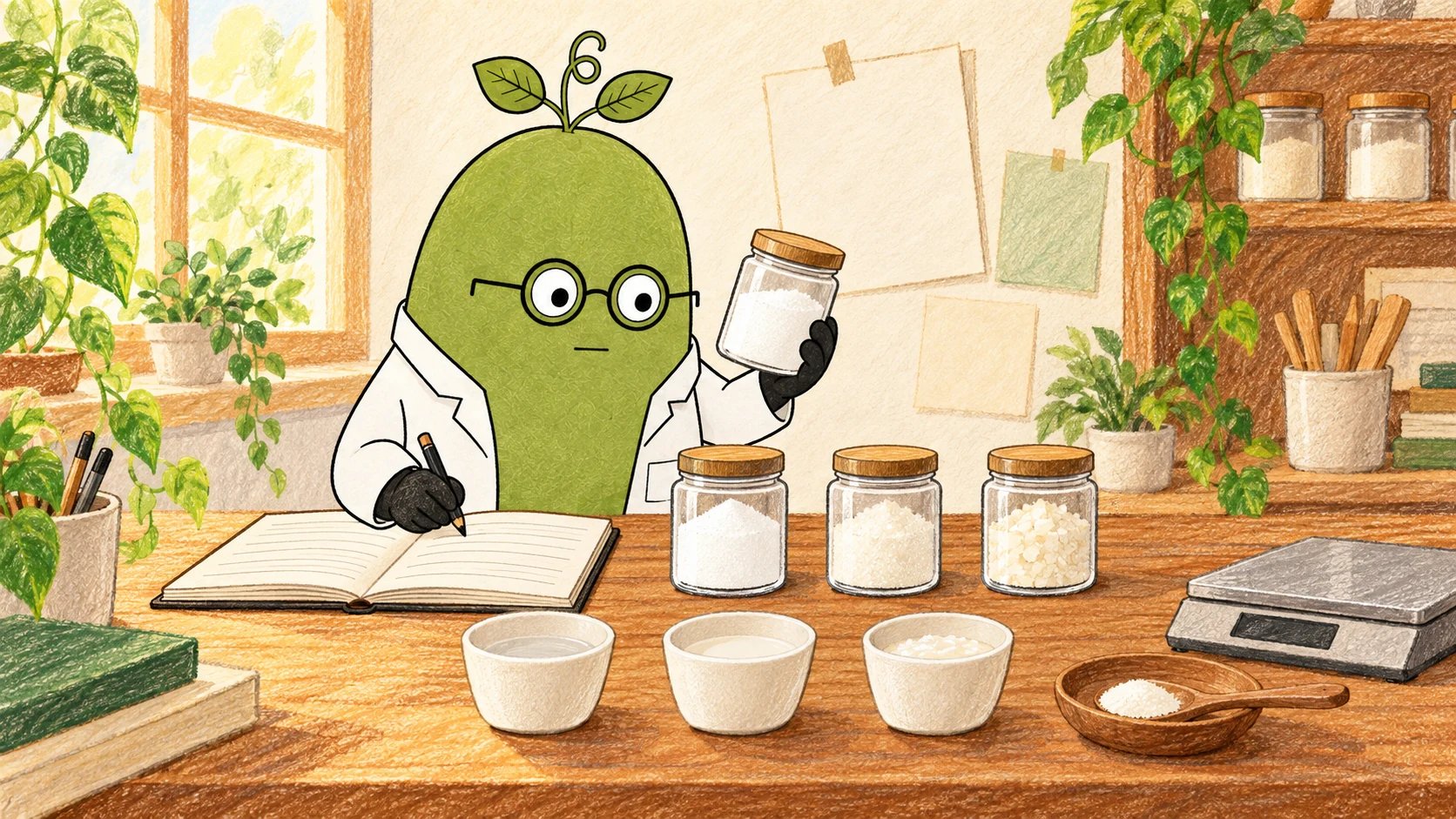
Use the same food base and process for each candidate. Adjust to the same target sweetness, then record onset, peak, linger, bitterness or other off-notes, and interaction with acid, protein, cocoa or fruit flavour. Taste again at the actual serving temperature and after the intended hold. If sugar removal also changes solids or mouthfeel, solve that as a separate formulation task. Increasing the high-intensity sweetener dose alone may make sweetness stronger without restoring body. Record commercial material mass, units and final-product basis. If a stock is used for accurate bench dosing, record its concentration and dilution, including added water. Keep a fixed-dose screen distinct from a matched-sweetness comparison, and state every sugar, carrier or solids change. Describe intensity separately from liking so the next adjustment has a clear purpose.
Treat processing and claims as product-specific
A successful bench taste is not a shelf-life result. Test the actual process and packaging before choosing either route. Heated applications need their own regulatory and stability review; do not infer a universal heat claim from a general sweetener comparison. Check the full formulation and target-market rules for ingredient declaration and any “natural” or sugar-reduction claim. A formulation choice and a label claim are different approvals.
Start with the food and the decision you need to make
Tell Hengliyuan the food type, market, current sweetener system, processing route, serving conditions and desired taste. Ask for the exact stevia and sucralose material identities, sample documents and any carrier information. Compare commercial terms only after both samples refer to defined purchasing items. A complete formulation or test sheet is not required for the first contact. Start with the food, intended market and taste or ingredient constraint; send the details you have. Packaging, estimated quantity, required documents and whether samples are needed can be clarified next. Confirm that the eventual sample, specification and quotation refer to the same material.
Common questions
Which should a manufacturer sample first?
Start from the ingredient brief. A plant-derived requirement points toward an appropriately identified steviol glycoside preparation. Where artificial sweeteners are accepted, compare sucralose as well. The exact grade, base and serving conditions decide the useful sample direction.
Discuss the comparison samplesAre all stevia preparations interchangeable?
No. Glycoside composition, specification, production route, carrier and any other sweeteners can differ. Keep the complete commercial identity and lot in the record; the word stevia is not enough to reproduce a trial or compare a quote.
Discuss the comparison samplesIs the same ingredient weight a fair taste comparison?
It is a fixed-dose screen, not proof of matched sweetness. Establish the dose of each identified material against the same sweetness reference in the same food, then compare the remaining sensory differences.
Discuss the comparison samplesDoes stevia always have more aftertaste than sucralose?
There is no useful universal ranking for every grade and formula. Record onset, peak, linger and off-notes at matched sweetness in the actual food. Keep intensity and liking as separate observations.
Discuss the comparison samplesCan either ingredient replace the body of sugar?
A high-intensity sweetener supplies sweetness at a small addition. It does not by itself replace the removed sugar mass, solids or mouthfeel. Record those formulation changes separately when interpreting the trial.
Discuss the comparison samplesIs the cheaper price per kilogram the cheaper option in use?
Not necessarily. Compare the identified commercial dose per finished serving, full composition and a consistent quotation basis. Include any carrier or bulk-replacement changes; a theoretical sweetness multiplier is not a measured dose.
Discuss the comparison samplesDoes an FDA reference approve our grade or finished food?
No. The linked overview distinguishes U.S. food-additive approval from GRAS and discusses certain steviol glycosides. Verify the selected preparation and intended use separately; that general overview does not approve a Hengliyuan grade, a finished-product claim or sale in another market.
Discuss the comparison samplesMust I finish the formula before asking about samples?
No. Tell us the food, destination market and the taste or ingredient constraint you want to resolve. Share what is known; the exact material, documents, sample quantity, packaging and quotation scope can be clarified together.
Discuss the comparison samples