
Read this guide in
Hengliyuan application and selection
Stevia vs. Sucralose in Reduced-Sugar Salad Dressing: How to Compare Samples
Compare stevia and sucralose in reduced-sugar dressing: matched-sweetness trials, vinegar and spice notes, texture and emulsion checks.
Steviol glycosides and sucralose are both candidates for reduced-sugar salad dressing. Start with the brand's ingredient requirements, then compare identified samples in the same dressing system.
For a stevia-derived sweetening direction, select the actual glycoside preparation and confirm its production route and label fit. Where sucralose is accepted, include it as another candidate. Identify whether each sample is a single ingredient or a preparation containing carriers or other sweeteners.
When the ingredient brief is still open, we recommend screening both directions in the first round. Compare flavor, appearance and actual cost in use before deciding which sample to carry forward.
Compare the actual preparations at matched sweetness
The same ingredient weight does not produce the same sweetness. Establish the dose of each identified material against the same reference in the intended dressing, then compare vinegar character, spices, finish and acceptance.
| Comparison | Steviol glycoside sample | Sucralose sample |
|---|---|---|
| Material identity | Glycoside composition, specification, production route, carrier and lot | Ingredient or blend identity, actual composition, carrier and lot |
| Sensory record | Sweetness intensity and liking; bitter or lingering notes; vinegar and spice balance | The same attributes and method, including any off-notes and lingering sweetness |
| Ingredient brief | Selected preparation fits the requested stevia-derived direction | Candidate where the project accepts sucralose |
| Market review | Exact preparation, full formula, food category and destination market | Exact preparation, full formula, food category and destination market |
Record the mass of commercial material on a consistent finished-product basis. If bench dosing uses a stock, record its concentration, dilution and added water. Keep fixed-dose screening distinct from a matched-sweetness comparison.
A dressing study separates appearance from overall liking
Duangsa et al. (2023) used rice-bran-oil dressing and fixed the sweetener products at 15% by weight. Thirty untrained participants used a nine-point hedonic scale. The commercial preparations were not matched for sweetness, and their exact purity and carriers were not established. These are selected means from Table 9; the study's 15% is not a recommended pure-ingredient dose.
| Attribute | Study sucralose product: mean [letters] | Study stevia product: mean [letters] | Within-row comparison |
|---|---|---|---|
| Appearance | 6.67 [b] | 4.80 [c] | Different row letters |
| Color | 7.53 [a] | 5.20 [b] | Different row letters |
| Smell | 6.60 [a] | 4.87 [b] | Different row letters |
| Overall flavor | 4.53 [d] | 5.27 [cd] | Shared letter |
| Texture | 5.93 [bc] | 5.40 [c] | Shared letter |
| Overall liking | 5.53 [b] | 5.13 [b] | Shared letter |
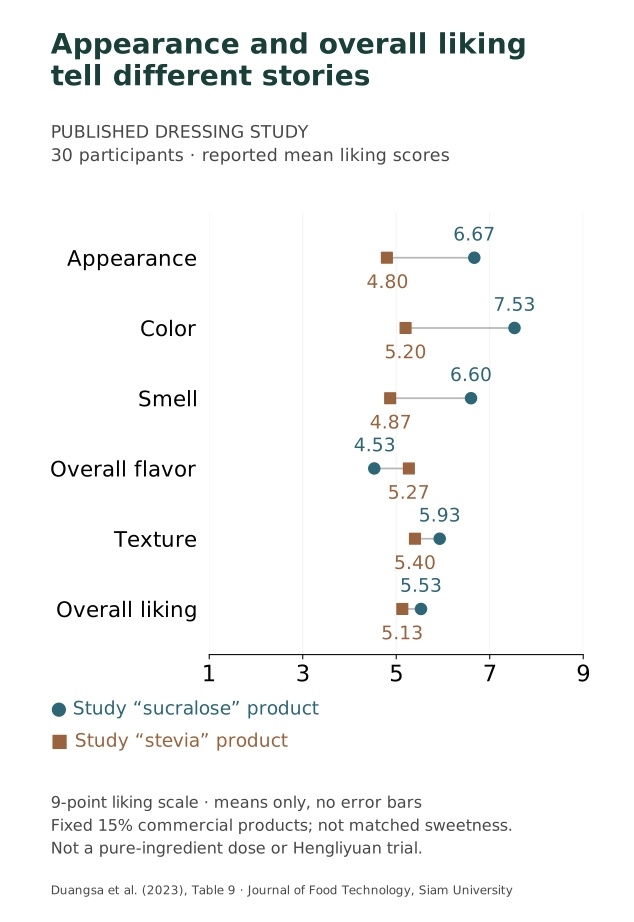
Original Duncan letters apply within each row (P<0.05): shared letters indicate no significant difference in that comparison. The plot shows means only, without error bars; we have not assigned a statistical meaning to the paper's undefined ± terms. These data do not establish a universal sweetener ranking.
Reb A, Reb D and Reb M need separate sample identities
Tao and Cho (2020) compared 0.1% Reb A, D and M solutions with 14% (w/v) sucrose using 126 participants. In-mouth sweetness and bitterness for D and M were not significantly different from sucrose, but their lingering sweetness was stronger. Immediate and lingering observations were taken 5 seconds and 1 minute after expectoration. This was an aqueous screen, not a dressing trial. Its sensory descriptor artificial does not identify an ingredient's production route. Use the exact glycoside preparation in the real dressing before choosing a grade or dose.
Keep the reference recipe and candidate bases distinct
Use the actual current sugar recipe as reference A when one exists; otherwise agree a reference and sweetness target. Prepare B and C with the same stated dressing system and process, keeping acid, salt, oil, emulsifier and spices controlled. Record sugar removal, bulk replacement, carrier and water changes explicitly instead of calling every formula identical.
| Sample | Purpose |
|---|---|
| A: reference | Actual current formula or agreed reference, with its full composition and preparation recorded |
| B: steviol glycosides | Identified preparation adjusted to target sweetness in the stated candidate base |
| C: sucralose | Identified ingredient or blend adjusted to the same target in that candidate base |
Compare at the same serving temperature and defined checkpoints. Record sweetness intensity and liking, sweet–sour balance, vinegar irritation, lingering/bitter notes, and onion, mustard or herb expression. Check coating on the intended food as well as the dressing on its own. Record viscosity, color, water or oil separation using stated methods, units and sample preparation; keep physical measurements separate from sensory liking. Note whether a stored sample was stirred before testing. A fresh or refrigerated cup does not establish shelf life or microbiological safety.
Choose the next change from the first result
Keep the reference and preparation record. Change a defined factor in the next round so a taste or appearance difference remains interpretable.
| First result | Next comparison |
|---|---|
| Steviol sample approaches the target but lingers | Compare a defined glycoside composition, dose or blend direction at the stated sweetness target |
| Sucralose sample tastes suitable but separates | Check the actual preparation, carrier, solids, emulsifier, water and process records before assigning a cause |
| Both directions are acceptable | Compare actual commercial dose cost on the same finished-product and quotation basis, then complete material and label review |
| Neither direction works | Identify the main gap: sweetness, acid balance, finish or texture; revise one defined part of the sample plan |
An emulsion test is a separate decision
The dressing paper also reports low emulsion stability for its sucralose preparation. Its method heated 15 g samples at 80°C for 30 minutes, cooled them and centrifuged them at 4,000 rpm for 10 minutes. That stress test is not a shelf-life test and does not show that sucralose inherently causes separation. For the actual product, agree the physical test, storage conditions and acceptance criteria with the project team. Recheck material composition and the complete emulsion system when the taste works but the pack separates; changing the sweetener alone may leave the cause unresolved.
Start with the dressing and the taste gap
Tell Hengliyuan the dressing type, destination market and the main issue: sweetness, vinegar/spice balance, lingering notes, coating or separation. Share the current sugar direction, ingredient restrictions, oil–water system and process details you have. A complete formula or completed trial sheet is not required to begin. Clarify whether the request is for an ingredient or a blend and ask for the exact material identity, composition, specification and available sample documents. Packaging, estimated quantity and quotation conditions can follow. Keep the sample and quoted purchasing item matched.
Common questions
Which direction should we try first?
Follow the ingredient brief. For a stevia-derived direction, identify the glycoside preparation and its production route. Where sucralose is accepted, include it as a candidate. If the brief is open, screen both in the same stated dressing system.
Discuss the dressing sampleIs equal ingredient weight a fair sweetness comparison?
It is a fixed-dose test, not proof of matched sweetness. Establish each identified material's dose against the same reference in the actual dressing and record any carrier, water or bulk changes.
Discuss the dressing sampleCan we use the study's 15% as a pure-sweetener dose?
No. It was the fixed addition of the study preparations, without a matched-sweetness design or complete purity/carrier disclosure. It is not a dosing recommendation for pure sucralose or a selected steviol glycoside.
Discuss the dressing sampleDid the dressing study prove sucralose tastes better overall?
No. Its sucralose and stevia preparations shared the same statistical letter for overall liking, even though appearance, color and smell differed. The result cannot rank every grade or predict the result in another dressing.
Discuss the dressing sampleDoes the aqueous Reb M study select our dressing grade?
No. It helps distinguish glycoside identities and lingering sweetness under its aqueous method. Confirm the selected material, dose and finish in the actual acid, oil, spice and emulsifier system.
Discuss the dressing sampleIf the dressing separates, is the sweetener necessarily responsible?
No. Review the exact preparation, carriers, solids, water, emulsifier and processing history. A heat-and-centrifuge result for one study formula is not proof of the cause in your pack or of shelf life.
Discuss the dressing sampleWhat should be recorded after refrigeration?
Record the actual temperature, time, pack, sample preparation and whether the dressing was stirred. Separate visible water or oil separation and physical readings from taste intensity and liking.
Discuss the dressing sampleCan we contact you before the formulation is finished?
Yes. Start with the dressing type, market and main taste or physical gap. Share the details you know; material identity, sample documents, packaging, quantity and quotation scope can be clarified next.
Discuss the dressing sample