
Read this guide in
Hengliyuan application and selection
Sucralose in Drinks & RTD Beverages: Full vs Partial Sugar Replacement Guide
Sucralose in RTD beverages: decide full vs partial sugar replacement, single vs blend, and build a sample comparison plan.
For a ready-to-drink beverage, first decide whether sucralose will replace all or only part of the sucrose, then whether it will be used alone or in a blended sweetener. Those choices define the formulation work and the sample comparison plan.
Hengliyuan currently supplies one powdered sucralose specification in 25 kg bags. Beverage manufacturers should review the product documentation, then confirm performance in their own formulation and process.
Replace all sucrose, or only part of it?
Start with the project objective. Partial replacement can retain some of the sweetness base and formulation functions of sucrose. A full replacement needs an assessment of sweetness, mouthfeel and product structure after the sucrose is removed. Sucralose is a high-intensity sweetener. It replaces the sweetness supplied by sucrose; it is not a same-weight substitute. Sucrose also affects beverage solids, mouthfeel and other formulation attributes. The higher the replacement level, the more closely those changes need to be assessed against the product target.
| Replacement route | What the trial must establish |
|---|---|
| Partial sucrose replacement | How much sucrose remains, whether the adjusted sweetness fits the base and finish, and whether mouthfeel meets the product target |
| Full sucrose replacement | Can the target sweetness be reached? After sucrose is reduced, do mouthfeel and overall flavour require adjustment with other ingredients? |
It is therefore more useful to state how much sucrose the project aims to reduce than simply to request sucralose. Keep the existing formulation as a control when there is an established product. For a new product, define the target sweetness, mouthfeel and formulation constraints first.
Use sucralose alone, or in a blend?
A single-sucralose approach keeps the ingredient list and dose calculation straightforward, and is a practical starting point for evaluating sweetness and aftertaste in an existing beverage. If it meets the product target, there is no reason to add another sweetener merely to make a blend. If the sweetness is acceptable but onset, sweetness profile, finish or overall mouthfeel does not fit the intended positioning, compare a blended sweetener. The contribution of any added sweetener must be assessed in the specific formulation; it cannot be assumed in advance that one ingredient will improve taste. For a blend, confirm the full ingredient list, component ratios, target sweetness and actual addition rate, then recheck ingredient-list and target-market requirements. A blended sweetener does not use the same addition rate as neat sucralose powder.
Why can results in water differ from results in the finished beverage?
Water has a simple taste profile, so sucralose sweetness is easy to assess in isolation. In the finished beverage, acidity, bitterness, aroma, protein and other ingredients all affect the overall sensory result. A water test is useful for initial screening. Select the replacement level and sweetener combination from their performance in the target beverage. If a current product or established formulation exists, retain it as the control instead of judging sweetness changes from memory. Change only one main variable in each comparison where possible. If sweetener, acidity and flavour are changed together, the source of a sensory difference is difficult to identify.
Set sweetness first, then assess the finish
Insufficient sweetness can distort other sensory judgements, while excessive sweetness can exaggerate lingering sweetness. Set the target sweetness first, then record the following three stages:
| Evaluation stage | Key observations |
|---|---|
| Initial taste | Whether first-sip sweetness reaches the target and fits the product positioning |
| During consumption | Whether sweetness is balanced with acidity, bitterness, aroma and the inherent flavour of the ingredients |
| Finish | Whether sweetness lingers appropriately and whether any aftertaste needs adjustment |
A note such as "sweetness is on target, but the finish is too long" gives a clearer next trial direction than "it does not taste good". It directs the next round toward the sweetness curve and overall formulation rather than leaving the adjustment unclear.
What should be assessed in different RTD beverage types?
The type of beverage determines the focus of evaluation, but you cannot judge whether sucralose is suitable based on the category name alone.
| Beverage type | What to compare |
|---|---|
| Water-like beverages | Is the sweetness clean, and does the finish fit the light product profile? |
| Tea and coffee beverages | Does sweetness mask tea or coffee aroma, or amplify bitterness? |
| Fruit and acidic beverages | Are sweetness and acidity balanced, and does the fruit aroma remain clear? |
| Protein beverages | Is sweetness balanced with the inherent flavour and aroma of the protein ingredient and the overall mouthfeel? |
| Beverages with functional ingredients | Whether the actual functional ingredients change the sweetness balance, original flavour or finish |
A beverage may span more than one category. For a protein coffee, for example, assess coffee flavour, the inherent flavour of the protein ingredient and sweetness together in the complete formulation. Results from black coffee or a standard protein drink cannot simply be transferred.
After an initial pass, assess processing and consumption conditions
A freshly prepared sample shows sensory performance only under the conditions at that time. RTD beverages also undergo processing, filling, storage and consumption, so the project should assess those conditions as relevant. Record whether the beverage is heated, when sucralose is added, and whether the finished product is consumed at ambient or refrigerated temperature. Evaluate a chilled product at its target drinking temperature and keep ambient and refrigerated results separate. If taste, colour or appearance changes after processing or storage, investigate the complete formulation, process and packaging individually. One observation does not establish that sucralose caused the change. An acceptable freshly prepared sample does not demonstrate finished-product shelf life.
Start with the beverage and the sample question
Start with the beverage type, intended market and the taste or replacement problem. If a formula already exists, share the current sweetening approach and whether the goal is full or partial sucrose replacement. You can contact Hengliyuan before the complete formula or test record is ready. For the sample discussion, add known ingredient constraints, target sweetness, drinking temperature, heat treatment, filling, packaging and intended storage. Existing sample observations help distinguish insufficient sweetness, an overly long finish, flavour masking and a processing or storage change. Hengliyuan can discuss the current sucralose powder or a blend, matching product documents and sample and purchase requirements. The 25 kg figure is the ingredient bag size, not the dose for a beverage batch. Add estimated quantity, document and sample needs where known.
Acidified RTD drinks: record acidity and process together
Record the actual pH, acid system, titratable acidity where relevant, sweetener concentration, heating or hold conditions and planned storage for the trial. Compare the complete drink before and after processing and at storage checkpoints. Keep sweetness and flavour changes separate from colour, haze or sediment. If the investigation concerns sucralose concentration, agree a suitable analytical method; sensory change alone does not prove chemical degradation. A result from one acidic drink does not validate another pH, process or shelf life.
Sucralose versus aspartame in beverages
Choose against the drink’s process and sensory target. FDA describes aspartame as losing sweetness on heating; this matters when designing the addition stage and heat treatment. Aspartame also requires a phenylalanine statement for US labels. Sucralose is a different purchasing and dosing item, so an equal powder weight is not an equal-sweetness comparison. Compare the actual grades at the same sensory target in the complete drink. Record acidity, heating, storage temperature, onset and finish, and analyse sweetener concentration if the decision concerns retention during storage. A refrigerated drink and a heat-processed ambient product need different evidence. A blend must be tested as its own complete composition, rather than inheriting either ingredient’s single-material result.
Sucralose versus acesulfame K in beverages
Acesulfame K and sucralose can both be evaluated for a heat-processed drink, but neither ingredient name guarantees the intended taste or storage result. EFSA’s 2025 Ace-K review describes a carbonated lime-lemon model stored at three temperatures for 60 days; loss was reported under the warmest condition. This is a reason to include temperature in the comparison, not a universal degradation rate for every beverage. Taste single-material and blend candidates at the agreed sweetness, recording onset, lingering sweetness and any bitter notes separately. Keep composition and actual dose visible, then compare cost at the accepted dose with the same quotation basis. Confirm the intended food category and label requirements for each candidate. This guide does not establish a Hengliyuan Ace-K supply specification or publish a fixed blending ratio.
One beverage study shows why storage conditions matter
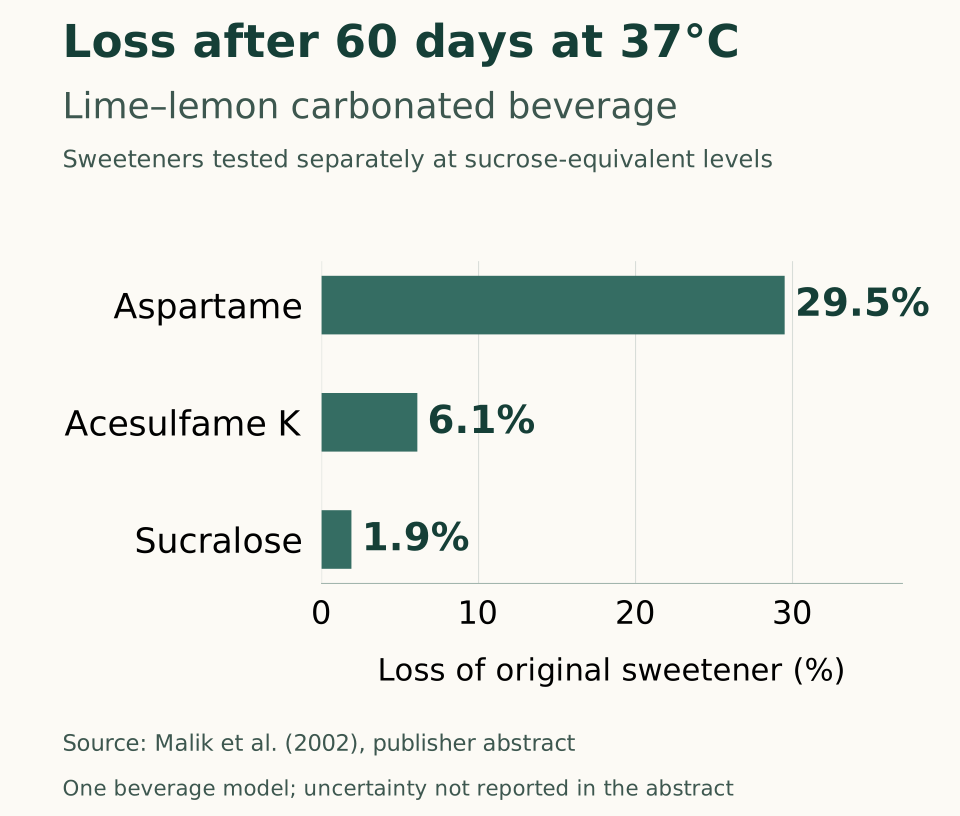
Malik et al. (2002) tested the sweeteners separately in a lime–lemon carbonated drink at sucrose-equivalent levels, using HPLC. The publisher abstract reports these losses after 60 days at 37°C; exact doses, pH values, sample count and uncertainty are not given in the abstract.
| Sweetener | Reported loss (%) |
|---|---|
| Aspartame | 29.5 |
| Acesulfame K | 6.1 |
| Sucralose | 1.9 |
Sucralose in dairy drinks: test the complete milk system
Sucralose can be evaluated in dairy drinks, but preserving sweetness does not by itself preserve the milk product. A published cardamom-milk study used sucralose with inulin and compared pasteurised refrigerated drinks with sterilised ambient drinks. The low-calorie drink used powdered commercial sweetener tablets with inulin, rather than neat sucralose alone. It tracked physical, sensory and microbiological changes, so its finished-product storage outcome cannot be attributed to sucralose alone. EFSA’s 2026 review also cites sucralose retention in a refrigerated fermented-milk model. That finding concerns its stated matrix and storage conditions. In your milk drink, keep protein, fat, stabilisers, minerals and process fixed, and record viscosity, heat-related aggregation, sediment, browning, sweetness and aftertaste separately. Check microbial quality and packaging through the intended shelf-life study; use an appropriate assay when sucralose retention itself is the question.
Common questions
How should full versus partial sugar replacement be chosen?
Define the reduction goal and the sucrose functions that the finished drink must retain. Compare the routes against an existing control at the intended sweetness, including mouthfeel, flavour and performance through the real process.
Discuss beverage samplesShould sucralose be used alone or in a blend?
If the single ingredient meets the product target, continue verifying that route. Consider a documented blend when onset, finish, flavour balance or mouthfeel needs adjustment. Confirm every ingredient, its ratio and the actual commercial dose before comparing samples.
Discuss beverage samplesWhy can a water tasting differ from the finished drink?
Acidity, aroma, protein, solids and serving temperature affect the sensory balance. Use water for initial screening, then compare the candidates in the complete drink with the same control and preparation conditions.
Discuss beverage samplesWhat should we send before requesting a beverage sample?
Start with the application, intended market and the problem; a full formula is not required for the first contact. Add the current sucrose level, replacement goal, relevant ingredients, process, storage, packaging, quantity and document needs where known.
Discuss beverage samplesHow should sucralose and aspartame be compared in a drink?
Compare identified materials at the same sensory target through the intended process and storage. FDA describes aspartame as losing sweetness when heated, and US food labels containing it need a phenylalanine statement. Equal powder weights do not establish equal sweetness.
Discuss beverage samplesCan sucralose be swapped for acesulfame K at the same dose?
Do not assume the same commercial dose or taste. Compare the whole drink at the accepted sweetness, document any blend composition and check the food category and label requirements for the intended market.
Discuss beverage samplesDoes sweetness retention prove dairy-drink shelf life?
No. Milk composition, heat treatment, viscosity, aggregation, browning, microbial quality and packaging require their own checks. Use a suitable assay if the question is sucralose concentration; taste alone cannot establish chemical retention.
Discuss beverage samplesCan a published storage result set the shelf life of our beverage?
It can help identify conditions worth testing. Establish the result in your own formulation, process, packaging and intended storage, with sensory, physical, chemical and microbiological outcomes assessed as relevant.
Discuss beverage samples