
Read this guide in
SAMPLE TESTING CHECKLIST
Natural Sweetener Samples: A Buyer Testing Checklist for Beverages and Bakery
Compare sweetener samples in your actual drink or bakery recipe. Use separate trial records for taste, processing and storage, then send a useful revision brief.
Judge a sweetener sample in the product you plan to sell, against a reference you already understand. Our factory view: a promising first taste is a reason to continue the trial, not a reason to approve the production order.
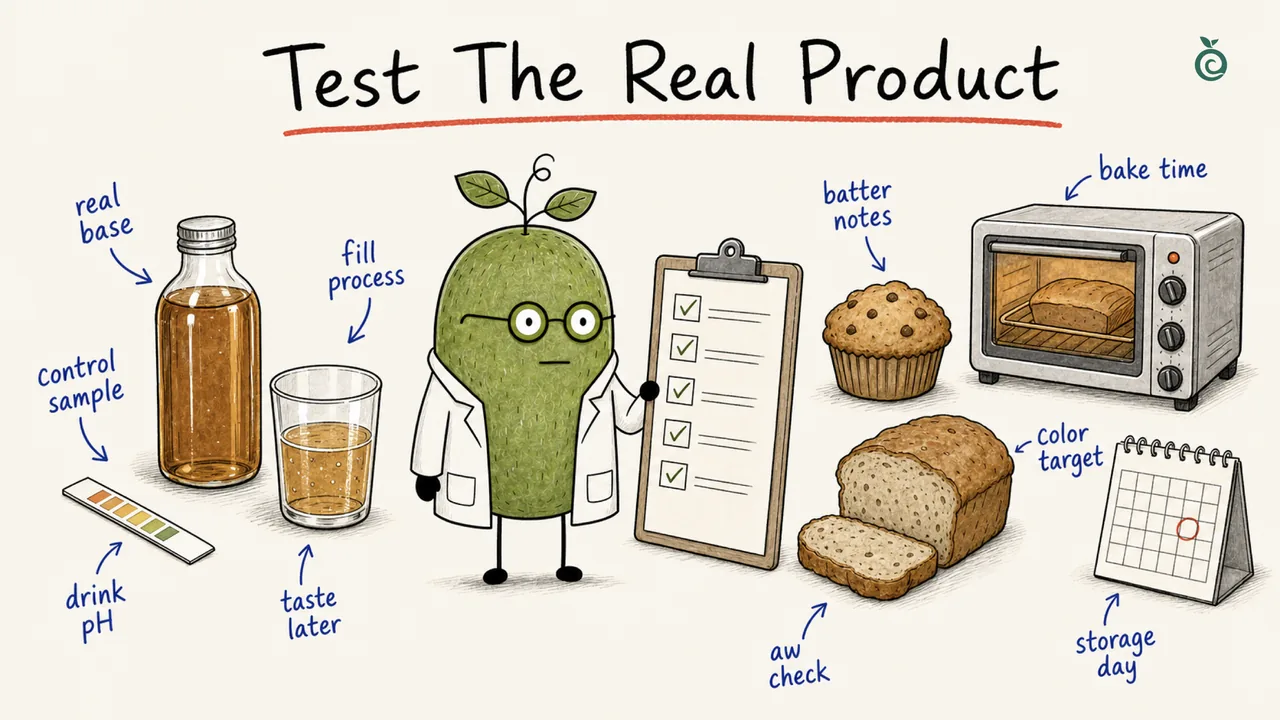
A useful first trial can be small. Keep the base and serving conditions comparable, record what changed, and decide in advance which results matter. Use the beverage and bakery records below for monk fruit, stevia, allulose-supported or custom blends; they are working checklists, not validated formulas or shelf-life approvals.
Start with one product question
Write one outcome the trial must answer. For example: does the candidate keep a clean sweetness after hot fill in an acidic fruit drink, or can it reduce sugar in a muffin without excessive browning or a dry bite? A focused question prevents a team from judging several unrelated products with one quick tasting.
Build the right controls
Keep a full-sugar, current formula or current commercial product as a reference where possible. Change one sweetener direction at a time in the same real base. Record the sample code, production date, intended use level, key process conditions and any other formula change. Do not compare a water solution with a finished bakery product and call it an equivalent test. For a taste comparison, bring candidates toward the same sweetness target and record the dose used. Equal grams of different sweeteners need not give equal sweetness. If the dose or bulking system changes, record that too: the comparison now includes those formula differences. Give each candidate a neutral sample code and serve it at the same temperature as its reference.
Beverage checklist
Capture product type, pH, acid system, flavor, protein or mineral load, Brix or solids when relevant, heat treatment, filling method, packaging, light exposure and storage target. At each checkpoint, score color, clarity or sediment, first sweetness, peak sweetness, lingering sweetness, bitterness or off-note and overall balance.
| Beverage trial field | Record for each sample | Compare with the reference |
|---|---|---|
| Identity and dose | Sample code, batch, ingredient form and amount in the full recipe. | Same base and stated sweetness target. |
| Base and processing | pH, acid/flavour system, protein or minerals, heat treatment and filling. | Which condition changed between trials? |
| Tasting conditions | Serving temperature and time since processing. | First sweetness, finish, bitterness and overall balance. |
| Physical observations | Colour, clarity, sediment and any separation. | Record the observation before naming a cause. |
| Storage checkpoint | Date, elapsed time, packaging and actual storage conditions. | Taste and appearance at the same checkpoint. |
Keep the original observations, even when a candidate tastes good overall. “Sweet enough, but a bitter finish after processing” gives us more to work with than “not suitable.”
Bakery checklist
Capture the bakery format, batter or dough handling, product moisture target, bake time and temperature, surface and core temperature if available, package and storage window. Score color, volume, crumb or bite, hardness or softness, moisture, water activity where available, sweetness, aftertaste and the same product again after storage.
| Bakery trial field | Record for each sample | Compare with the reference |
|---|---|---|
| Recipe and solids | Sample code, sweetener dose, added water and any bulking change. | Identify changes beyond sweetness. |
| Mixing and baking | Dough/batter handling, piece size, oven settings and bake duration. | Use comparable pieces and equipment conditions. |
| After cooling | Cooling time, colour, volume, crumb/bite and sweetness. | Taste at a defined stage, not hot versus cooled. |
| Moisture and texture | Moisture or water-activity readings when measured; softness or hardness observations. | Keep measured values separate from tasting descriptions. |
| Storage checkpoint | Package, storage conditions, date and elapsed time. | Repeat the texture and taste comparison on stored samples. |
A softer bite does not establish water activity or shelf life. If those measurements decide the purchase, agree on the test method and acceptance requirement with the team responsible for the finished product.
Choose storage points before tasting
Set checkpoints before making the samples and use the same schedule for the reference and candidates. For drinks, include a check after the intended process and later points relevant to the planned storage conditions. For bakery, define the cooling point and repeat the comparison during the intended packaged-storage window. There is no universal day-three or day-seven pass. A short sensory screen helps choose the next candidate; finished-product shelf-life and safety validation need their own plan.
Turn the score into a supplier decision
Shortlist the sample when taste, process behaviour and storage observations meet the criteria you set. Keep a candidate on hold when a required measurement or market check is still missing. If the result needs work, send the sample code, dose, process, serving or storage condition and the specific difference from your reference. For example: “Sample B reaches the sweetness target, but the finish is too long after hot fill.” Or: “Sample C tastes right after cooling, but the packaged crumb firms faster than our control.” These are examples of useful feedback, not results from a Hengliyuan trial.
Technical references
Benucci, Lombardelli and Esti review how natural sweeteners affect sensory and textural properties across food applications (published online in 2024; journal issue 2025). It supports evaluating more than sweetness alone. The trial fields above are our practical recommendations; the paper does not validate this checklist or set acceptance limits for your product.
Review note
Reviewed October 16, 2026. Confirm the selected ingredient documents and target-market requirements before purchase. Keep sample screening, production approval and shelf-life validation as separate decisions.
Common questions
Should we compare samples in water first?
Water is useful for an initial taste screen. Make the selection in the actual drink, dough or batter, where processing and the rest of the formula can change the result.
Discuss your sample trialCan one scorecard cover both beverages and bakery?
Use the same project identity and sample codes, but separate the application records. A clear beverage and a soft crumb need different observations and measurements.
Discuss your sample trialShould every sample use the same dose?
Not when their sweetness differs. Record the dose needed for your sweetness target and note any changes to water or bulk. Equal-dose and equal-sweetness tests answer different questions.
Discuss your sample trialHow long should sample storage be checked?
Choose checkpoints that fit the intended product, package and storage conditions. Same-day tasting can screen candidates, but it cannot establish the finished product’s shelf life.
Discuss your sample trialWhat should buyers send before asking for samples?
Start with the target market, product type and the taste or processing issue. Add the known recipe context, packaging, estimated quantity and required documents. You can contact us before every detail is settled.
Discuss your sample trial