
Read this guide in
FRUIT BEVERAGE VALIDATION SCORECARD
Fruit Juice Formulation: Sweetness, Aroma & Heat Validation Scorecard
Compare fruit beverage samples against a matched control. Record sweetness, aroma, heat history and storage separately, with a free downloadable trial sheet.
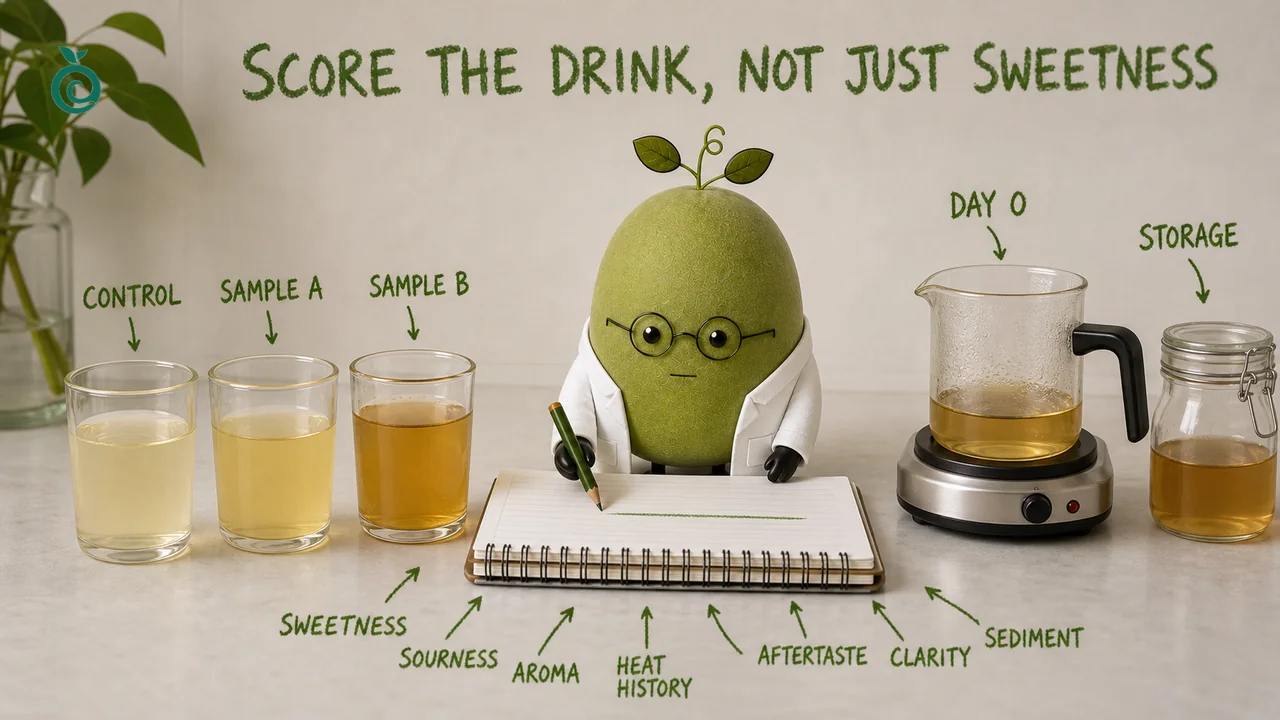
Our rule for a fruit beverage trial: keep an unchanged control and make the next decision from the failed requirement, not an average score. A candidate can match sweetness yet mute fruit aroma, or taste right before heating and differ after cooling. Record those outcomes separately in the actual fruit base.
Reuse the headings for NFC drinks, concentrate or reconstituted beverages and flavored fruit drinks, but set the method and decision criteria for the actual fruit base, process, package and target market.
What should the scorecard define first?
Identify the beverage: NFC juice, reconstituted juice, concentrate at its intended dilution, or a flavored fruit drink. Record the base recipe and batch, sample codes, control sweetener, candidate amount, final batch size and every other formulation change. Agree the desired result before tasting. A clear flavored drink and a cloudy juice need different appearance expectations.
Record the sensory comparison without hiding a failed row
Use the same base, preparation and serving temperature for the control and candidate. Record the tasting order and change it for a repeat comparison when practical. Descriptive observations are useful; if your team uses numbers, define the scale and anchors before testing. Do not add unrelated attributes into an automatic pass score.
| Observation | Matched control | Candidate and next question |
|---|---|---|
| Sweetness onset and peak | Describe when sweetness appears and its strongest point. | Compare timing and intensity separately. Is either outside the agreed target? |
| Sourness and balance | Describe the acid impression in this base. | Record what changed without assuming that the acid amount changed. |
| Fruit aroma | Record opening aroma and in-mouth character separately. | Note muted, cooked or other unwanted notes and when they appear. |
| Finish and body | Record lingering taste, aftertaste and mouthfeel. | Identify the specific difference that needs another sample. |
Record measured Brix, pH or titratable acidity separately with the method and conditions. They are not interchangeable measurements or substitutes for the sensory comparison. Leave an unmeasured field blank.
When should aroma be scored?
Keep opening aroma, in-mouth fruit character, aroma release after swallowing and any cooked, stale or muted note as separate rows. If the drink contains an essence or flavor system, record the addition point and real-base result rather than approving it from the bottle smell alone.
Which process and physical checks belong in the record?
Write the heat history, fill or cooling condition, mixing order and observation time. Add clarity or cloud, visible sediment, separation, color change and re-mixing behavior when they matter to the project. A process note is a test condition, not a claim that the beverage is stable or safe.
Keep process and storage checkpoints separate
Use a separate paired record for each checkpoint. Keep the serving temperature and pour size matched within each comparison. A warm processed sample compared with a cold control leaves temperature mixed into the result.
| Checkpoint | Conditions to record | Decision supported |
|---|---|---|
| Prepared beverage, before the intended heat step | Base, dilution, mixing order, sample codes and serving temperature | Screen the initial sweetness and fruit character. |
| After the intended process and cooling | Actual heat history, fill/cooling conditions, package and observation time | Check whether the sensory and physical result still meets the brief. |
| Defined storage checkpoint | Elapsed time, actual storage conditions, package and opening history | Record changes in taste, aroma, color, cloud, sediment or separation. |
Use the checkpoints required by the project; this table does not prescribe a heat treatment or storage schedule. A sensory match after one checkpoint does not establish microbiological safety or shelf life.
How should a failed row shape the next sample?
If sweetness misses the target, keep the fruit base and process unchanged while testing the next sweetener direction. If fruit character or acid balance changes, record that failure even when sweetness passes. Review the relevant flavor or acid variable in a separate comparison. For sediment or separation, keep the sensory record but investigate the base, mixing, process and packaging conditions. Change one planned variable at a time where practical, and document any unavoidable changes.
Download the existing beverage trial record
The free beverage trial Excel already includes control and candidate fields for fruit base, flavor/acid system, pH, Brix, heat history, storage, sensory observations and the next decision. Use a separate copy for each base and checkpoint; mark the coffee-only row not applicable for fruit drinks. No email is required.
Use the aroma field for separate opening and in-mouth notes, and keep supporting photos or detailed test records alongside the sheet. Unknown is not zero. There is no recommended dose, universal pass score or automatic shelf-life conclusion in this blank record.
Choose a fruit-juice sugar-reduction direction
Screen the proposed sweetener in the real juice base, at the intended dilution and acidity. Compare partial and fuller sugar replacement separately because removed sugar can change body as well as sweetness. Keep flavor and processing fixed while adjusting the sweetener direction, then repeat after the intended heat process and storage. Review the full composition and destination-market use before making a finished-product claim.
Review note
Reviewed October 16, 2026. This is our practical trial-record method, not a validated universal scoring standard. Define acceptance criteria for the actual beverage and intended use; keep sensory, analytical and safety decisions distinct.
Record these fields before comparing fruit beverage samples
- Beverage lane and real fruit base
- Current or sugar-containing control
- Sweetness, sourness and aftertaste
- Opening and in-mouth aroma
- Brix or solids and acidity method
- Heat history, fill and cooling condition
- Clarity, cloud, sediment or separation
- Storage checkpoints and package observations
Common questions
What makes two fruit beverage samples comparable?
Use the same actual base and a clearly identified control. Record sweetener amounts, final batch size, processing, serving conditions and every other change. Compare each checkpoint separately.
Discuss this requestShould I average sweetness, aroma and appearance into one score?
We would keep the requirements separate. A good average can hide an aroma failure or unwanted sediment. Define the required result for each attribute, then record the failed requirement and next action.
Discuss this requestDoes matching Brix mean matching sweetness?
Do not use Brix alone to approve the taste. Record the measurement method and conditions alongside the matched sensory comparison; the beverage base and sweetener system still matter.
Discuss this requestWhen should I assess fruit aroma?
Record opening aroma and in-mouth fruit character separately, then note the finish and any unwanted character. Repeat under matched conditions after the intended process and at the defined storage checkpoints.
Discuss this requestDo I need a new Excel for every checkpoint?
Use a separate copy of the same trial sheet for each base and checkpoint. Label sample codes, elapsed time and conditions clearly so an immediate result is not mistaken for a stored-sample result. The existing sheet is free to download without email.
Discuss this requestWhat should I send for a sweetener sample discussion?
Send the fruit base, current sweetener, main taste issue, intended process and target market. Add packaging, expected quantity, required documents and sample needs where known. Sharing the completed record is optional; you can contact us with the details you already have.
Discuss this request