
Read this guide in
BEVERAGE SAMPLE TESTING
Sweetener Testing for Fruit Juice and Coffee Beverages: Sample Guide
Plan separate sweetener trials for coffee and fruit drinks. Compare the actual base, serving conditions, taste and storage with a free Excel record.
A sweetener that works in coffee is a candidate for a fruit drink, not an approved solution. Our approach is to keep a control in each actual beverage base and make a separate decision for each serving and storage condition.
Use this guide to plan those comparisons before requesting samples. Coffee bitterness and roast character need their own observations; fruit acidity and aroma need theirs. The aim is to identify the next useful trial, not to declare one ingredient the winner across every drink.
Download the blank beverage trial record
Use a separate copy for each beverage base and observation condition. The Excel keeps control and candidate side by side, with fields for preparation, sweetness timing, base character and the next trial. Download directly without email or registration. Completing or sharing it is optional.
Test coffee and fruit drinks in their own bases
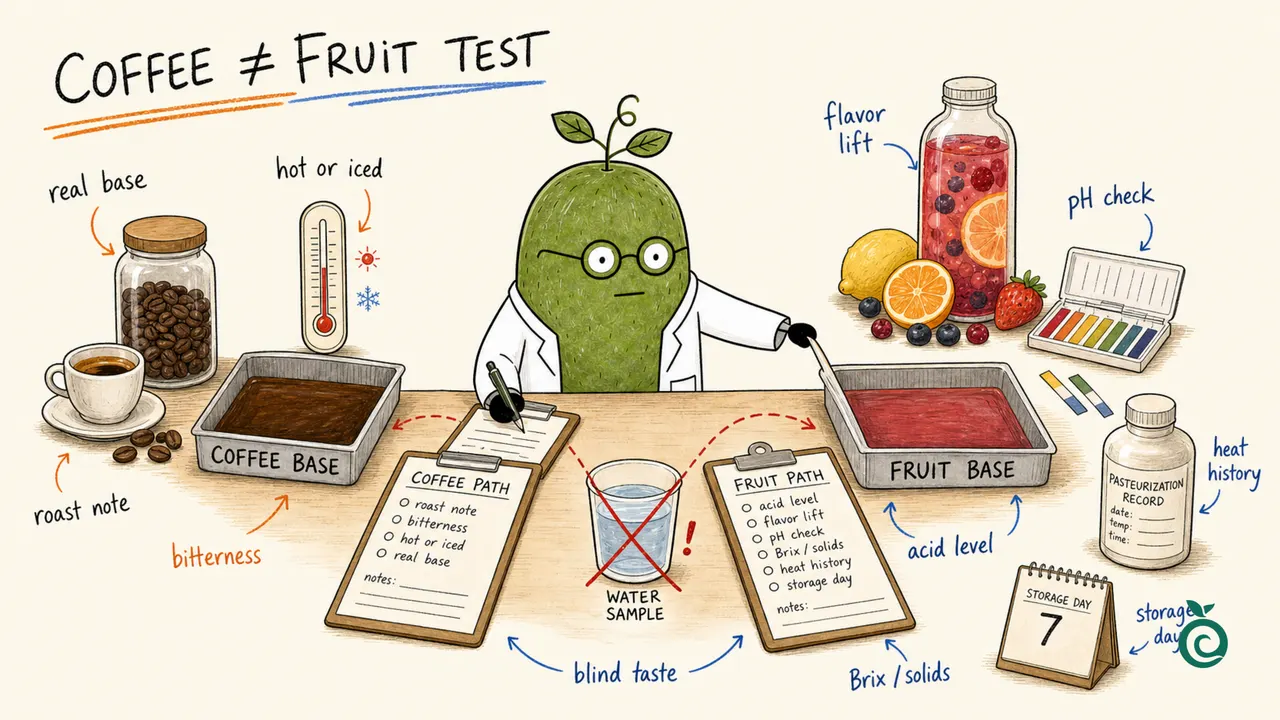
Treat them as separate applications. A coffee result does not approve a fruit beverage because the bases differ in acidity, flavor, solids, process and serving conditions. Water can screen an obvious issue, but make the application decision in each real base against a defined control.
Coffee changes the question
Name the intended drink: espresso, black coffee, decaffeinated coffee, iced coffee or a milk-based coffee. Record sweetness, bitterness, roast character, acidity, body and finish at the serving temperature. The cited espresso studies concern defined coffee systems. Use them to frame questions for your coffee trial, not to predict a fruit beverage or a commercial blend.
Fruit drinks need their own checks
For a citrus, berry, tropical or mixed-fruit drink, record the acid system or pH if known, flavor direction, solids or Brix where relevant, color target, heat process and storage condition. Then note sweetness, sourness, aroma, bitterness or lingering notes, color, clarity and sediment. Do not transfer a coffee pass to a fruit base.
Build a comparison for each actual base
Start with the benchmark the project is trying to match, such as the current commercial recipe or an agreed sucrose control. Compare the candidate in the same prepared base. If the aim is to compare taste at matched sweetness, establish that match in each base first; equal ingredient mass does not mean equal sweetness.
| Comparison | Record for control and candidate | Decision stays with |
|---|---|---|
| Hot coffee | Coffee type, roast or extraction, milk if used, dose and serving temperature; sweetness, bitterness, coffee character and finish. | That coffee recipe and hot-serving condition. |
| Iced coffee, when relevant | Chilled preparation, dilution from ice if used, dose and temperature; sweetness timing, body and finish. | The intended cold-serving method, separately from hot coffee. |
| Fruit beverage before processing | Fruit or flavor base, acid system, measured pH or Brix when relevant; sweetness, sourness, aroma and mouthfeel. | That specific fruit base and formulation. |
| After intended process or storage | Actual heat history, packaging, storage condition and elapsed time; repeat taste and visible color, clarity or sediment observations. | The recorded process and checkpoint, not a shelf-life conclusion. |
Give every sample a code. Record all formulation changes, keep the control unchanged, and vary tasting order when practical. Write down untested bases and conditions so a pass cannot silently carry over to another drink.
Decide what the sweetener must do
Screen monk fruit or stevia in the finished drink for sweetness timing and finish. Discuss an allulose-supported or erythritol-free direction only when it fits the application, ingredient restrictions and target-market review. Ingredient names alone do not establish a suitable use level, sensory result or label status.
Technical references and their limits
Azevedo et al. (2015), Cusielo et al. (2019) and Cusielo et al. (2026) examined defined espresso systems. They support comparing sweetness, coffee character and temporal sensory attributes in the actual base. They do not establish a dosage, acceptance result or preferred extract for every coffee, tea or fruit drink.
- Azevedo et al. (2015), High-intensity sweeteners in espresso coffee: ideal and equivalent sweetness and time-intensity analysis
- Cusielo et al. (2019), Sensory Influence of Sweetener Addition on Traditional and Decaffeinated Espresso
- Cusielo et al. (2026), Between Bitterness and Sweetness: How Decaffeination and Sweeteners Shape the Sensory Experience of Espresso Coffee
Common questions
Can the same sweetener blend be considered for coffee and fruit drinks?
Yes, it can be a candidate for both. Keep the actual-base tests and decisions separate. A result in one coffee or fruit recipe does not establish the required amount, flavor fit or performance in another.
Discuss this requestShould candidates be compared at the same ingredient dose?
Record the actual dose, but do not assume equal mass gives equal sweetness. If the purpose is to compare flavor at matched sweetness, establish the intended sweetness match in each base before judging bitterness, aroma and finish.
Discuss this requestCan we start with a water test?
Yes, as an early screen for an obvious issue. Move to the intended coffee or fruit recipe before making the application decision. Keep the water observation separate from the real-base result.
Discuss this requestWhat changes when testing hot and iced coffee?
Record each preparation and serving temperature separately, including ice dilution when relevant. Keep sample identity, dose and tasting order with the result so a warm sample is not used to approve the cold-serving route.
Discuss this requestDo I need every process detail before asking for samples?
No. Start with the drink type, actual base and the question you want the sample to answer. Identify unknown process or storage details; packaging, estimated quantity and document requirements can follow as the commercial brief develops. The Excel record is optional.
Discuss this request