
Read this guide in
COFFEE AND TEA SWEETENER TESTING
Natural Sweeteners for Coffee and Tea: Sensory Testing Guide
Compare sweeteners in real coffee and tea: control dose and brewing, record bitterness and lingering sweetness, and download a free beverage trial sheet.
Choose a sweetener in the drink you intend to sell. At Hengliyuan, we compare the target sweetness alongside coffee or tea character, mouthfeel and the finish after repeated sips; a pleasant water sample is only an initial screen.
Keep the base and preparation fixed, compare the intended dose first, then match sweetness if the candidates differ. This separates a practical use-rate problem from an aftertaste or flavor-balance problem.
Use this guide to plan coffee and tea tasting, including instant powders and RTD projects. The linked trial sheet helps record observations; it does not replace process, shelf-life or market-specific checks.
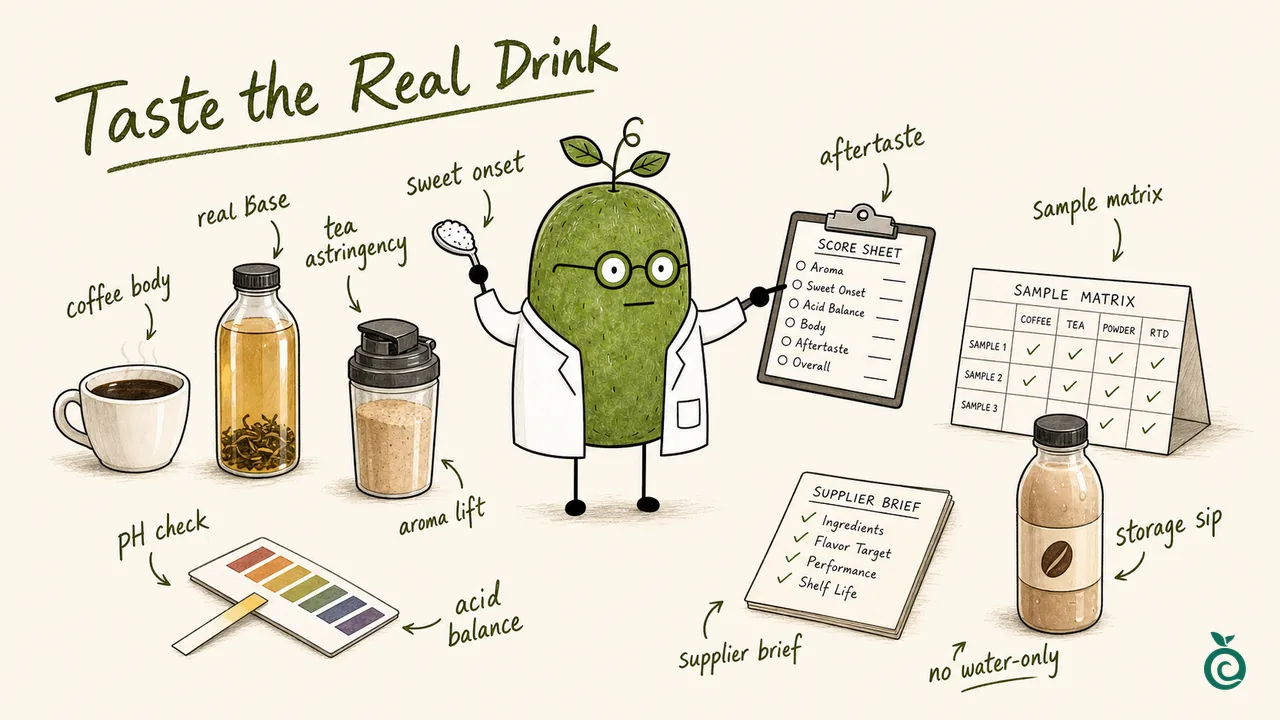
Start from the real drink, not water
Plain water is useful for checking solubility and obvious off-notes, but it is not enough for approval. Test in the actual coffee, tea, powder drink or RTD base with the intended dilution, pH, acid system, mineral load, flavor, processing route and serving temperature.
Run an intended-dose comparison, then match sweetness
Keep a sugar reference or your current accepted recipe alongside the candidates. Use neutral sample codes, the same brewing or reconstitution method, the same finished volume and a recorded serving temperature. Keep coffee extraction, tea steeping, milk, acids and dilution unchanged within each comparison. Start at the intended use rate to see whether the blend works in the proposed packet or recipe. If sweetness differs, run a separate comparison adjusted toward the reference sweetness and record the new dose. Do not combine the two sets of results: changing dose can also change solids and body. Vary the tasting order between assessors or repeat rounds, keep serving portions and pauses consistent, and record each person’s observations before discussing them. Separate descriptive intensity from liking: less bitterness is not automatically a better coffee or tea.
| Comparison | Keep fixed | Record separately |
|---|---|---|
| Intended use rate | Base, preparation, cup size and serving temperature | Actual dose; sweetness gap; suitability for the proposed use |
| Matched sweetness | The reference and preparation conditions | Adjusted dose; body changes; bitterness, dryness and lingering finish |
| Repeat tasting | Codes, portion size and agreed observation points | Order, assessor, repeat and whether the same issue returns |
Score aroma, acid and sweetness together
A fruit or tea flavor can seem quiet when sweetness and acidity are not balanced. Record aroma lift, sourness, bitterness, astringency, sweetness onset, peak sweetness, lingering sweetness, dry mouthfeel and aftertaste after repeated sips. This helps separate a weak flavor problem from a sweetener-balance problem. Agree on attribute definitions before tasting: bitterness is a taste, while astringency describes a drying or puckering sensation. Record when a finish appears and how long it persists rather than using one combined “aftertaste” score. If using a numerical scale, define the anchors and keep the same scale across samples; an informal panel score is not a consumer acceptance result.
| Attribute | What to note | Useful comparison |
|---|---|---|
| Coffee or tea character | Roast, leaf aroma and whether the base remains recognizable | Reference and candidate in the same base |
| Sweetness timing | Onset, peak and lingering sweetness | Same agreed observation points after a sip |
| Bitterness and dryness | Describe each separately, including when it appears | First sip and repeated sips |
| Body and finish | Thinness, coating and unwanted lingering notes | Intended-dose and matched-sweetness results kept separate |
| Overall preference | Which sample the assessor prefers and why | Keep preference separate from intensity scores |
Treat stevia, monk fruit and allulose as different tools
Stevia can provide strong sweetness lift but needs glycoside and aftertaste screening. Monk fruit can help round sweetness in some beverage systems. Allulose may support body or a more sugar-like curve in markets where it fits the regulation and label plan. The useful question is not which one is best, but what job each one must do in the finished drink.
Do not ignore processing and storage
Hot coffee, cold-brew coffee, UHT tea, hot-filled tea and instant powder each create different checks. Look at clarity, sediment, color change, viscosity, sweetness drift, flavor loss and aftertaste after storage. A sample that works at room temperature on day one may not fit an RTD process.
Build a sample brief a supplier can use
For a sample discussion, share any available details on target market, drink type, serving size, sugar-reduction goal, flavor, pH if known, Brix or solids if known, process, packaging specification, estimated quantity, required certificates/documents and whether samples are needed. If some details are undecided, we can clarify them together before confirming the sample or quotation.
Technical references
Azevedo et al. (2015), Cusielo et al. (2019) and Cusielo et al. (2026) examined defined espresso systems. They support comparing sweetness, coffee character and temporal sensory attributes in the actual base. They do not establish a dosage, acceptance result or preferred extract for every coffee, tea or fruit drink.
- Azevedo et al. (2015), High-intensity sweeteners in espresso coffee: ideal and equivalent sweetness and time-intensity analysis
- Cusielo et al. (2019), Sensory Influence of Sweetener Addition on Traditional and Decaffeinated Espresso
- Cusielo et al. (2026), Between Bitterness and Sweetness: How Decaffeination and Sweeteners Shape the Sensory Experience of Espresso Coffee
Download the trial record and discuss the next sample
Use the editable beverage trial record for coffee or tea. Enter the brew or tea base, candidate code, dose and serving conditions; use the sensory notes for aroma, bitterness, drying and finish. Record tasting order and assessor or repeat identifiers in the notes, and keep separate records for intended-dose and matched-sweetness comparisons. The workbook opens without an email address or registration. To discuss a sample, start with the drink type, target market and the taste problem you want to solve. Share other details as they become available; a complete formula is not required for the first conversation.
Review note
Reviewed October 16, 2026.
Common questions
Should I compare sweeteners at the same dose?
Start at the intended use rate if that dose matters to the packet or recipe. If sweetness differs, make a second comparison adjusted toward the reference sweetness. Keep both records; equal dose and equal sweetness answer different questions.
Discuss this requestHow do I separate bitterness from astringency?
Record bitter taste separately from drying or puckering mouthfeel. Note when each appears and whether it builds over repeated sips. Use the same base and preparation so a brewing change is not mistaken for a sweetener effect.
Discuss this requestCan stevia work in coffee or tea?
Yes. We screen the glycoside profile and dose in the actual base, keeping the desired coffee or tea character in the comparison. A result from one roast, tea infusion or serving temperature does not establish the result in another.
Discuss this requestWhen should I include allulose in the comparison?
Consider it when the project also needs bulk or body, alongside the sweetness target. Check the intended market and labeling plan before choosing the route, then compare the complete recipe rather than assuming sweetness alone predicts mouthfeel.
Discuss this requestDo I need to send a complete formula before discussing samples?
No. Start with the drink type, target market and the issue you want to improve. Serving size, preparation, packaging and known restrictions help us narrow the sample direction; undecided details can be clarified during the discussion.
Discuss this request