
Read this guide in
Hengliyuan application and selection
Sugar-Free Coffee Sweetener Packets: Stick Pack Guide for Hot & Iced Coffee
Choose a whole-packet coffee sweetener by cup size and nominal sweetness. Compare 5 g at 3× with 2 g at 5×, then test hot, iced, black and milk coffee.
Our coffee stick-pack approach is one whole packet for one defined drink and cup size. The customer tears it open and adds the full contents. To make that convenient format work, choose the formula, sweetness and packet weight around the drink before approving the pack.
A 5 g packet at 3× nominal sweetness and a 2 g packet at 5× do not deliver the same nominal sweetness per packet. Use the arithmetic to choose a starting sample, then check the complete drink. Black coffee, milk or protein coffee, hot service and iced service need separate results.

Choose the ingredient route first
The established sample routes are listed below. Confirm the specific formula and current specification when arranging samples; the ingredient route alone does not establish the final taste or label wording.
| Route | Ingredient direction | When to discuss it |
|---|---|---|
| Natural-series route | Erythritol, monk fruit sweetener and steviol glycosides. | These ingredients fit the project brief. |
| Sucralose route | Erythritol and sucralose. | The project accepts sucralose. |
| Custom formula | Adjust the blend, nominal sweetness or packet weight around the brief. | An established specification does not fit the intended cup. |
“Natural series” is our ingredient-route classification. Final packaging claims require review of the complete formula and destination-market requirements.
Compare sweetness per packet, not just powder weight
The two nominal starting points in our coffee stick-pack guide are 5 g at 3× sweetness and 2 g at 5×. Multiply packet weight by the nominal sweetness multiple to estimate the sugar sweetness equivalent. This is a selection calculation, not a sensory measurement.
| Packet specification | Nominal calculation | Starting point |
|---|---|---|
| 5 g at 3× | 5 × 3 = about 15 g sugar sweetness equivalent. | A defined cup whose sugar benchmark is around 15 g. |
| 2 g at 5× | 2 × 5 = about 10 g sugar sweetness equivalent. | A defined cup whose sugar benchmark is around 10 g. |
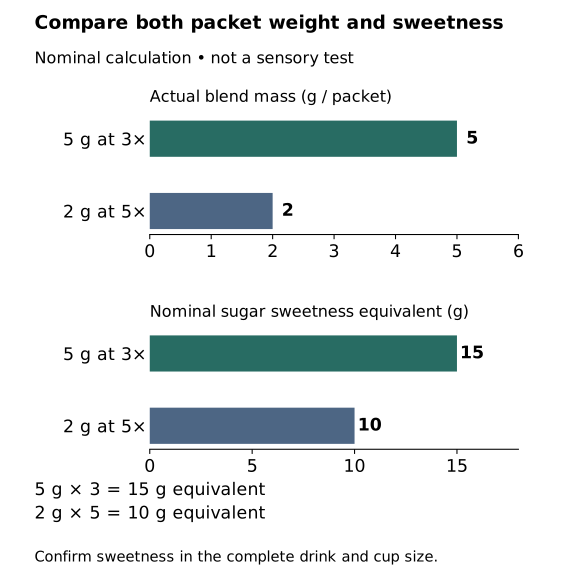
Use the whole packet in the intended cup. If neither specification fits, adjust the single-packet formula or net weight and repeat the trial. The goal remains one complete packet per specified drink.
Define the cup before choosing the packet
Record the drink name, actual serving volume, coffee recipe and extraction method, milk or protein ingredients, current sugar amount and target sweetness. For iced drinks, also record ice amount and preparation order. Keep the complete recipe fixed while comparing a candidate with the original sugar version. Different cup sizes may need different packet specifications. Do not assume a packet selected for one drink can cover a larger cup or a different milk base. Confirm each intended use before sharing one specification across the range.
Keep black coffee and milk or protein coffee separate
For black coffee, record sweetness onset, peak and finish beside bitterness, acidity and roast character. For milk, plant-based or protein coffee, use the complete final recipe and assess coffee character, the added base, body and aftertaste. A change in milk, plant base, protein ingredient or its amount creates a new condition to check. Compare each candidate against its own drink’s original sugar control rather than comparing scores between different drinks.
Verify hot and iced preparation separately
Test the method the café or customer will actually use, including how the full packet is added.
| Check | Hot coffee | Iced coffee |
|---|---|---|
| Preparation | Fix coffee, other ingredients, cup volume and serving temperature. | Also fix ice amount, dilution and preparation order. |
| Packet addition | Add the entire packet at the intended step and stir. | Record whether it enters warm coffee before ice or the finished cold drink. |
| Taste | Record sweetness, coffee character, body and finish. | Repeat at the intended cold temperature and relevant drinking times. |
| Handling | Check clean emptying, mixing and cup-bottom residue. | Check residue after the actual mixing method and during drinking. |
A hot-drink pass does not approve the iced version. Ice melting changes the serving condition; record when the observation was made.
Use only the test groups the project will sell
Keep the original sugar recipe as the control in every group. Add one whole candidate packet to the matching drink.
| Test group | Control | Candidate |
|---|---|---|
| Hot black coffee | Original coffee and sugar recipe. | Same coffee and cup; one whole packet. |
| Iced black coffee | Original recipe with fixed ice and preparation order. | Same conditions; one whole packet. |
| Hot milk or protein coffee | Complete original recipe and sugar amount. | Same full base; replace sugar with one whole packet. |
| Iced milk or protein coffee | Complete original recipe, ice and preparation order. | Same full base and conditions; one whole packet. |
Record the packet formula code and net weight, cup volume, temperature, ice and every base ingredient. Note whether sweetness is too low, close to target or too high; record onset, finish, unwanted aftertaste, emptying and residue separately.
Choose the next trial from the failed requirement
Do not change every part of the drink at once.
| Result | Next step |
|---|---|
| Sweetness is close to target | Keep the full-packet format and check flavor, finish and handling. |
| Both starting specifications miss the target | Adjust blend, nominal sweetness or net weight for the specified cup. |
| Black coffee passes; milk or protein coffee does not | Keep the complete milk or protein base fixed and revise its packet. |
| Hot passes; iced does not | Check ice, volume and preparation order before revising the iced-drink packet. |
| Sweetness fits but aftertaste does not | Compare another ingredient route or discuss a custom blend. |
| All intended uses meet the agreed criteria | Confirm formula, packet weight, approved drinks and cup sizes, packaging and cost per cup. |
Compare the quoted cost of one finished packet per cup, including the relevant packing scope. Price per kilogram alone does not give the cost of the intended serving.
Download the trial record or discuss the cup directly
Reuse our beverage trial record, with a separate copy for each coffee base and hot or iced condition. In the candidate amount field, record one whole packet, its formula code and net weight. Record ice and emptying or residue notes with preparation and observations. Download without an email or registration; completing or sharing the record is optional.
Common questions
How do I choose between 5 g at 3× and 2 g at 5×?
Start with the sugar benchmark in the specified cup. The nominal equivalents are about 15 g and 10 g of sugar sweetness respectively. Test one whole packet in the complete drink; confirm the selected formula and specification when arranging samples.
Discuss this requestCan a black-coffee packet be used in milk coffee?
Consider it as a candidate, then test it in the complete milk, plant-based or protein coffee against that drink’s own sugar control. Do not transfer the black-coffee decision automatically.
Discuss this requestCan one specification serve both hot and iced coffee?
Yes, if each intended recipe, cup size and preparation method meets the agreed criteria. Record hot and iced results separately, including ice amount and observation time.
Discuss this requestWhat if one packet is too sweet or not sweet enough?
Revise the blend, nominal sweetness or packet weight for the intended cup and repeat with a whole packet. For this project format, the design target is one full packet per defined serving.
Discuss this requestWhat information is needed to start a sample discussion?
Start with the coffee recipe, cup volume, original sugar amount, hot or iced use and accepted ingredients. Share packaging, quantity and document needs when known. You can contact us without completing the downloadable record.
Discuss this request