
Read this guide in
Hengliyuan applications and selection
Erythritol-Stevia Blend for Coffee: Aftertaste Trial Guide
Test erythritol-stevia blends in iced milk coffee with unsweetened and sugar controls. Separate sweetness, coffee flavor, dissolution and lingering aftertaste.
Reaching target sweetness is only the first step for a coffee sweetener blend. More importantly, it should introduce no odd tastes, leave the original coffee flavor clear, and avoid unwanted aftertaste.
Hengliyuan has held discussions and conducted tests with coffee associations in Indonesia, China and the United States. Their requirement in these exchanges was clear: clean, pure sweetness without interfering with the overall coffee flavor. This is also a central goal in Hengliyuan’s development of coffee sweetener blends.
Existing trials favor milk coffee, especially iced milk coffee
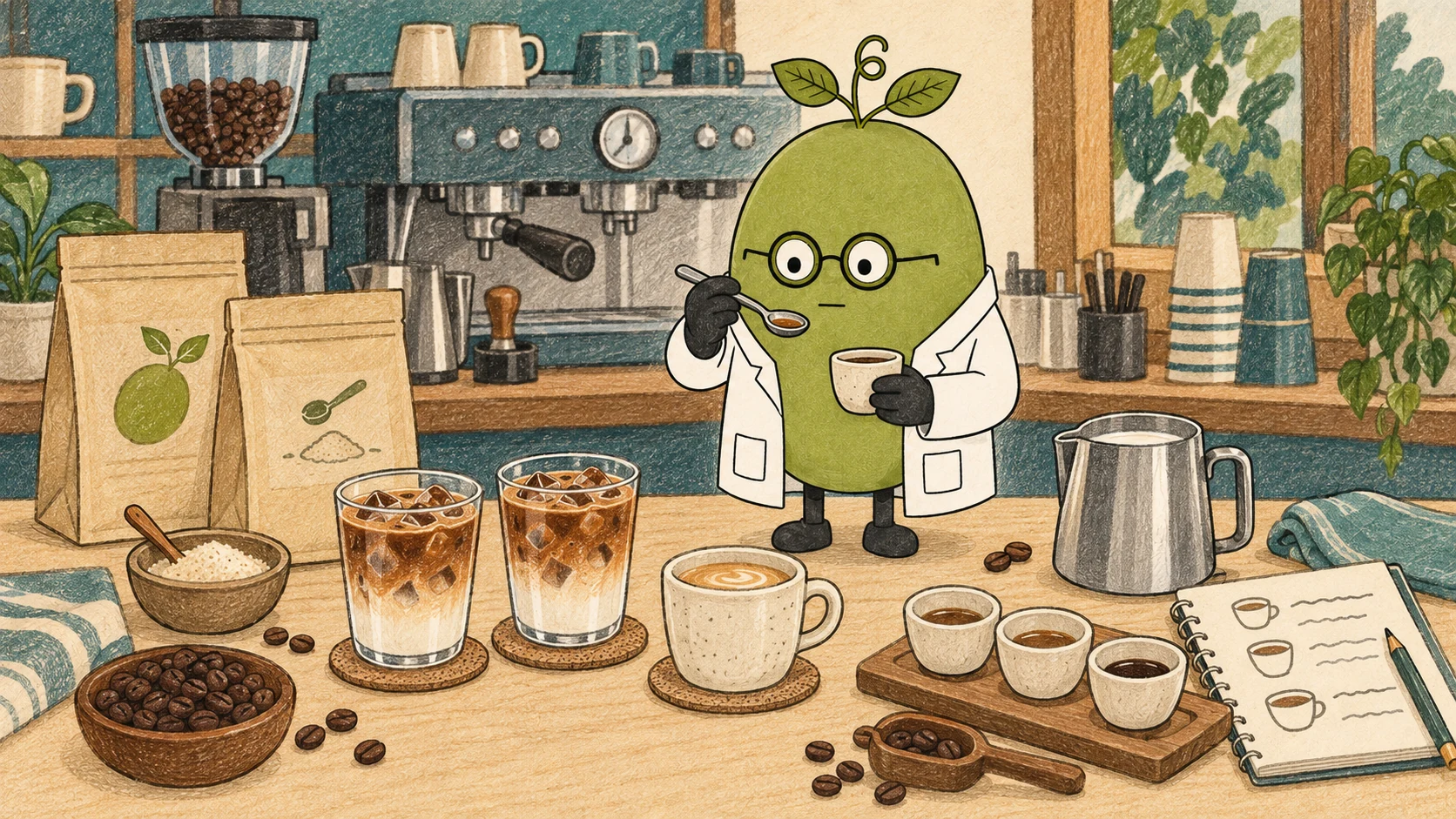
Among the blends and coffee drinks in tests Hengliyuan has participated in so far, milk coffee showed better suitability, with iced milk coffee standing out in particular. Development trials can therefore prioritize the milk coffee products actually sold. Assess coffee, milk and sweetness together: is sweetness right, is coffee flavor retained, does milk flavor fit, and does the sweetener introduce any unwanted taste? These observations concern the tested formulas and conditions. Different coffees, milk types or hot and cold serving methods require separate confirmation; do not simply carry over one dose and conclusion.
Set up three cups before judging the blend
For us, clean sweetness means the desired sweetness on entry, clear coffee flavor and no unwanted extra bitterness or lingering sweet finish. Use the same coffee and milk base in three cups so each comparison answers a different question.
| Cup | What it tells you | Keep in the record |
|---|---|---|
| Unsweetened base | Which bitter, roasted and milk notes already belong to the drink | Coffee preparation, milk type and ratio, serving size |
| Accepted sugar reference | The sweetness and overall flavor you want to retain | Sugar dose and the preparation method |
| Candidate blend | Whether the replacement reaches that sweetness without masking coffee or adding an unwanted finish | Sample code, blend dose and addition method |
Match the candidate to the target sweetness before comparing flavor; equal grams of sugar and blend do not make an equivalent taste test. Keep extraction, milk ratio, final cup volume, ice quantity and tasting time consistent. If a predissolved sample adds water, account for that water in the other cups. The unsweetened cup identifies the original coffee notes; the sugar cup is the target, not proof that every bitter note is a defect. If the candidate is sweet enough but coffee flavor becomes less distinct, change the blend direction rather than simply adding more.
Trial the actual iced milk coffee and describe specific sensations
Use the intended coffee, milk and ratios; fix cup volume, ice quantity and tasting time. Record whether the sweetener is added directly or predissolved, and check complete dissolution. At comparable target sweetness, give feedback as follows:
| Trial impression | Priority for the next round |
|---|---|
| Weak overall sweetness; acceptable finish | After confirming dissolution, try adjusting dosage |
| Weak initial sweetness but a long sweet finish | Compare sweetness development; revisit ingredients and ratios |
| Correct sweetness but unwanted extra bitterness or off-flavor | Compare with the control; investigate ingredients and the overall pairing |
| Correct sweetness but less distinct coffee or milk flavor than the original | Keep the coffee and milk formula fixed; compare other blends |
| Undissolved particles at the bottom | Check addition and dissolution before assessing taste |
These observations guide the next comparison; they do not diagnose a single ingredient on their own. Taste all cups just after serving, then again after the same interval that reflects normal drinking. Record the elapsed time and keep ice quantity and handling consistent so a more diluted cup is not mistaken for a weaker sweetener. If particles remain, resolve the preparation problem before ranking aftertaste. Test hot milk coffee and black coffee separately as actually served, keeping their own doses and results.
Adjust for the target coffee until sweetness and flavor work together
Hengliyuan can compare several blends in one round or adjust them after each feedback round, according to customer ingredient requirements. Development is not restricted in advance to one ingredient combination: selection considers target taste, destination-market requirements and actual use conditions. If sweetness is insufficient, adjust after checking dissolution and dosage. If sweetness is right but the finish is unsatisfactory, discuss ingredient choice and proportions further. Useful feedback includes “sweet enough, but extra bitterness,” “balanced in iced milk coffee, but sweetness lingers too long in hot milk coffee,” or “we want more of the original coffee aroma.” These details guide the next formula better than a simple like or dislike. For Hengliyuan sampling, provide coffee type, milk and ratios, hot or cold use, original sugar quantity or a preferred target sample, plus destination country, relevant regulatory and certification requirements and excluded ingredients. The goal is a blend with suitable sweetness, no unwanted odd tastes, and preservation of the target coffee’s overall flavor. You do not need a finished formula to start. Send the drink type, target market and the main taste problem; include the known preparation details and sample observations so we can narrow the next comparison.
Pure erythritol or an erythritol-stevia blend for coffee?
They are different samples. Pure erythritol contributes bulk and is less sweet than sucrose at equal weight; a blend also gains sweetness from its steviol glycosides and may have a different finish. Compare the actual materials in the intended coffee at matched target sweetness, recording their different doses. For iced coffee, check dissolution and particles after cooling separately from cooling sensation and aftertaste. This guide's blend observations do not establish a dose or taste result for pure erythritol.
Review note
Reviewed October 16, 2026. The comparison tables guide coffee trials; they are not a measured ranking of stevia grades or a universal blend dosage. Confirm current product documents and destination-market requirements for the selected formula.
How Hengliyuan makes the corresponding blend
Hengliyuan makes its erythritol-based sweetener blends by fluid-bed granulation. In this common food-powder process, airflow fluidizes the powders as particles agglomerate. Confirm the particle specification, dissolution and application performance against the selected formula and sample.
Common questions
Why keep both an unsweetened cup and a sugar reference?
They answer different questions. The unsweetened base shows the coffee and milk notes already present. The accepted sugar recipe sets the desired sweetness and flavor. Compare the candidate with both before attributing bitterness or flavor loss to the blend.
Discuss coffee blend samplesShould I use the same grams of blend and sugar?
No. Adjust the candidate to comparable target sweetness and record its actual dose. Equal mass is not a sweetness match. Keep the rest of the drink and preparation consistent.
Discuss coffee blend samplesWhat if the coffee is sweet enough but the finish lasts too long?
Describe when the unwanted sweetness appears and how it differs from the reference. Compare another blend or ingredient ratio at the same target sweetness rather than increasing the dose. Keep the coffee and milk base fixed for that round.
Discuss coffee blend samplesHow should I compare iced milk coffee as the ice melts?
Use the same initial ice quantity, cup volume and preparation. Taste all cups at the same recorded times, including a normal drinking interval. Differences in dilution or holding time can otherwise obscure the comparison.
Discuss coffee blend samplesDoes the iced milk-coffee result apply to hot or black coffee?
No. Our favorable observations concern the tested milk-coffee formulas and conditions. Test each intended coffee base and serving method separately; neither the dose nor the taste conclusion transfers automatically.
Discuss coffee blend samplesWhat should I send with a coffee sample request?
Start with the coffee drink, sales market and taste problem. Add milk type and ratio, serving size, hot or iced preparation, sugar reference, excluded ingredients and required documents when known. For an existing trial, include sample code, dose, dissolution observations and specific aftertaste feedback.
Discuss coffee blend samples