
Read this guide in
Hengliyuan applications and selection
Dried Monk Fruit vs. Whole Fruit Powder: Tea and Food Seasoning Applications
Choose dried monk fruit for filtered tea infusions or whole fruit powder for seasoning and dry mixes. Compare flavor, sediment and sample requirements.
For tea made by steeping or simmering and then filtering, start with dried monk fruit. For dry mixing, portion packing, or seasoning nuts and dried meat, start with whole fruit powder. Choose by what happens to the fruit solids in your process—not simply by whether the ingredient comes as a fruit or a powder.
Hengliyuan whole monk fruit powder is made by directly grinding the whole fruit. We use it for flavor and sweetness as well as for its powder format. It retains insoluble fruit components, so it is not an instant-dissolving substitute for a filtered infusion.
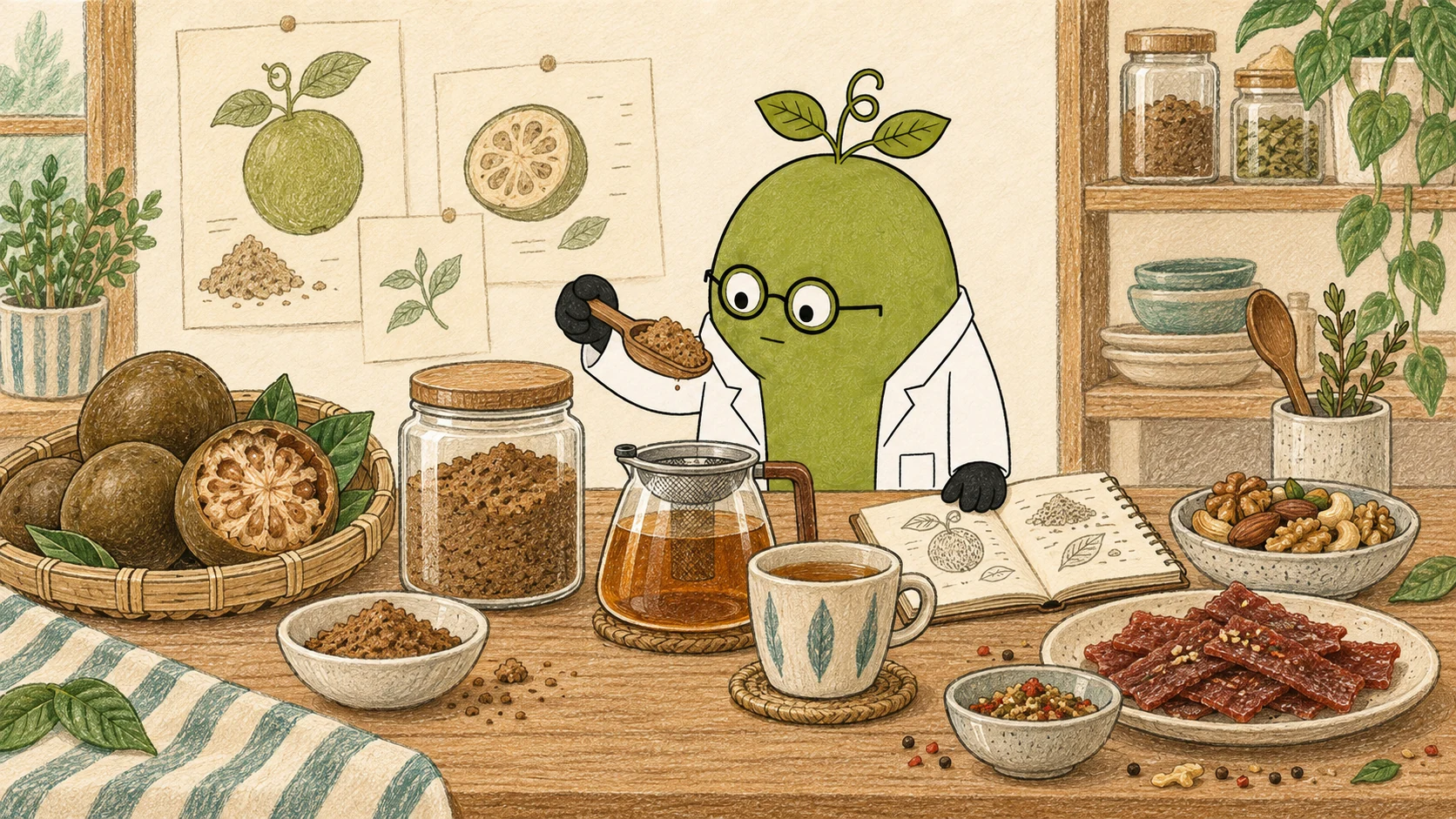
For tea drinks, consider brewing and the target flavor
If your shop or factory already uses steeping or simmering followed by filtration, select a suitable dried monk fruit to make an infusion, then combine it with tea, juice or other ingredients. In Hengliyuan’s tasting experience, low-temperature-dehydrated fruit tastes clean and sweet without a Chinese medicinal-herb note; freeze-dried fruit is sweet with a grassy note. High-temperature-roasted and electrically roasted fruit have different medicinal-herb flavor profiles. First choose a flavor suited to the drink, then compare specifications and dosage. Whole fruit powder can also be sampled in tea drinks, but assess graininess, sediment and filtration. It retains insoluble fruit components: being a powder does not mean it dissolves completely.
For nuts and dried meat, build flavor and adjust sweetness
Whole monk fruit powder can season nuts, adding flavor and sweetness. Check how its flavor complements the nut aroma and whether particle size and dosage affect mouthfeel. In dried meat snacks, whole fruit powder can also add flavor layers and replace part of the white sugar according to the sweetness target. Compare sweetness, meat flavor, sweet–savory balance and chew to determine a suitable inclusion rate. After replacing some sugar, reassess storage performance. Sugar affects water activity and texture as well as sweetness. Whether the reformulation helps extend shelf life must be judged from processing, packaging and shelf-life test results. Assess calories at the actual inclusion rate. A small dose contributes correspondingly less energy, but the effect on the finished food must be calculated from ingredient energy values and the complete formula. Adding monk fruit powder does not automatically make a food zero-calorie or low-calorie.
Distinguish whole fruit powder from juice powder
For weighing powders, mixing with other dry ingredients or portion packing, whole fruit powder is an option to sample. Confirm how the fruit was processed, particle size and performance in your product. For a just-add-water drink, specify whether cloudiness, fine particles or sediment are acceptable. If fewer visible particles are needed, compare differently processed ingredients such as juice powder. Whole fruit powder is directly ground fruit; juice powder is made by concentrating and drying juice. Their processes differ, so the name “monk fruit powder” alone cannot establish suitability. Confirm reconstitution performance with samples. For an instant drink, check the ingredient list as well as the product name: a juice powder may contain a carrier. Test the actual sample in the intended water or beverage base; the name alone does not promise a clear drink.
Select samples by application to define specifications
Use the application below to choose a starting sample, then compare it in your own process. The table is a sampling guide, not a fixed substitution ratio.
| Application | Ingredients to compare first | Key trial points |
|---|---|---|
| Filtered tea infusion | Dried monk fruit | Infusion flavor, color, sweetness and filtration |
| Nut seasoning | Whole monk fruit powder | Flavor pairing, sweetness, graininess and dosage |
| Dried meat seasoning and partial sugar replacement | Whole monk fruit powder | Flavor layers, sweet–savory balance, sugar replacement rate, chew and storage performance |
| Dry mixing or portion packing | Whole monk fruit powder | Particle size, mixing and packing performance |
| Instant drinks requiring fewer visible particles | Processed ingredients such as juice powder | Reconstitution, sediment and mouthfeel |
When switching between dried fruit and powder, reconfirm dosage and processing conditions rather than replacing them weight for weight. A filtered infusion and a drink containing whole fruit solids are different products even when their sweetness is similar. For a first sample discussion, tell us what you are making, whether you filter the product, and the taste or texture you want. Include the destination country and document requirements if known. For nuts or dried meat, describe how the seasoning is applied and how much sweetness you want to change; for tea, say whether visible particles or sediment are acceptable.
Review note
Reviewed October 16, 2026. Flavor descriptions reflect Hengliyuan’s tasting experience. Ingredient selection and dosage still depend on the sample and finished-product process.
Common questions
Can whole monk fruit powder replace dried fruit weight for weight in tea?
No fixed weight-for-weight ratio is appropriate. Dried fruit is usually brewed and filtered, while whole fruit powder introduces fruit solids into the process. Compare the intended dose, sweetness, flavor, mouthfeel and filtration result in the same tea base.
Discuss ingredient forms and samplesDoes whole monk fruit powder dissolve completely in water?
No. It retains insoluble fruit components. It can disperse in a drink, but fine particles, graininess or sediment may remain. Test the actual serving conditions and filtration process rather than treating powder format as proof of solubility.
Discuss ingredient forms and samplesHow does whole fruit powder differ from juice powder?
Hengliyuan whole fruit powder is directly ground whole fruit; juice powder is made by concentrating and drying juice and may contain a carrier. Check the composition and reconstitution performance of the actual specification. Juice powder is not automatically a promise of a clear drink.
Discuss ingredient forms and samplesCan whole fruit powder be used on nuts or dried meat?
Yes. We consider it for flavor and sweetness in nut and dried-meat seasoning. Compare flavor pairing, particle size, dosage and mouthfeel. If it replaces some sugar, reassess texture and storage performance in the reformulated product.
Discuss ingredient forms and samplesDoes whole monk fruit powder make a food zero-calorie?
No. Evaluate the complete formula at the actual inclusion rate and apply the claim rules for the destination market. Adding whole fruit powder does not by itself make a finished food zero-calorie or low-calorie.
Discuss ingredient forms and samplesWhat should I tell Hengliyuan when asking for samples?
Start with the product you are making, your brewing or mixing process, whether you filter it, and your desired taste or texture. Share the destination country and document needs if known. You can contact us before every specification is settled; we can discuss which ingredient form to compare first.
Discuss ingredient forms and samples