
Read this guide in
Hengliyuan application and selection
How to Choose a Monk Fruit Sweetener Supplier: Ingredient, Blending, and OEM Capabilities
Compare monk fruit suppliers by the work you need: ingredient supply, blending or OEM packing. Match samples, batch COAs, production responsibilities and quotations.
Our buying rule: establish who does the work and which product is being quoted before comparing price. A monk fruit extract, a blended tabletop sweetener and a finished private-label packet are different purchases. The same supplier may coordinate several stages, but the responsibilities should remain clear.
Ask comparable suppliers to respond to the same brief. Match the product code, sample, specification, batch COA and quotation, then test the candidate in your actual application. A low price or a large headline capacity does not resolve a mismatch between those records.
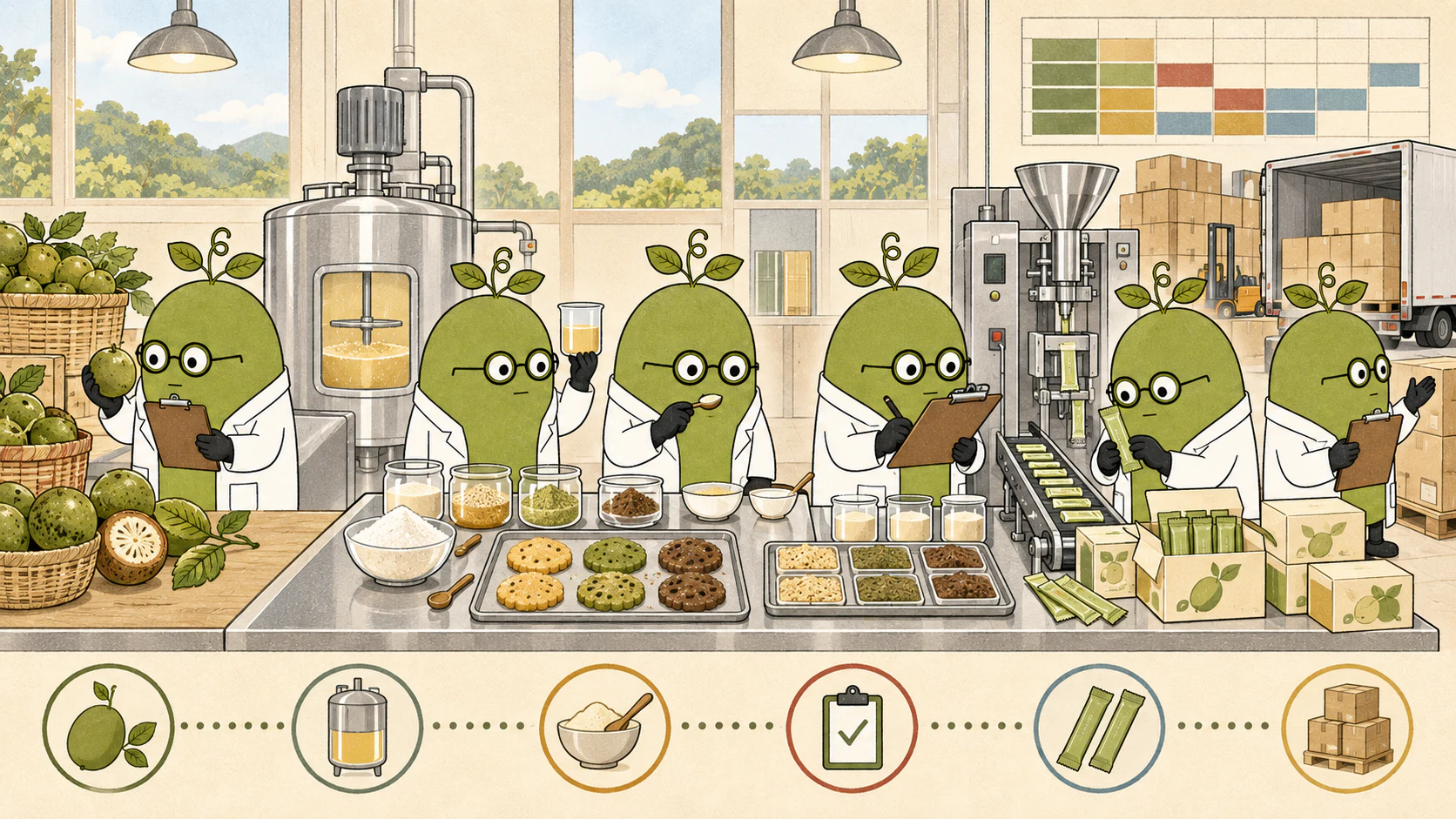
Match the supplier role to the product you need
Monk fruit sweetener is not a complete purchasing specification. Identify the format and the stage you are buying, then review the capability that matters to that stage.
| Role | Core work | Evidence to review | Order-planning question |
|---|---|---|---|
| Ingredient production or supply | Product identity, specification and batch release | Actual producer, batch COA, composition and traceability records | Can this exact grade be supplied on your replenishment schedule? |
| Sweetener blending | Formulation and application adjustment | Sample rationale, real-base results and scale-up controls | How is uniformity checked at the planned batch size? |
| OEM packing | Turn an approved formula and artwork into finished packs | Version control, filling checks, coding and release records | What capacity is available for this pack format and net weight? |
Match the specification, sample and batch COA
The specification states the agreed requirements. A batch COA reports results for an identified batch. Check the product code and version across both documents, the sample label and the quotation. If the sample lot differs from the proposed delivery lot, record that difference and agree how the delivery lot will be released.
| Check | What to match | Mismatch to resolve |
|---|---|---|
| Product identity | Extract, juice powder, blend or packed finished product | The same marketing name hides different compositions. |
| Assay basis | Mogroside V, total mogrosides or the agreed analyte; method and units | Two percentages refer to different measurements. |
| Complete composition | Carriers, bulking ingredients and other sweeteners | A sample tastes suitable but contains an excluded ingredient. |
| Physical form | Powder, liquid, granules or finished packs | The quoted form does not suit the intended process. |
| Batch | Lot ID, test date, results and sample/delivery relationship | An unrelated COA is presented as the sample or shipment record. |
| Version | Specification revision and quoted product code | The order substitutes a different grade after sample approval. |
The FDA describes monk fruit extracts with varying mogroside levels and sweetness. Do not treat the words monk fruit extract as one fixed composition or sweetness specification. Review the actual ingredient and intended use for the destination market.
Give the sample one clear question to answer
Use the actual beverage, food or powder base and an unchanged current or sugar-containing control. Record the candidate dose, sweetness onset and intensity, finish, dissolution, mouthfeel, color and aroma. Keep conditions matched within the comparison. For a processed or stored product, repeat the relevant checks after the intended process and at defined storage checkpoints. A suitable lab sample supports the next trial; scale-up, blend uniformity, packaging and shelf-life work still need their own records.
Trace ingredient control through the actual producer
A supplier need not own every planting, transport and export step to explain responsibility. Ask who controls the steps affecting the product and how the records connect. For an extract, the relevant process may include raw-material acceptance, extraction, purification, concentration or drying, standardization, testing and release; confirm the actual route for that product. Follow three links: incoming material lot to production lot, production lot to testing and release, and shipped lot to the label and COA received. Use a documented example with confidential details removed if necessary. A claim of full traceability should lead to records that can locate a discrepancy. ISO 22005 describes a traceability framework for the food and feed chain. It is a useful reference for this record-based approach, not evidence that a particular supplier is certified. Ask about stock and scheduling for the specific grade rather than assuming every grade shares the same availability.
Check how the blending team turns feedback into the next sample
A useful blending proposal starts with the actual base, process, serving conditions and ingredient requirements. Ask why the proposed direction fits that brief, what the first comparison should establish and what would change if sweetness, finish, body or dissolution misses the target. Then discuss scale-up: ingredient addition, mixing, sampling and release at the planned batch size. A successful small sample is not proof that a larger blend will be uniform. Hengliyuan’s existing natural series combines erythritol, monk fruit sweetening ingredients and steviol glycosides. Its artificial sweetener series combines erythritol and sucralose. Custom work can address different ingredients, sweetness, serving amounts and application needs; the real-base trial guides the choice.
Check OEM control from approved version to finished pack
Lock the formula version, net weight, packaging material and artwork for the order. Ask how incoming packaging checks, filling, in-process inspection, batch coding, case packing and release are recorded. Keep formula approval and packaging approval identifiable so a taste revision cannot silently carry over into printed materials. Discuss the way the customer will use the product: packets per cup, tabletop measurement, inner-pack count and readable instructions. Confirm throughput for the actual packet, pouch, jar or box, including material readiness and changeover time. A total annual capacity does not establish a delivery date for your particular pack.
Separate rated capacity from available order capacity
Provide the first order, expected monthly use and replenishment pattern. Ask for a response tied to the exact product and pack.
| Planning item | Confirm for your project |
|---|---|
| Scale-up | Checks required between the approved sample and production batch. |
| Batch size | Usable batch size for this grade or formulation. |
| Current availability | Open production slots and peak-period constraints. |
| Materials | Lead times for ingredients and custom printed packaging. |
| Quality release | Sampling, testing and release arrangements for the order. |
| Replenishment | Normal repeat-order timing and options for changed demand. |
| Delay handling | Who notifies you, when, and how a revised delivery plan is agreed. |
Rated capacity, capacity currently available and capacity committed to your order are different. Ask which production stage a quoted capacity covers and when your materials and packaging can be ready.
Verify responsibilities, not only the company label
Factory and trading company are starting descriptions, not a complete supply map. Confirm the actual producer, specification owner, sample coordinator, testing/document provider, packing site and export contact. Check that the legal entity, address, product scope and document validity match the proposed supply route. A supplier can source from another factory and still manage the project, provided responsibilities and product records are clear. Do not assume a seller manufactured every item in its catalogue or that a document for one site covers another.
Compare quotations on the same basis
Ask the supplier to resolve blank fields rather than assuming they are included.
| Quotation field | Confirm before comparing |
|---|---|
| Product version | Existing or custom formula; tested sample and specification code. |
| Ingredient specification | Assay basis, full composition and physical form. |
| Use and pack | Actual dose or serving target; net weight per pack. |
| Packaging scope | Inner packs, outer boxes, cartons, artwork, barcodes and printing setup. |
| MOQ basis | Ingredient weight, finished units or individual printed design. |
| Order capacity | Batch size, current availability and split-delivery plan. |
| Tests and documents | Included tests, document scope and any additional cost. |
| Lead time | What must be approved or received before the clock starts. |
| Commercial terms | Currency, validity, delivery basis, freight and other inclusions. |
Only compare price after the grade, composition, serving basis, pack and delivery scope match. Keep provisional assumptions visible until both sides confirm them.
Use the first reply to judge project handling
A useful reply identifies the product, explains the supplier’s role, proposes a relevant sample comparison and separates confirmed facts from open questions. It should also explain what is missing from the quote. A price-only reply leaves the buyer to guess about composition, documentation and delivery; resolve those points before ordering.
Send the details you already know
Start with the target market, actual application and whether you need an ingredient, blend or packed product. Add the current sweetener or control, target result, excluded ingredients, process, pack format, first order and replenishment estimate. List required documents and the main question for the next sample. You do not need to disclose a complete confidential formula at the first contact. Share the necessary technical context in stages, and identify any missing information that limits sample selection.
Where Hengliyuan fits into the project
Established in 2013, Hengliyuan works on monk fruit ingredient supply, blended sweeteners and OEM/ODM projects. Ingredients may also be supplied through other factories to match the project. Confirm the actual producer and document route for the selected material rather than assuming every catalogue item is manufactured at one site.
- View monk fruit extract specifications
- Learn about custom blended sweeteners
- Read the private-label sweetener packing guide
- Submit natural sweetener OEM and private label requirements
| Project area | What to review with Hengliyuan |
|---|---|
| Ingredient supply | Selected material, actual production source, batch specification and documents. |
| Existing or custom blends | Ingredient route, real-base sample results and scale-up requirements. |
| Production and packing | The relevant site and process for the selected formulation and pack. |
| OEM/ODM | Formula version, artwork, pack specification and release checks. |
| Documentation | The current audit or supporting file that covers the entity, site and product in your order. |
We can start with ingredient supply, an existing blend, a custom formula or private-label packing. Share the application, market, estimated use and packaging idea so the sample, documents, quotation and production version can be reviewed as one project. Exact specifications, document coverage, quantities and delivery dates are confirmed for that project.
Sources and scope
FDA’s sweetener overview supports the distinction between monk fruit extracts with different mogroside content. ISO 22005 provides a general traceability framework. Neither source verifies Hengliyuan’s capacity, certifies a supplier or approves a finished product for every market.
Review note
Reviewed October 16, 2026. Supplier responsibilities, batch identity and quotation scope are reviewed separately. Order availability is confirmed for the actual product and packaging; no universal delivery or application performance is promised.
Common questions
What should I check first when choosing a monk fruit supplier?
Decide whether you need an ingredient, blending work or a packed finished product. Then confirm who performs each stage and match the product code, sample, specification and quote.
Discuss this requestIs a specification the same as a batch COA?
No. The specification states requirements; a batch COA reports results for an identified lot. Check the sample and delivery lot relationship and agree release requirements for the shipment.
Discuss this requestIs buying from a factory always better than buying from a supplier?
The key is a clear production route and accountable responsibilities. Identify who produces, tests, documents, packs and exports the selected product. A seller may source some materials from another factory.
Discuss this requestCan I compare two monk fruit prices per kilogram?
Only after matching product identity, assay basis, complete composition, form and commercial scope. For blends and packed products, also compare the amount actually used per serving and the included packaging.
Discuss this requestDoes annual capacity prove that my order can ship on time?
No. Ask what the number covers, which slots are currently available, and when ingredients and packaging will be ready for your exact specification. Confirm the delivery plan for the order.
Discuss this requestMust I send my complete formula to request a sample?
Not at the first contact. Share the application, key base characteristics, current sweetener, process and main problem. Confidential details can be handled in stages; identify what remains unknown before approving a sample direction.
Discuss this request