
Read this guide in
PROTEIN SNACK GUIDE
Monk Fruit Sweetener for Protein Bars and Nutrition Snacks
Compare monk fruit extract or blends in the actual protein bar. Separate dose, matched sweetness, binder changes and texture after storage before choosing a sample.
Protein bars and nutrition snacks are hard sweetener applications because sweetness, protein notes, binding, chew, moisture and shelf texture are connected. A good sample must be tested in the bar system, not only tasted as a dry sweetener.
This guide is for protein bar brands, nutrition snack developers, cereal bar factories, private-label snack teams and ingredient buyers evaluating monk fruit sweetener or monk fruit blends.
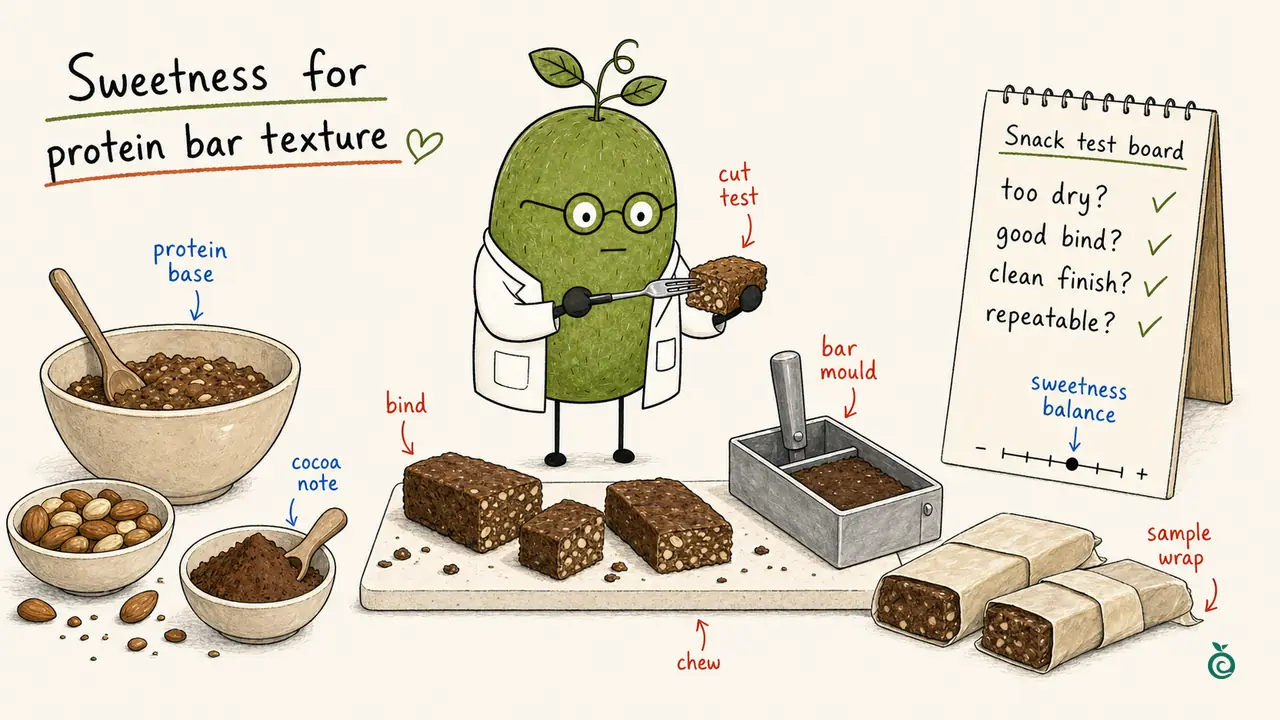
The illustration brings together protein mixing, cutting, wrapped bars and a sweetness dial. The dial and ticks are illustrative rather than measured results; assess sweetness, binding and stored texture in the actual bar.
Start with the protein base
Whey, milk protein, soy, pea, collagen and mixed protein systems can create different bitterness, dryness and aroma challenges. The sweetener should be tested with the actual protein source. Record the protein product or grade, lot and actual addition with the sample code. If the source, protein ratio or flavour changes during the trial, keep the changed recipe as its own version instead of attributing the result to the sweetener alone.
Sweetness is only one part of the bar
Sugar and syrups can affect binding, chew, moisture and flavor release. Monk fruit can support sweetness, but the full formula may still need a body, syrup, fiber or binder direction. Identify the supplied extract grade or complete blend ingredients, carrier where present and actual addition. Keep the binder amount and composition visible in the comparison; the sweetener name alone does not tell you what mass, water or other ingredients entered the bar.
Choose the question before comparing two samples
A fixed-amount screening, a sweetness-matched comparison and a complete reformulation answer different questions. Keep the control and candidate identities, actual additions and recipe versions with the result so a change in the method is visible.
| Comparison | Keep in the record | How to use the result |
|---|---|---|
| Same stated ingredient amount | Supplied material/grade, actual mass, base, binder and process | Screen at that addition; equal mass does not establish equal sweetness or binder function |
| Matched target sweetness | Actual addition for each candidate, matching method and otherwise comparable bar recipe | Compare the flavour and finish at that sweetness target; retain any solids or binder differences |
| Complete reformulated bar | Every formula/process change, bar dimensions, package, storage and evaluation conditions | Choose between finished-product versions; multiple changes do not isolate the sweetener effect |
Watch for lingering notes
Protein bars often carry cocoa, peanut, vanilla, fruit, coffee or functional ingredient notes. Test whether sweetness helps the flavor or makes protein bitterness and aftertaste more obvious. Use coded portions and the same serving temperature, bite or portion size and tasting sequence for the matched comparison. Record sweetness onset, peak and finish separately from protein notes, dryness and liking. If you evaluate a centre or coating separately, identify it as a component sample and also assess the complete bar you intend to sell. A better isolated coating does not settle the taste of the combined product.
Shelf texture matters early
A bar can taste good on the first day and become hard, dry, sticky or crumbly later. Pilot samples should include short storage checks before buyers lock the sweetener direction. Keep the forming/cutting observation, cooled bar and packaged storage result as distinct checkpoints. Use the same bar dimensions, sample position, temperature and method when comparing texture. Keep a sensory bite assessment separate from an instrument result and state the method and units for any reported hardness. Retain matched control and candidate packs for each checkpoint, record storage and opening history, and evaluate the relevant unopened and after-opening use conditions separately. Short checks help select the next trial; the commercial shelf-life decision requires the finished-product validation plan.
Protein-bar binder trial checklist
Record the protein system, binder composition, actual solids and sweetener dose. Keep forming and cooling comparable, then measure bite and hardness by the same method at planned storage points. Record water activity and moisture separately where they are part of the specification. A change that improves first-day sweetness may still change later hardening. Use coded samples and preserve the control and package history before choosing the next revision.
Packaging changes the commercial plan
Single bars, multipacks, bulk foodservice packs and private-label cartons have different weight, shelf-life, label and cost assumptions. Share packaging details before final quotation. Keep the accepted sample code, recipe version and storage evaluation conditions with the quotation scope so a pack or formula change receives the appropriate follow-up check.
Start with the bar and the problem you want to solve
For the first sample discussion, share the snack type, protein and binder ingredients you can identify, the current sweetener or sample code, and the main problem. Say whether it is a long sweet finish, a protein note, poor forming or a change after storage, and add the comparison conditions you know. You can keep a proprietary recipe internally while sharing the details needed for the next trial. For a quotation, confirm the selected material or blend, target market, packaging specification, expected quantity, documents and sample requirements when available. These details can follow as the sample direction develops; they are not a requirement to ask the first technical question.
Common questions
Can pure monk fruit extract replace sugar syrup in a protein bar?
Extract provides sweetness. It does not by itself replace the mass, binding and other functions of the removed syrup. Evaluate the complete formula and identify any replacement binder or other changes alongside the actual extract addition.
Discuss this bar trialIs the same weight of two monk fruit materials a fair comparison?
It is a fixed-amount screen if that is the stated question. It does not establish equal sweetness, solids or binder contribution because the supplied materials can differ. For a sweetness-matched comparison, record each actual addition and keep other recipe changes visible.
Discuss this bar trialCan I change the protein blend while comparing sweeteners?
Yes, as a separate reformulated bar with its own recipe version. If you need to identify the sweetener effect, retain the same protein base and other comparison conditions. Otherwise the result belongs to the combined changes.
Discuss this bar trialShould I taste the centre and coating separately?
Component samples can help locate a flavour question when they are clearly identified. Also compare the complete bar in its intended serving condition. Keep sample code, portion, temperature and tasting sequence with the result so the component and finished-product records are not confused.
Discuss this bar trialHow should I compare a bar that hardens during storage?
Keep matched control and candidate packs and record the recipe, forming/cooling, package and storage history. Compare at defined checkpoints using the same dimensions, sample position, temperature and texture method. A sensory bite note is not an instrument hardness result, and a first-day taste pass does not establish shelf life.
Discuss this bar trialCan I ask about samples before packaging and quantity are final?
Yes. Start with the actual snack, the protein and binder ingredients you can identify, the current sample and the specific taste, forming or storage question. Packaging, expected quantity, market and documents can be confirmed as the sample direction moves toward quotation.
Discuss this bar trial