
Read this guide in
PROTEIN POWDER GUIDE
Monk Fruit Sweetener for Protein Powder and Meal Replacement
Compare monk fruit in the actual protein powder or meal-replacement base. Separate full serving mass, sweetener dose, preparation and dry-blend checks. Free trial record.
Protein powders, collagen mixes and meal replacement drinks often need sweetness without making the product taste heavy or artificial. Monk fruit sweetener can support this direction, but the full powder system decides whether the product tastes balanced.
This guide is for brands and manufacturers checking monk fruit sweetener for whey protein, plant protein, collagen powder, nutrition shakes, smoothie mixes and low-sugar meal replacement concepts.
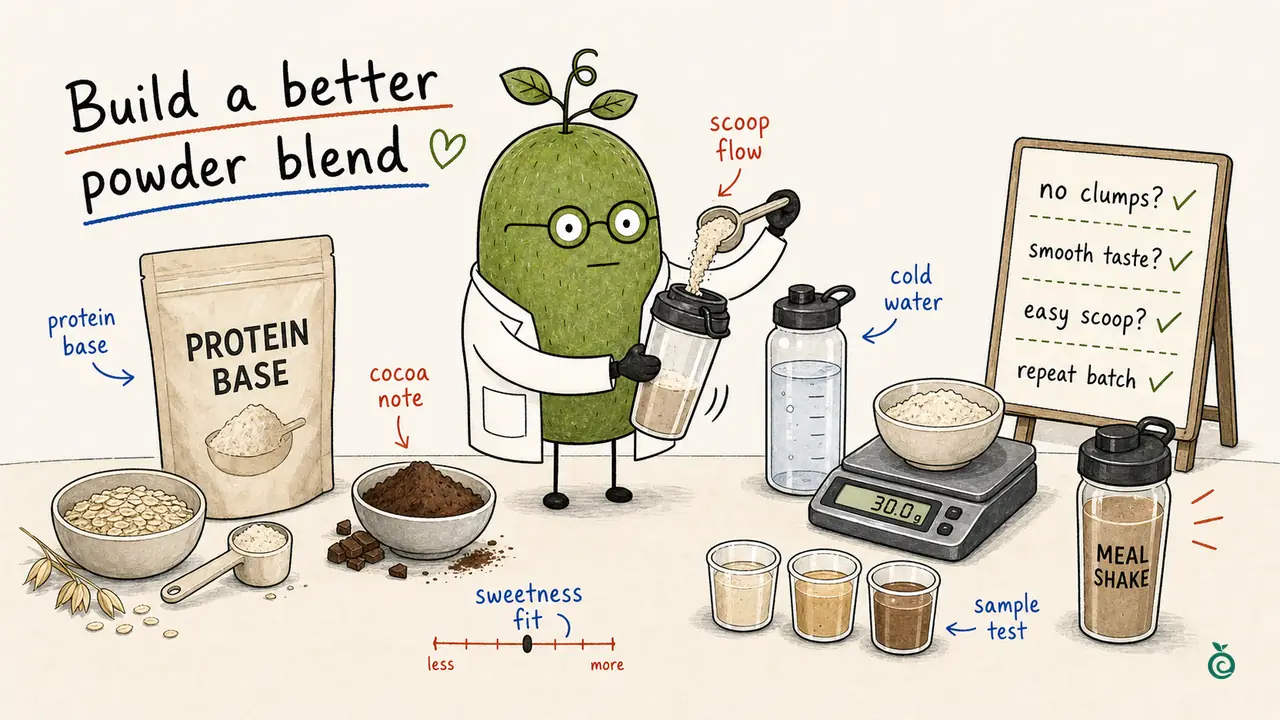
The Doctor illustration shows a protein base, scoop, shaker and sample cups. Its 30.0 g scale reading and ticks are illustrative, not a recommended serving or measured result. Record full powder mass and sweetener addition separately when testing the actual prepared drink.
Start with the powder base
Whey protein, pea protein, soy protein, collagen and mixed nutrition bases each bring different bitterness, creaminess, aroma and mouthfeel. The monk fruit sweetener level should be tested in the real base, not only in water. Identify the actual protein product or grade, batch, extract or blend, carrier where present and the amount added. Keep the complete recipe version with the result, including any change to flavour, protein ratio or other ingredients.
Balance sweetness with flavor and mouthfeel
Vanilla, chocolate, coffee, fruit and cereal flavours can need different sweetness profiles. Compare initial and peak sweetness, the finish, protein notes and mouthfeel in the complete drink. Use coded samples and the same serving conditions. State whether the comparison uses the same supplied-material addition or matches a target sweetness. Record each actual addition and any other formula change. Keep descriptive sweetness and bitterness notes separate from overall liking, and from clumps or settled material.
Record the actual powder portion and preparation
Weigh the full powder portion and record the liquid identity and quantity. If a scoop is part of the instructions, record how it was filled and its actual powder mass for that preparation. Keep the sweetener ingredient addition separate from the full drink-mix portion. Use the proposed consumer method as a defined test condition: the vessel, order of addition, mixing operation, preparation temperature and delay before tasting. Water, milk and a plant base are separate preparation conditions. A result from one should not silently stand in for the others.
| Check | Record with the coded cup | Keep the conclusion within this scope |
|---|---|---|
| Dry sample identity | Recipe/batch, dry-blending operation and sample or filling position | The powder represented by that cup; taste alone does not establish uniform ingredient content |
| Consumer preparation | Full powder mass, liquid identity/quantity, scoop method and mixing history | The specific preparation instructions tested |
| Standing and re-mixing | Elapsed time, undisturbed clumps/foam/deposit, then re-mixing operation and what remains | Physical observations; appearance alone does not identify the material or quantify solubility |
| Serving and taste | Measured serving temperature, portion and tasting sequence | Sweetness timing, protein notes and mouthfeel at that condition |
Powder and reconstitution checklist
Identify the protein base, extract or blend grade, carrier and actual serving mass. Record dry blending and sample positions, then prepare each coded drink with the same water or milk volume, temperature and mixing method. Evaluate sweetness, protein bitterness and finish separately from lumps or sediment. Repeat with the intended consumer preparation. Tasting cannot by itself establish uniform ingredient content in the dry batch.
Download the protein-powder trial record
Use the paired control/candidate sheet to keep powder identity and dry-sample position with the prepared drink. It includes actual full powder mass and liquid quantity, preparation and serving temperatures, clumps, foam, undisturbed deposits, re-mixing and taste notes. The 28 fields are blank for your observations. Sensory entries are descriptive notes, with no prefilled scores or automatic approval. Use a separate copy for a different preparation condition or sample pair. Download without an email address.
Decide between ingredient supply and OEM format
Some buyers need a sweetener blend for their own protein powder factory. Others need finished stick packs, sachets, jars, pouches or private-label nutrition powder. The route changes packaging, MOQ, testing and quotation assumptions. Confirm which supplied material or packing service is in scope, and keep the accepted sample version and preparation instructions with that quotation.
Review label and market direction early
Protein and meal replacement products often have detailed nutrition, claim and ingredient-list requirements. Buyers should confirm local label rules before locking formula, serving size, sweetness claims and artwork.
Bring the specific powder question into the first discussion
Start with the protein or nutrition base you can identify, flavour, intended powder portion and liquid, and the result you want to change. Add the sweetener or sample code and the preparation or dry-sampling notes you know. You can keep a proprietary recipe internally while sharing the details needed to discuss the next sample. For a quotation, confirm the selected material or blend, market, product and packaging format, expected quantity and required documents when available. These details can follow as the sample direction develops. A settled packaging order is not required for the first technical question.
Common questions
Is monk fruit automatically better in whey or plant protein?
There is no universal choice from the protein name alone. Compare the candidate in the actual whey, pea, soy, collagen or mixed base and intended flavour. Keep the supplied material, actual addition and preparation conditions identifiable.
Discuss this powder trialIs full powder mass the same as the sweetener dose?
No. Full powder mass is the complete drink mix used for that preparation. The sweetener dose concerns the identified extract or blend and its stated batch or serving basis. Record both rather than using a scoop count as the sweetener amount.
Discuss this powder trialDo clumps or a deposit mean the monk fruit ingredient failed to dissolve?
Appearance alone cannot identify which material is present or establish a quantitative solubility result. Record the whole powder and preparation history, observe the undisturbed sample at a stated time, then record the re-mixing operation and what remains. Keep this finding separate from the taste result.
Discuss this powder trialCan a water test stand in for a milk or plant-base shake?
Use each intended liquid as its own preparation condition. Keep the actual powder mass, liquid identity and quantity, mixing operation and serving temperature with the sample code. Changing the liquid while changing the sweetener leaves more than one factor in the comparison.
Discuss this powder trialDoes consistent cup sweetness prove a uniform dry blend?
No. Tasting can support the sensory comparison but does not by itself establish ingredient content throughout a dry batch. Keep dry sample or filling positions identifiable and use a suitable sampling and analytical plan for the required uniformity decision.
Discuss this powder trialCan I discuss samples before the package and order quantity are fixed?
Yes. Start with the actual base, flavour, intended portion and liquid, current sample and the taste or mixing issue. Market, packaging, quantity and document needs can be confirmed as the sample direction moves toward quotation.
Discuss this powder trial