
Read this guide in
SPORTS DRINK FORMULATION
Clear Protein Drink Sweetener Guide: Monk Fruit & Stevia Sample Brief
Choose monk fruit and stevia sample directions for clear protein and amino acid drinks. Compare bitterness, astringency, aftertaste, clarity and dilution.
Clear protein, amino acid and pre-workout drinks are often harder to sweeten than simple flavored water. Protein notes, amino acids, caffeine, minerals and acids can all change bitterness and flavor release.
Our starting point is the finished drink: identify whether the problem is bitterness, drying astringency, lingering sweetness or physical haze before changing the blend. This guide helps sports nutrition brands and powder buyers prepare a useful sample comparison.
Start with the active base
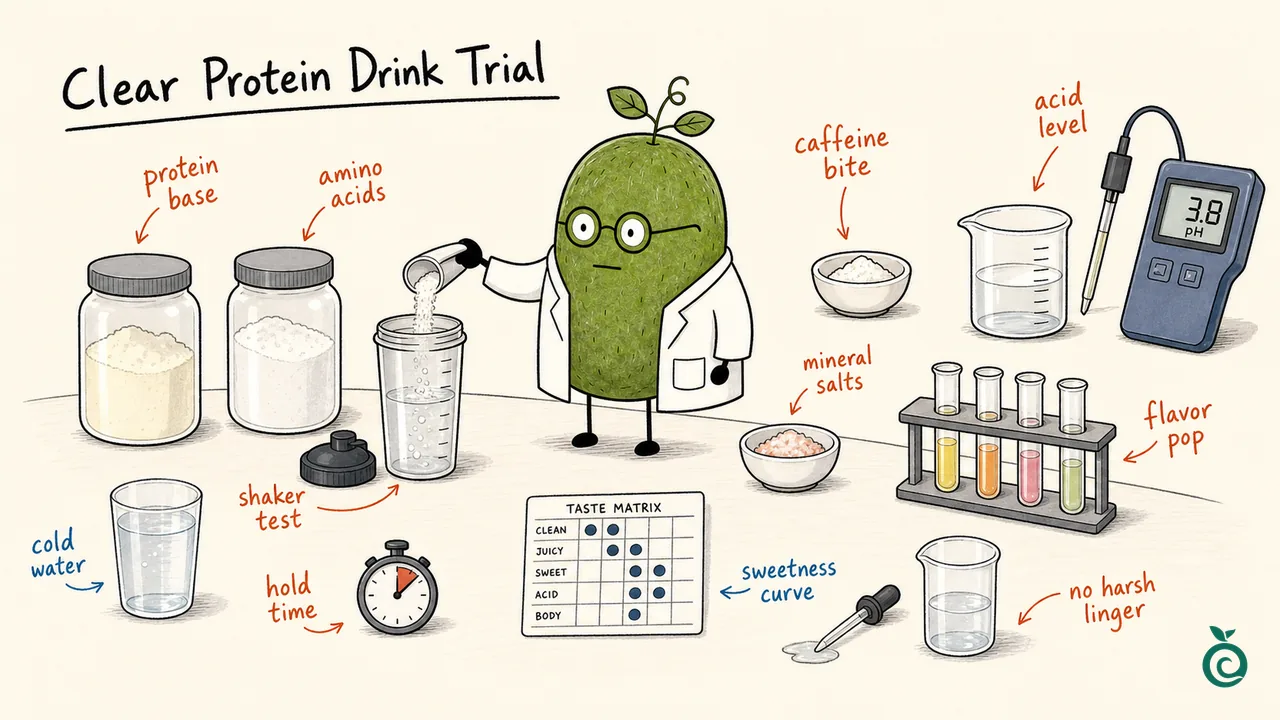
List the protein source, EAA or BCAA profile, caffeine level, minerals, acids, colors and flavors before choosing the sweetener system. A sweetener blend that works in a hydration stick may not cover the same bitterness in a pre-workout or clear whey drink.
Flavor needs a complete taste system
Natural flavor powders can taste weak in plain water because the full drink system is missing. Acid level, sweetness timing, mineral salts and bitterness control can decide whether the flavor feels bright or flat. Screen samples in the intended base, not only in water.
Choose the sweetener role
Monk fruit and stevia can provide high-intensity sweetness at low use levels. Allulose may be considered for body where the target market allows it. Erythritol-free directions often need careful work on carrier choice, sweetness onset and lingering bitterness, especially in powder formats.
Separate bitterness from drying astringency
A bitter taste and a dry, puckering mouthfeel are different observations. Record them separately before increasing sweetness or flavor. Change one planned variable against a fixed control, then test the promising direction in the complete acid, flavor and active-ingredient system. Otherwise, changing flavor, acid and sweetener together makes the result hard to explain.
Check powder behavior and dilution
For stick packs, tubs and sachets, check flow, dusting, caking, cold-water dispersion, shaker mixing and sediment. Fix powder mass and water volume for the main comparison. Putting the same powder dose into 250 mL and 500 mL changes every dissolved ingredient concentration, not only sweetness. Test the intended consumer dilution separately from deliberate dilution challenges.
Build a small, interpretable sample matrix
Keep the existing formula or agreed reference. First compare sweetener directions in the same base at a comparable sweetness target. Then investigate acid, flavor or carrier changes separately. Record grade, dose, powder-to-water ratio, pH, water temperature and mixing method. Use the same tasting and hold times; a short bench hold does not establish shelf life.
What a whey-protein study shows about astringency
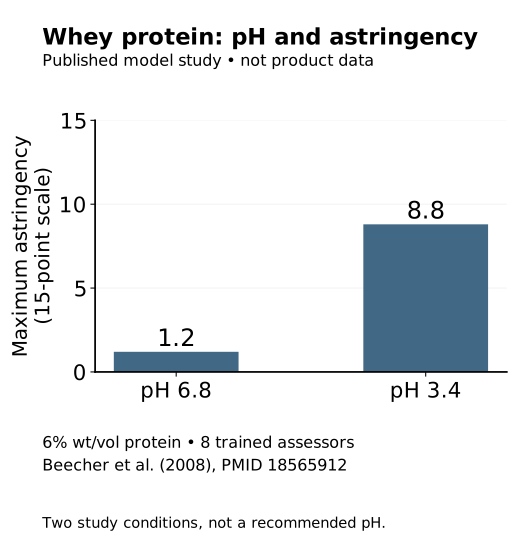
Beecher et al. (2008) used eight trained assessors and a model drink containing 6% wt/vol whey protein. The abstract reports maximum astringency intensities of 1.2 at pH 6.8 and 8.8 at pH 3.4 on a 15-point scale. The figure redraws those two reported values. Below pH 3.4, the study found decreasing astringency alongside increasing sourness, so these two bars must not be read as a straight-line pH rule. This supports checking the acid/protein system when a drink feels drying. It does not prescribe a pH, establish a safe process, or predict the response of a clear whey, EAA or BCAA product.
Record taste and clarity as separate decisions
Use the same sample IDs and conditions for control and trial. A drink that tastes better still needs to meet the intended clear appearance, mixing and storage requirements.
| Check | Record for control and trial | Keep fixed |
|---|---|---|
| Taste over time | Entry and peak sweetness; lingering sweet, bitter or metallic finish. | Sip size, serving temperature and observation times. |
| Astringency | Drying or puckering mouthfeel, recorded separately from bitterness. | Protein source, concentration, acid system and measured pH. |
| Clarity and foam | Haze, sediment and foam before and after an agreed rest. | Water, dilution, mixing, container and lighting. |
| Dispersion and hold | Lumps, floating powder, sediment or taste changes during the agreed screen. | Mixing method, hold time and temperature. |
| Next sample | The specific defect to investigate and the single planned change. | An unchanged reference and agreed acceptance criteria. |
For a clear protein drink, take matched photos after mixing and after the agreed rest. Record foam separately from haze. A passing sweetness score does not approve clarity, stability or market suitability.
Why the finish needs its own check
A 2018 study evaluated naturally sweetened vanilla whey-protein drinks using temporal sensory methods, with 25 g protein per 360 mL water and a consumer test involving 150 people. It supports following sensations over time instead of approving a blend from one sweetness score. Those vanilla RTM conditions do not establish a blend ratio for an acidic clear-protein or amino-acid drink.
Send the problem you want the sample to solve
Start with clear whey, another protein source, or an EAA/BCAA drink; tell us the main issue and intended dilution. Add the active ingredients, flavor, market and label direction you know. Quantity, packaging and documents can be clarified together.
Common questions
Can monk fruit or stevia work in clear protein drinks?
They are candidates for testing in the actual protein, acid and flavor base. Compare the sweetness profile and finish, then check clarity and dispersion independently. A water-only match is not finished-drink approval.
Discuss this requestWhy can a protein drink taste both bitter and drying?
Bitterness and drying astringency are different sensory observations. Record them separately and investigate the protein, acid and active-ingredient system alongside the sweetener. Increasing sweetness may not resolve both.
Discuss this requestCan a sports nutrition blend be erythritol-free?
Yes, an erythritol-free direction can be discussed. Confirm the serving size, label direction and carrier requirements, then evaluate sweetness timing, powder behavior and the finished drink.
Discuss this requestWhat should buyers send before samples?
Start with the drink type, main taste problem and intended dilution. Add known active ingredients, flavor, market, packaging, likely quantity and document requirements. We can clarify missing details together.
Discuss this requestDoes a clear appearance immediately after mixing prove stability?
No. Compare appearance after the agreed rest and storage conditions, recording foam, haze and sediment separately. Initial clarity does not establish shelf life or safety.
Discuss this request