
Read this guide in
NUT SPREAD VALIDATION SCORECARD
Peanut Butter & Nut Spread Sweetener Scorecard: Oil Separation, Particles, Spreadability
Nut spread validation scorecard: compare low-sugar peanut butter and cocoa spreads by sweetness, oil separation, particles and storage.
A spread sample is easier to compare when the team decides what will be measured before opening the jar. This scorecard keeps sweetness, oil separation, particle feel, spreadability, mouthfeel and storage behavior visible instead of letting one good first taste hide a later problem.
Use it for peanut butter, cocoa-hazelnut spread, pistachio spread, cashew spread and nut or cocoa fillings. The fields can be reused, but targets must be set for the actual product, process, package and market.
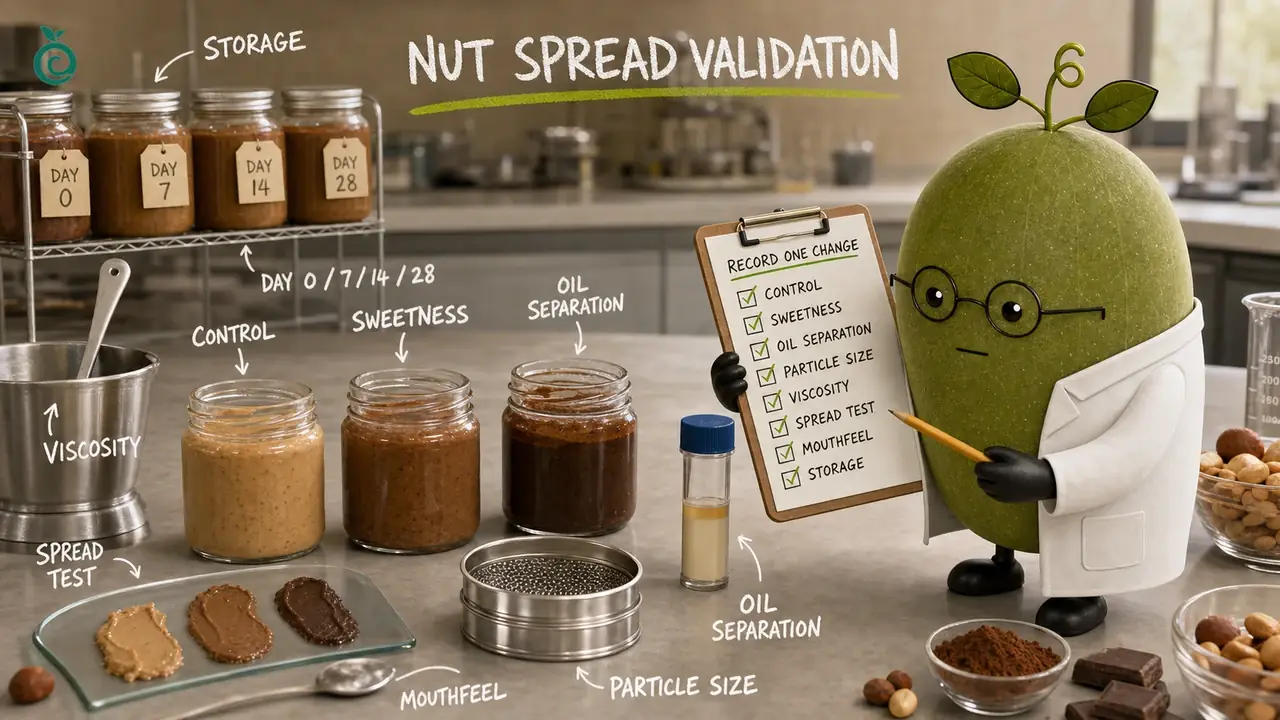
Read the illustration as separate records to keep
Keep sweetness, oil separation, particle feel, spreadability and package or storage observations separate for the control and candidate. The drawn ticks, jar colors, oil tube and utensils illustrate checks to plan, not measured results, an approved sample or a specified instrument method. Day 0/7/14/28 is an example checkpoint list, not a universal validation schedule or a shelf-life result.
Define the product lane
Record the nut type, nut-paste percentage or description, cocoa or dairy components, retail spread or filling use, current sugar source, target sugar-reduction direction and intended use temperature. Do not compare a spoonable retail spread with a bakery filling as if they had the same release criteria.
Keep a control and change one main variable
Record the current or sucrose control beside each sample. Identify whether the sample changes sweetness, bulk solids, fiber, oil phase, particle size, emulsification, grinding or storage condition. A clear change log is more useful than a long list of ingredients with no explanation of what the sample was meant to test.
Record sweetness and finish separately
Use a matched tasting order for first sweetness, mid-palate, bitterness, licorice-like notes, cooling, lingering sweetness, nut flavor, cocoa intensity and overall fit. Do not use a sweetness score to stand in for oil separation, texture or oxidation.
Record oil phase and visible separation
Note surface oil, ring formation, layering, re-mixing time, surface dryness and any change after standing. Record sample mass, container, temperature and observation time where relevant. Visible oil is an observation, not by itself a safety, freshness or shelf-life conclusion.
Record particles, flow and spread
Use the agreed particle method or D10/D50/D90 values, then record viscosity or yield stress if available, spatula spread, hardness, adhesiveness, grit, powdery mouthfeel and oral melt. Keep the test temperature and conditioning time fixed so the comparison has a clear meaning.
Repeat the same checks in the real package
At day 0, 7, 14 and 28 or the project's agreed checkpoints, repeat taste, oil separation, spreadability, mouthfeel, color, oxidation and package-seal observations. Include temperature, humidity, light and opening frequency when they matter. A short storage screen is still a screening result, not a commercial shelf-life claim.
Turn the scorecard into the next sample
If sweetness fails, adjust the sweetener direction while holding the physical system steady. If spreadability or oil separation fails, review oil phase, particles, processing and temperature separately. If the package changes the result, keep the same formula and test the package question on its own.
Keep the basis beside the observation
Use a matched control and candidate record for one defined comparison. The same field name is useful only when its method, sample and conditions are also clear.
| Record group | Keep with the observation | Do not turn it into |
|---|---|---|
| Identity and change | Product/formula, material and lot, actual addition, reference and intended change | A comparison of unidentified samples |
| Use condition | Conditioning time, actual temperature, tasting order and portion or operation | Equal performance across different use conditions |
| Sweetness and finish | Initial and mid-palate sweetness, finish, bitter/licorice/cooling and nut/cocoa notes | A single taste score replacing physical results |
| Oil and re-mixing | Observation before mixing; jar or accelerated method, sample basis, time/temperature; operation and finding after mixing | An oil percentage transferred between different methods |
| Particle and texture | Material/stage, dispersion and reporting basis; instrumental method/units and separate grit/spread observations | D90 as maximum size or as a universal sensory threshold |
| Storage and package | Actual checkpoint, pack/seal and storage/opening history; appearance and flavor observations separately | A short trial or fresh appearance proving commercial shelf life |
| Next action | Specific unresolved question, next change or document needed | A weighted total or automatic pass for an unresolved product |
Keep any project ratings and acceptance criteria with their definitions. This page and the download supply descriptive recording fields, with no preset score, weights or universal pass line. An observation that is missing, not measured or not applicable should remain identifiable rather than being silently entered as zero.
Download the paired nut-spread record
Download the free Excel sheet without leaving an email address. It has 32 paired fields for control and candidate, with 64 yellow blank input cells covering sample identity, formula changes, conditions, taste, free oil, particle methods, texture, packaging and next action. Use one file per pair and actual observation checkpoint, keeping the record reference with photos or instrument reports. Save a separate record for the next checkpoint so earlier observations remain available. The sheet has no preset data, formulas, automatic ranking or product approval, and completing it is optional before contacting Hengliyuan.
Technical references and boundaries
The matching formulation guide explains the cited pistachio and cocoa-hazelnut studies, their methods and study-specific limits. It also distinguishes particle measurement from sensory grit and oil separation methods from stored-jar observations. Use that explanation when choosing the checks for this record; the published studies do not set your pass score, formula, particle limit, viscosity target or shelf life.
Send the question the next sample should answer
Begin with the nut spread, final sales market and the taste or physical issue. Share known nut base, fat sources, ingredient restrictions, process and package details; if the formula or quantity is still being developed, describe the intended product and reference. You can send a completed record, a short observation or a document question. Once the sample direction is useful, connect the selected material and formula version to the specification, receiving pack, quantity, documents and delivery terms. This is a sweetener ingredient or blend discussion; identify a finished spread manufacturing request separately so supply fit can be confirmed.
Record these fields before comparing samples
- Product position and nut base
- Current or sucrose control
- Sweetness and aftertaste
- Oil separation and re-mixing
- Particle size and spreadability
- Use temperature and conditioning time
- Package and storage checkpoints
- One main variable changed
Common questions
Does this scorecard need a numerical total?
The page and download use descriptive observations with no preset score, weights or pass line. If your team uses ratings, define each scale and the actual project criteria separately. A high taste total must not hide an unresolved physical, document or storage question.
Discuss the nut-spread sample directionCan I reuse the fields for peanut butter and cocoa-hazelnut spread?
Yes, while identifying the actual nut base, fat system, process, use and market. Define the relevant criteria for that product instead of carrying a previous product's acceptance limits into the next one.
Discuss the nut-spread sample directionHow should I use the downloadable record?
Use one file for the identified control and candidate at one actual observation checkpoint. Fill the blank yellow cells with the observations and their basis, retaining linked photos or reports. Save another record for the next checkpoint; download and first contact do not require an email registration or a completed sheet.
Discuss the nut-spread sample directionShould I inspect oil separation before or after re-mixing?
Keep the before-mixing observation, the re-mixing operation and the later finding separate. Record the elapsed time, temperature and method. A centrifuge or accelerated-test value is not automatically the same observation as free oil in an undisturbed jar.
Discuss the nut-spread sample directionIs a D90 value enough to explain grit?
Keep the material/stage, dispersion, instrument and reporting basis with the number. D90 is a percentile, not maximum particle size, and it does not by itself establish the finished spread's sensory grit. Record the actual mouthfeel separately.
Discuss the nut-spread sample directionAre day 0/7/14/28 checks enough to approve shelf life?
They are an example screening schedule. Choose the actual checkpoints and validation plan for the formula, process, package, distribution and intended life. A short sensory or physical comparison does not establish commercial shelf life.
Discuss the nut-spread sample directionWhat can I send before the formula and quantity are final?
Start with the nut-spread format, final sales market and the issue or intended product. Add known base, process, ingredient and package information. A brief observation or question is enough to begin clarifying the sample direction; the worksheet is optional.
Discuss the nut-spread sample direction