
Read this guide in
ACIDIC BEVERAGES
Best Natural Sweetener for Cold and Acidic Drinks: A Buyer's Testing Guide
Choosing a natural sweetener for cold, acidic drinks? Test monk fruit, stevia and allulose blends for taste, clarity and stability.
The best candidate is the permitted sweetener that meets the agreed taste and stability target in your actual cold, acidic drink. This page covers that application decision; the dissolution and carrier guide covers powder preparation before tasting.
Acidic drinks can make sweetener decisions harder. Citrus, berry, tea acids, carbonation and mineral systems can sharpen aftertaste, thin the middle of the sip or make sweetness feel shorter than expected.
This guide helps beverage buyers prepare a clearer sample test for natural sweetener blends in lemonade-style drinks, fruit teas, sparkling beverages, hydration drinks, beverage powders and low-sugar RTD products.
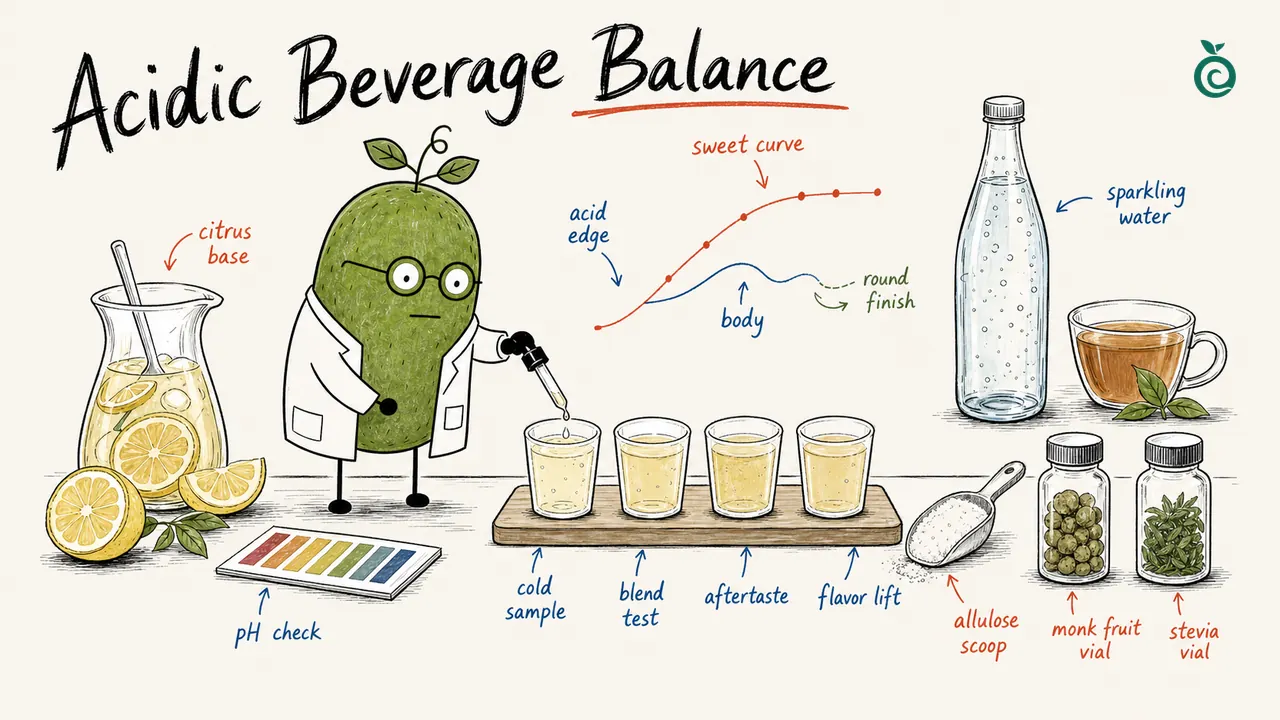
Read the illustration as a test plan
Compare the complete chilled drink for acid balance, body and finish alongside its physical appearance. The drawn curves, colored cups and pH strip illustrate questions to check; they contain no measured sweetness, acidity, sample ranking or storage data. The allulose scoop and extract vials do not specify a formula, addition rate or ingredient permission.
Acid changes the sweetener experience
A blend that tastes clean in water may feel sharper in lemon, berry, tea or cola-style bases. Acid can expose bitter tails, make the middle of the sip feel hollow or change how fast sweetness appears and disappears.
Match the blend role to the drink
Monk fruit can support a clean natural sweetener direction, stevia can lift sweetness efficiently, and allulose may help body in markets where it is suitable. The right blend depends on the drink's target claim, flavor base, cost and local ingredient rules.
Cold and acidic beverage test parameters
Set the test around the complete beverage. Record the acid identity, pH and the measurement method, and include titratable acidity when it is relevant to the comparison. Two drinks with the same pH can have different sourness and flavor balance. Keep the flavor, minerals, proteins, juice solids and intended dilution visible in the formula record. Compare sweetness at the actual serving temperature. If the drink is carbonated, test still and carbonated versions from the same formula and record the carbonation and time after opening. If it is diluted from a syrup or powder, record the concentrate and water masses. A concentrate tasting is not the finished-drink test. Use the same conditions for the control and each candidate.
| Variable | What to record | How to interpret |
|---|---|---|
| Acidity | Acid identity, pH method and relevant titratable acidity | Do not infer all sourness from pH alone |
| Chilled service | Measured serving temperature and time | Compare coded samples in the same condition |
| Carbonation | Setting / method and time after opening | Compare with the matching still formula |
| Storage | Package, temperature history and planned checkpoints | Repeat clarity and sensory observations |
| Dilution | Actual concentrate, powder and water masses | Compare the consumer serving |
Keep two comparison questions separate. At a fixed addition, record the same stated mass basis for each candidate; for matched sweetness, record the actual addition needed for the agreed reference. Identify the exact extract grade or blend composition and sample version in either case. A result from one comparison basis does not answer the other.
Do not ignore mouthfeel
When sugar is reduced, the drink can taste thin even if the sweetness level is correct. Buyers should score body, coating, finish and flavor lift, not only sweetness intensity.
Review clarity and taste after the intended process
Use the actual mixing and processing route for the next development trial. Record the sweetener addition point, heat history if used, fill and cooling conditions. Keep a separately labeled unprocessed comparison when it helps distinguish process effects. For dry powders, use the carrier and dissolution guide to document preparation before drawing a conclusion about beverage stability. At the selected storage checkpoints, inspect the undisturbed pack and note haze, color, sediment and visible crystals. Then prepare or serve the product as intended and repeat the coded tasting. Report sweetness onset, sourness balance, flavor character and finish separately. A physical deposit and a bitter finish can require different revisions; do not bundle them into a single “unstable” result. Use the outcome to define one next question. If acid balance is the problem, compare an acid adjustment separately from a sweetener change. If there is a deposit, identify the likely material through the appropriate analysis rather than assuming it is the extract. If the formulation is technically promising, confirm ingredient permissions, label claims and the complete product’s process and shelf-life requirements before launch. No universal cold-drink dose or storage period is established by this comparison method.
Use the observation to choose the next trial
Keep the reference drink, sample identity and comparison basis with the observation. Change one suspected cause in the next comparison where practical, and state every unavoidable formula or process change. These are development checks; they are not diagnoses from appearance alone.
| Observation | Useful next comparison | What still needs confirmation |
|---|---|---|
| Sweetness is acceptable but the finish is bitter or too long | Compare the candidate or addition in the same acid and flavor base; record the finish separately from peak sweetness | Whether the change keeps the intended sweetness and flavor at cold service |
| Sweetness matches but the drink feels thin | Keep the sweetness reference and assess body, coating and flavor lift separately | The selected body adjustment must also fit composition, processing and market requirements |
| Haze, sediment or visible crystals appear | Separate preparation from storage; compare the process history and investigate the deposit with suitable analysis | The visible deposit alone does not identify the sweetener or prove chemical degradation |
| The fresh sample is preferred but changes in the pack | Repeat the recorded process, package and planned storage checkpoints against the reference | A short tasting or clear appearance does not establish microbiological safety or shelf life |
For individual tasting notes, reuse the free sensory scorecard linked here. Record the acid, temperature, carbonation and dilution conditions from this guide in its preparation and serving fields. Keep the physical observations and any required safety work in the product trial record; a sensory score does not replace them.
Start a sample discussion before every detail is settled
Tell us the drink type, final sales market and the taste or appearance issue you want to resolve. Add the acid system or pH, flavor, serving condition and ingredient restrictions if known. If this is a new product, describe the intended drink and comparison target; you do not need a finished formula or final order quantity to begin. Say whether you need a manufacturing ingredient, a dry beverage mix or a filled private-label product so the supply discussion follows the right route. After the sample direction is useful, confirm the accepted formula or sample reference, specification, receiving pack, trial or repeat quantity, requested documents and delivery terms for quotation. Ingredient documents and a successful tasting are separate from the finished beverage's release requirements.
Common questions
Which natural sweetener is best for a cold, acidic drink?
Start with ingredients permitted for the intended product and market, then compare identified candidates in the actual drink. Monk fruit, stevia and blends can be screened against your reference; a water tasting or a sweetness specification alone does not choose the best candidate for that beverage.
Discuss the beverage sample directionCan I use a monk fruit or stevia water test to choose a citrus formula?
Use water as an initial screen, then test the same identified material in the actual citrus base at its serving temperature. Record the addition, acidity, flavor and carbonation conditions. A preferred water sample still needs a separate application comparison.
Discuss the beverage sample directionDoes the same pH mean two drinks will taste equally sour?
No. Record the acid system and relevant titratable acidity as well as pH and its measurement method. Keep the full base and dilution visible when comparing sourness and sweetness balance.
Discuss the beverage sample directionShould every candidate be tested at the same addition?
Choose the question first. A fixed-addition screen compares candidates on the stated mass basis; a matched-sweetness trial adjusts each addition toward the reference and records those amounts. Label the basis so a higher or lower score is not mistaken for an ingredient ranking across different methods.
Discuss the beverage sample directionDoes haze or sediment mean the sweetener has broken down?
It establishes a physical observation to investigate. Record the preparation, process, package and storage history, then identify the material by appropriate analysis. Appearance alone cannot assign the deposit to the sweetener or establish chemical degradation.
Discuss the beverage sample directionCan an allulose blend solve thin mouthfeel?
It is a direction to assess where the ingredient is suitable for the intended market and product. Confirm the complete composition and actual addition, then compare body as well as sweetness in the drink. No universal amount or mouthfeel result follows from the ingredient name.
Discuss the beverage sample directionHow long must I store a sample before approving it?
This guide sets no universal period. Define checkpoints for the actual formulation, process, packaging, distribution and intended life with the people responsible for product validation. A short sensory comparison helps development; commercial release also needs the applicable safety and shelf-life work.
Discuss the beverage sample direction