
Read this guide in
GUMMY AND CONFECTIONERY GUIDE
Natural Sweetener Blends for Gummies and Confectionery
Sweetener blends for sugar-reduced gummies and confectionery: monk fruit, stevia and allulose systems for chew, water activity and texture.
Gummies, jellies and chewy confectionery are not simple sweetener swaps. Sugar helps sweetness, bulk, chew, water control, flavor release and shelf texture, so a reduced-sugar gummy needs a complete sweetener system.
This guide is for confectionery brands, supplement gummy developers, private-label teams and ingredient buyers comparing monk fruit, stevia, allulose, fibers and erythritol-free blend directions before sample testing.
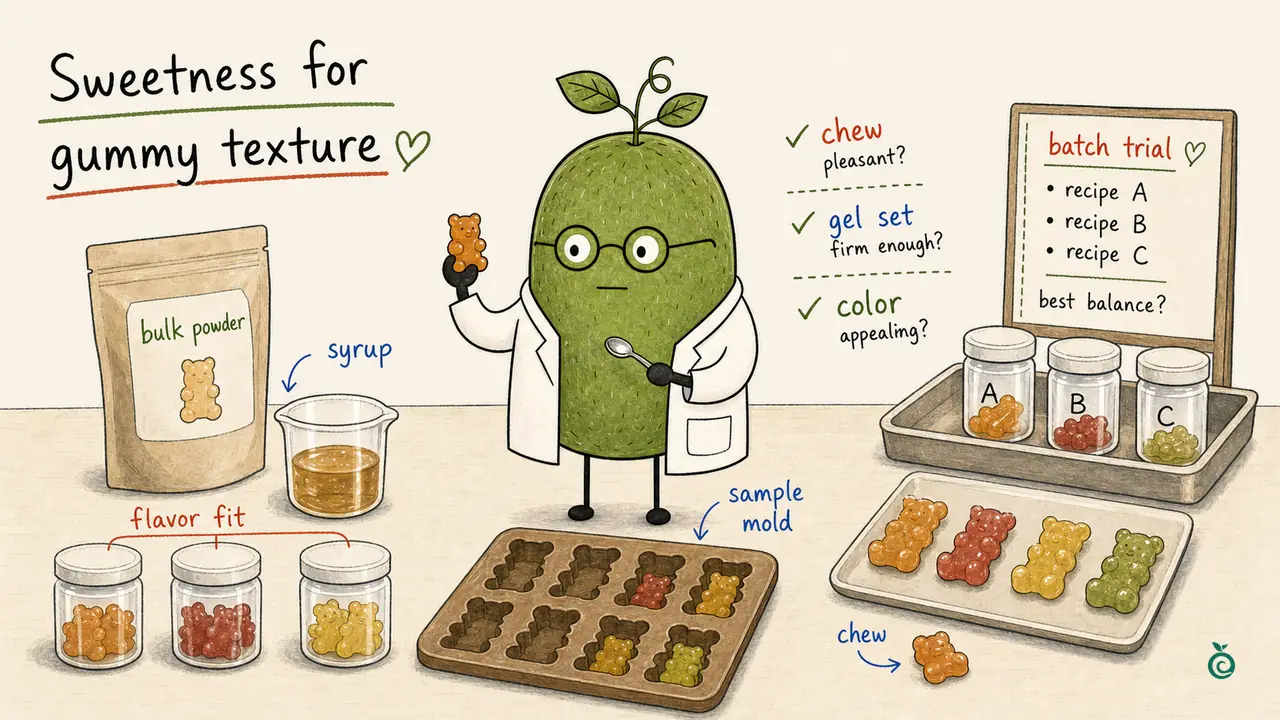
Read the illustration as questions for a gummy trial
Check sweetness alongside gel set, chew, surface behavior and flavor in the actual gummy. The recipe A/B/C labels, colors and ticks illustrate comparisons to plan, not tested recipes or an accepted sample ranking. The syrup, powder pack and finished shapes do not specify a formula, dose, production capability or shelf life.
Start with the confectionery format
A pectin gummy, gelatin gummy, hard candy, chew, nougat, chocolate coating and functional gummy need different sweetener and texture decisions. Tell the supplier the format before asking for a formula direction.
Separate sweetness from structure
Monk fruit and stevia can provide sweetness at low use levels, but they do not replace sugar bulk by themselves. Gummies usually need a carrier, rare sugar, fiber, polyol or syrup system to help rebuild body and chew.
Water activity and texture must be checked
Sugar-reduced gummies can become sticky, soft, dry or unstable if water control is not tested. Buyers should discuss Brix, pH, gel system, drying conditions, water activity and storage texture during pilot trials.
Allulose can help but is market-dependent
Allulose may support body, moisture and sugar-like taste in selected markets, but it is not accepted the same way everywhere. U.S. and EU projects, for example, need different regulatory checks before allulose is chosen.
Taste masking is part of the system
Fruit acids, flavors, botanicals, vitamins, minerals and protein notes can expose bitterness or lingering sweetness. Stevia grade, monk fruit specification, flavor system and acid balance should be tested together.
Set the gummy test around the gel system
Name the gelatin, pectin, starch or other gel route and keep its process consistent for the first sweetener screen. Record the actual solids, sweetener dose, cooking and depositing conditions, drying and package. Compare sweetness separately from chew, set and water activity. An attractive fresh gummy still needs its defined storage and safety assessment.
- Reduced-Sugar Gummy Texture and Stability Scorecard
- Sugar-Free Gummies: Sweetener and Texture Formulation Guide
- Instrument-maker explanation of Brix and method differences
| Property | Record with the result | Keep the interpretation separate |
|---|---|---|
| Refractometer / Brix | Instrument method, temperature, sample preparation and formula version | A reference-based reading does not establish the full sugar composition or sweetness |
| Moisture or dry matter | Defined method, sample stage and basis | Use the specified method rather than treating Brix as the same measurement |
| Water activity (aw) | Instrument method, temperature and sampling condition | Do not substitute moisture or Brix for the measured aw result |
| pH and gel route | Exact gel type/grade, pH method and relevant process stage | A target for one gel system is not a universal gummy endpoint |
| Set, chew and surface | Sample size, temperature, time after making and agreed handling / packaging observations | A fresh preferred gummy still needs the intended process, storage and safety review |
A refractometer measures refractive index and converts it to a Brix value using reference relationships. In a mixed formulation, other dissolved ingredients affect the reading; it is not a direct measurement of sucrose or an interchangeable dry-matter result. Keep the instrument method, temperature and formula version with the value, and confirm the appropriate method for each separate property.
Use regulatory references for their stated scope
The FDA allulose guidance concerns declaration on Nutrition and Supplement Facts labels; it does not by itself settle the finished package wording for a gummy. State the intended country and, for a U.S. project, the main sales state before artwork review. EFSA's 2025 opinion identified unanswered data requests and concluded that the safety of the novel food assessed could not be established. That opinion is not an authorisation. Confirm the current ingredient and use route for the actual market and product; do not read a U.S. nutrition-label document or an EFSA opinion as worldwide permission.
Define the sample question before the final quotation
Tell Hengliyuan the confectionery format, final sales market and the taste or texture problem you want to resolve. Share the gel system, ingredient restrictions, current process and intended package if known; if these are still being developed, describe the product target and reference. A finished formula or final order quantity is not required to start. After the sample direction is useful, link the accepted material or formula version to its specification, receiving pack, trial or repeat quantity, document needs and delivery terms. This page concerns sweetener ingredients and blends. Identify a finished gummy manufacturing request separately so supply fit can be confirmed; an ingredient sample does not validate the complete finished product. For a functional or supplement gummy, identify the relevant actives and the compatibility question you need reviewed. Active distribution, declared content and stability need their own finished-product controls; an acceptable sweetener tasting does not establish them.
Common questions
Can monk fruit or stevia replace sugar bulk in a gummy?
They can supply sweetness, while the formula still needs the physical system for body, chew and water control. Identify the full candidate composition and its actual addition, then compare the complete gummy against your reference.
Discuss the confectionery sample directionDoes the same Brix reading mean two sweetener systems are equivalent?
No. A refractometer reading depends on the sample and method; it does not establish the same sugar composition, perceived sweetness, dry matter or water activity in two different formulas. Keep those properties and the gel/process conditions separate in the trial record.
Discuss the confectionery sample directionCan I use one pH or aw target for every gummy?
This guide sets no universal endpoint. Choose the applicable criteria for the actual gel system, formula, process, package and intended life with the people responsible for product validation. A successful result in another formulation does not establish your release limits.
Discuss the confectionery sample directionCan the sample direction exclude erythritol?
State that restriction and the intended gummy or confectionery format. The candidate still needs a complete composition and a plan for sweetness and physical functions. Excluding erythritol alone does not establish a successful recipe or a sugar-free finished-pack claim.
Discuss the confectionery sample directionDoes a sweetener sample validate a vitamin or botanical gummy?
It can inform the sweetness and flavor comparison. The complete product still needs the appropriate controls for its actives, distribution, declared content, stability and other applicable requirements. Keep those results separate from the sweetener sample feedback.
Discuss the confectionery sample directionWhat can I send before my formula and quantity are final?
Begin with the confectionery type, final sales market and the problem or product target. Add known gel, process, ingredient restrictions and packaging information. The sample direction and subsequent specification and quotation details can then be clarified.
Discuss the confectionery sample direction