
Read this guide in
PROTEIN BEVERAGE SENSORY
Protein Drink Sweetener Guide: Natural Options for RTM Shakes & Meal Replacements
Compare monk fruit, stevia and blends in real protein drinks. Separate sweetness timing, aftertaste, blind liking, label appeal and RTM/RTD processing.
This page covers the natural-sweetener trial brief for RTM protein drinks and meal replacements. The plant-protein guide addresses sweetener selection within that base; the soy stability scorecard separates physical stability observations from taste.
Protein drink buyers often want a natural sweetener system and a cleaner label. Our starting point is the real protein base: tasting a sweetener by itself in water misses interactions in the finished shake. A complete protein powder mixed with its intended water is already a real-base test.
This guide is for ready-to-mix protein beverages, ready-to-drink shakes, protein coffee, meal replacement drinks and sports nutrition powders that need monk fruit, stevia, allulose-supported or custom natural sweetener blend trials.
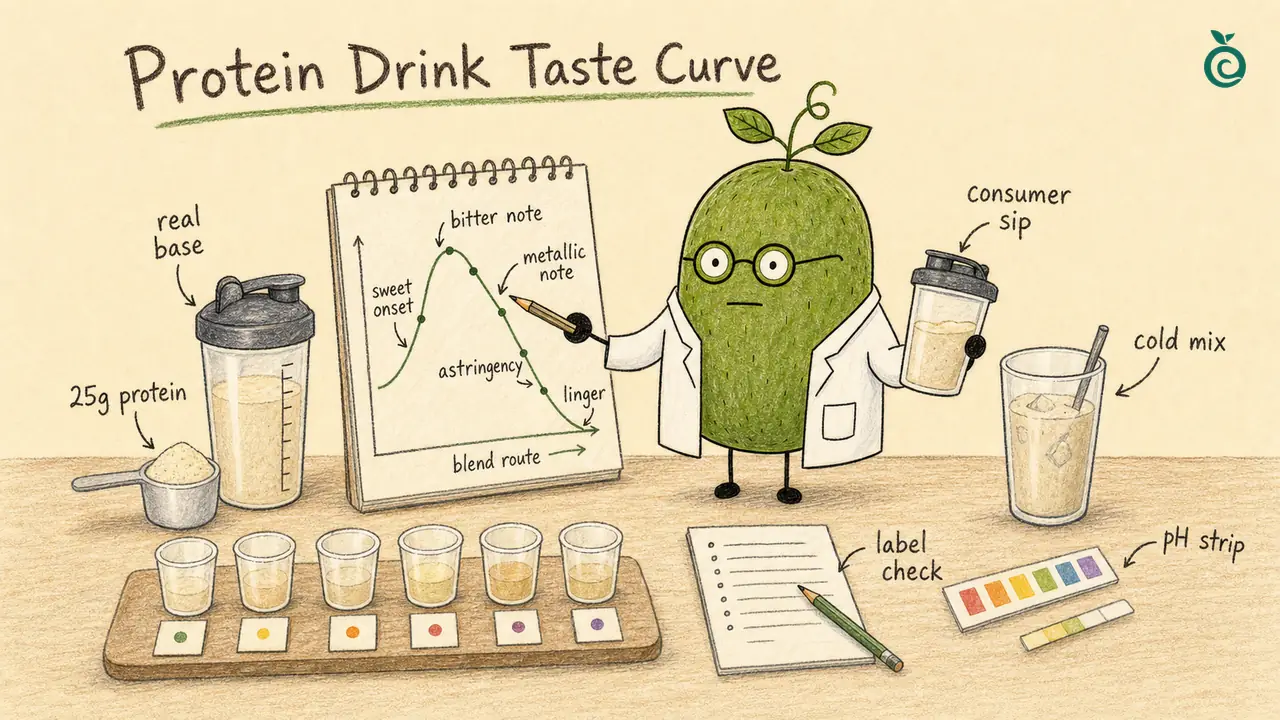
Read the drawing as a tasting plan
The illustration separates preparation in the real protein base from a first-sip or label check. Its 25 g protein label refers to a published whey-model condition, not a complete powder serving or our recommended protein or sweetener dose. The unscaled line, attribute order, coded cups and pH strip are conceptual prompts, not a measured taste curve, trial results or a pH reading.
Protein changes the sweetener
Whey, milk protein, collagen, soy, pea and mixed plant proteins can expose bitterness, chalkiness, astringency or metallic notes. A sweetener that tastes balanced in water may taste thin, bitter or slow in a high-protein drink.
Compare the supplied materials at a defined sweetness target
Keep the actual protein grade, flavor system, sweetener identity, carrier or bulk composition and formula revision with each code. Record complete powder mass separately from sweetener ingredient addition and state the addition basis. The same label name does not establish the same extract purity, steviol-glycoside composition or blend. A fixed-addition screen asks what happens at a selected amount. A matched-sweetness comparison asks how the sensory profiles differ when intended sweetness is comparable in the real base; retain the different amounts used to reach that target. A sweeter first sip is not proof of a better finish. Compare monk fruit, stevia and relevant blends against the current product without assuming one route wins in every protein base.
Keep the actual serving and process with the taste record
State the protein source and amount, complete formula portion, liquid identity and amount, mixing, standing time, preparation and drinking temperatures. Keep pH, minerals, fat, fiber, cocoa, coffee and other relevant components identifiable. These conditions can overlap: a protein coffee may also be an RTD product.
| Product condition | Keep with the comparison | Question for the next sample |
|---|---|---|
| Ready-to-mix powder | Actual complete powder portion, intended liquid, mixing, standing and serving temperature | Does the candidate work after the preparation the customer will actually use? |
| Ready-to-drink beverage | Actual formulation, heat process if used, package, storage and opening history | Does the sensory result hold after the intended process and at the relevant storage checkpoint? |
| Protein coffee | Coffee identity, preparation, acidity, serving temperature and protein base | Which bitter, roasted or metallic note is present, and when does it appear? |
| Meal replacement | Protein, fat, fiber, minerals, flavor and intended full serving | Does the whole drink meet the taste and mouthfeel target, rather than just a simplified protein-water model? |
Keep dispersion, sediment, foam, viscosity and taste as separate observations. An appearance defect does not identify the responsible ingredient, and an acceptable first tasting does not establish RTD process stability or commercial shelf life.
Record the finish after the first sip
Record sweetness onset, peak and fade alongside bitter, metallic, astringent, licorice-like, chalky or lingering notes as relevant. Define the tasting task, clock start, actual observation times, assessor, serving conditions, order and palate-cleansing procedure before comparing. Twenty or forty seconds can be an observation point in a project; neither is a universal onset time or a required end to the assessment. Keep attribute description, perceived intensity and liking as different records. Time intensity follows a defined sensation; temporal dominance of sensations records the dominant sensation; TCATA records which attributes are selected over time. A few checkpoint notes are useful for screening, but they do not reproduce any of these full research datasets or establish a statistically significant liking penalty.
Use the blank aftertaste worksheet when timing matters
The free Excel record keeps sample identity, preparation, actual observation times and eight sensory descriptors together. Use one copy per coded sample, assessor and preparation, with separate copies linked for the control, candidate or repeat. It downloads directly without an email address or registration. The sheet contains 52 blank inputs, with no prefilled trial result, formula or automatic ranking. Use descriptive notes or an agreed scale with stated anchors; an empty cell means unrecorded, not zero. Filling in the worksheet is optional for contacting us.
Keep label appeal and tasting acceptance separate
Our rule is to retain both the taste result and what the assessor knew about the product. A natural-sweetener concept can be attractive while the actual drink still has a weak finish. Record whether a brand, label or claim was shown before tasting, and plan the comparison so those cues are identifiable. Parker, Lopetcharat and Drake (2018) tested vanilla whey RTM beverages and evaluated selected drinks with and without priming statements in a consumer study of 150 people. The study found two different consumer responses; the table summarizes the reported directions, not percentages of the market or a forecast for your customers.
| Study consumer segment | Reported response under priming | Formulation implication |
|---|---|---|
| Label-conscious segment | Preferred beverages sweetened with natural blends | Retain the proposed label alongside the actual drink test. |
| Flavor-driven segment | Conceptually preferred natural sweeteners, but preferred the sucralose-sweetened beverage when primed | Concept preference alone does not select the accepted formula. |
Do not turn these segments into a claim that every consumer prefers a natural blend. For a new product, define the intended customer and compare the actual formulas and proposed label under a stated test design.
Use the whey studies within their actual scope
The 2018 study established matched sweetness before comparing temporal profiles in vanilla whey drinks; its reported model used 25 g protein with 360 mL water. That is protein mass and a water amount, not 25 g of finished powder or a 360 mL final-volume mixing instruction. The studied materials and selected blends do not specify the grade, dose or ratio for your product. Harwood and Drake (2021) paired temporal liking with TCATA in a vanilla whey-isolate RTM model involving 143 consumers in total. Its abstract reports unwanted temporal notes and mitigation by blends in that model. The approach supports looking beyond the first sip; it does not prove that a supplied blend removes every aftertaste or that the same outcome holds in pea, soy, collagen, coffee or heat-treated RTD systems.
Choose the next trial for the market and the actual defect
A concentrated sweetener can address sweetness without replacing all the solids or body of the current sugar system. Keep any allulose, bulk or body-support direction identifiable in the full formula and check the intended country, finished-food use and proposed label before selecting it. For a U.S. allulose project, include the main sales states and proposed packaging claim for review. Start a sample discussion with the protein-drink format, target market and one taste problem. Add the base, flavor, actual portion/liquid, supplied sweetener, process and observations you already have. Packaging, estimated quantity, documents and sample arrangements can follow; the full technical or purchasing brief is not required for first contact.
Common questions
Can monk fruit or stevia work in a protein drink?
They can support sweetness. Compare the actual supplied grade or blend in the intended protein base, flavor, preparation and process, including the finish after the first sip. A material name alone does not establish the result.
Discuss this requestDoes equal sweetness mean equal aftertaste?
No. Define how sweetness was matched and retain the actual additions. Then assess bitterness, metallic notes, astringency, lingering sweetness and other relevant attributes over the agreed tasting task.
Discuss this requestIs a complete protein powder mixed with water a real-base test?
Yes, when that is the intended preparation. The early-screen limitation is sweetener alone in water. Keep the complete powder portion, actual sweetener addition, liquid, mixing, standing and temperature identifiable.
Discuss this requestCan a few timed notes establish a TCATA curve or liking penalty?
No. The checkpoint record is a practical screen. A temporal dataset and statistical liking-penalty analysis require their own defined design, participants, tasks and analysis.
Discuss this requestCan an RTM taste result approve a heat-treated RTD product?
No. Keep the actual RTD formula, process, package and storage checkpoints in a separate evaluation. A successful reconstituted-powder tasting does not establish heat-process stability or shelf life.
Discuss this requestDoes a preferred natural label guarantee that customers like the drink?
No. The cited whey study found different responses among consumer segments. Keep the product taste, intended customer and the label information shown during testing identifiable.
Discuss this requestWhat can we send before the protein-drink brief is complete?
Start with the format, market and one taste problem. Add the base, flavor, portion/liquid, sweetener and observations you have; quantity, packaging, documents and sample needs can be clarified as the direction develops.
Discuss this request