
Read this guide in
SUGAR-FREE CHOCOLATE TROUBLESHOOTING
Sugar-Free Chocolate Sweetener: Fixing Gritty Texture and Bloom
Fix gritty texture, waxy melt and bloom in sugar-free chocolate: bulk sweeteners, process control and sample briefs.
A sugar-free chocolate sample can be sweet enough and still fail on texture. Buyers may see gritty mouthfeel, waxy melt, bitter finish or a pale bloom after storage.
The issue is usually not one sweetener name. Sugar-free chocolate needs a bulk system, particle control, fat crystallization control and label review. Start with the defect and the actual product; the sample discussion can begin before every process detail is available.
Start with the defect and when it appeared
Describe what failed first: sandy particles, dry grit, waxy melt, slow sweetness, bitter finish or a pale surface after storage. Include whether it was present on day zero or developed later. Photos, storage history and process notes help separate possible causes; appearance alone is not a confirmed diagnosis. Fat bloom involves the fat phase, including crystallization or fat migration. Conventional sugar bloom involves moisture dissolving surface sugar and subsequent recrystallization. In a sugar-free system, identify the actual crystallizing ingredient before calling a pale surface sugar bloom.
| Observation | Useful next check |
|---|---|
| Grit throughout a fresh piece | Particle distribution, dispersion and agglomeration; compare with the control under the same preparation |
| Pale surface after temperature changes | Fat system, crystallization, cooling and storage history; distinguish surface changes from grit in the whole piece |
| Grainy surface after cold unpacking or moisture exposure | Condensation, package barrier and ingredient crystals; keep the actual sweetener composition in the assessment |
| Waxy melt or a slow finish | Fat blend and melting behaviour, then flavour and sweetness over time; do not treat this as a particle-size result |

Separate chocolate, compound coating and filling
Chocolate, compound coating, cocoa filling and nut spread do not behave the same way. Cocoa butter tempering, plant-oil coating systems, filling fat, nut oil and emulsifier choice can all change bloom risk, melt and particle feel. Confirm the format before asking for a sweetener replacement. Use the crystallization or cooling route appropriate to the identified fat system; do not apply one cocoa-butter tempering curve to every compound coating. For a filled product, consider the shell and filling together, including possible oil migration.
Bulk sweeteners change particles and flow
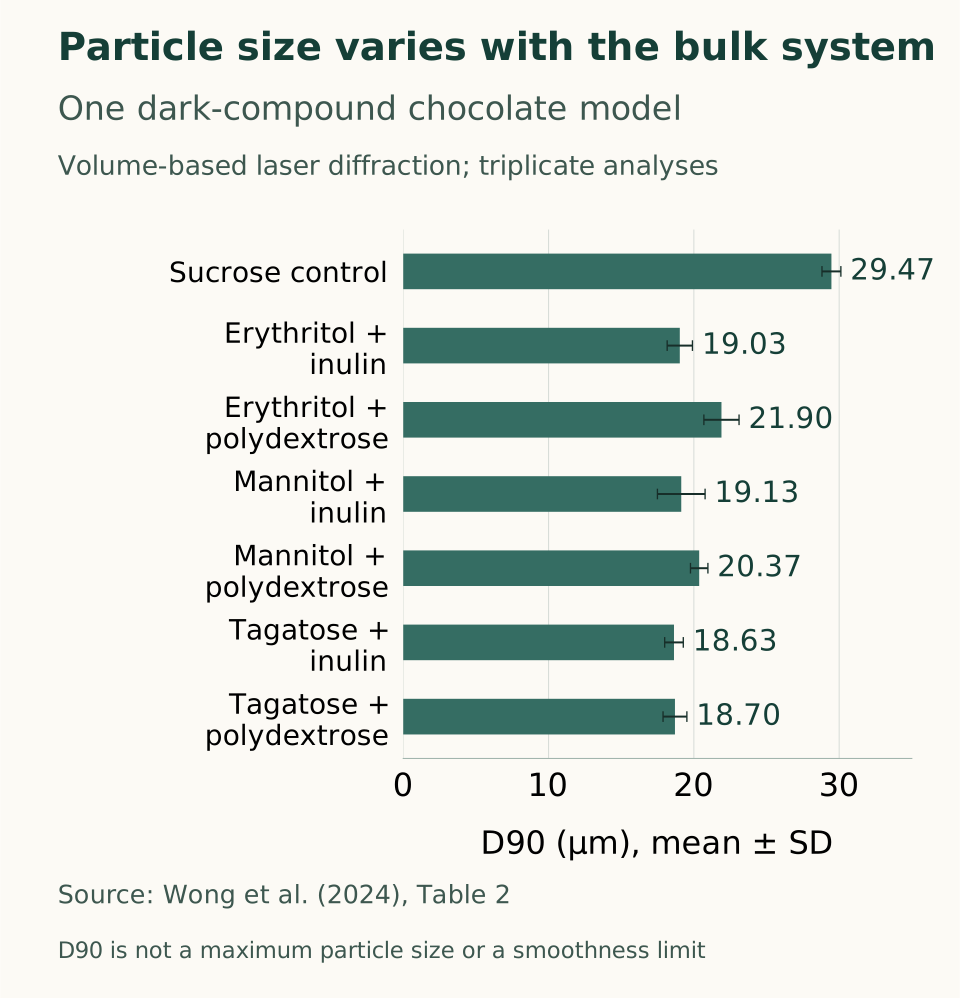
Sugar is also a solid particle in chocolate. A replacement can alter particle distribution, moisture interaction and particle shape as well as sweetness. Record the measurement method and sample preparation: a fineness-gauge reading, D[3,2] and a volume-based D90 are different descriptions. D90 means that 90% of the measured particle volume is below that diameter; it is not the largest particle or an average size. Wong et al. (2024) studied sweetener–polymer mixtures in a dark-compound model containing cocoa butter and hydrogenated palm-kernel oil, without emulsifier. Particle size was measured by laser diffraction after dispersion and sonication in isopropanol. Its smaller replacement-system D90 values accompanied higher plastic viscosities than the sucrose control. Measure flow and mouthfeel alongside particle distribution; a smaller number alone does not select the commercial sample.
Published particle-size results are a comparison, not a limit
The following values are from Table 2 of the Wong et al. study, using triplicate analyses. Samples were refined and conched, tempered and conditioned for two weeks at 7°C before analysis. These are results for that complete fat and bulk system, not ingredient specifications, recommended storage conditions or a sensory acceptance threshold.
| Sweetening system in the study | D90 (µm): mean ± SD |
|---|---|
| Sucrose control | 29.467 ± 0.65 |
| Erythritol + inulin | 19.033 ± 0.87 |
| Erythritol + polydextrose | 21.900 ± 1.21 |
| Mannitol + inulin | 19.133 ± 1.64 |
| Mannitol + polydextrose | 20.367 ± 0.60 |
| Tagatose + inulin | 18.633 ± 0.64 |
| Tagatose + polydextrose | 18.700 ± 0.82 |
Allulose and FOS still need process control
A 2026 IOP conference paper by Lee and Lo compared five FOS/allulose sweetener combinations with a sucrose control. Its 100% allulose description means all of the sweetener portion was allulose, not that the finished chocolate was entirely allulose. The study assessed physical properties, bloom and sensory response. In its sensory results, the allulose-only sweetener sample ranked below the sucrose control but above the FOS-only sample in overall liking. The FOS-only sample was associated with harder and grittier impressions. A major qualification is the process: the sucrose control was machine-refined and conched, while the FOS/allulose samples were mixed manually. Those differences prevent attributing the texture contrast to sweetener chemistry alone. The bloom observations used approximately −20°C storage over four weeks, rather than a normal retail shelf-life test. Use the paper to identify variables worth comparing under a matched process; do not turn its result into an allulose bloom-prevention guarantee or a general formula. Allulose remains subject to the intended market and product-category requirements.
High-intensity sweetness still needs a bulk system
Monk fruit and stevia can help adjust sweetness onset, peak and finish at low use levels, but they do not replace sugar’s bulk, particle structure or fat-crystal behaviour. Confirm the selected commercial ingredient or blend, then evaluate it with the bulk and fat system in the finished chocolate. More sweetness will not repair a coarse particle distribution or an unsuitable melt.
Compare the fresh sample and the intended storage
Do not approve a chocolate sample from day-zero taste only. Use a control and a small, identified sample matrix; record the change made in each candidate. Compare samples in the same packaging and under the same conditions, including the intended storage. A stress screen helps identify a weak direction but does not set commercial shelf life. Choose acceptance criteria for the actual format and process. Record the method, temperature and sample state with each instrumental result; keep sensory impressions separate from instrument readings.
| Check | Record for the control and each candidate |
|---|---|
| Identity and processing | Commercial ingredients and ratios, refining/conching, fat system and crystallization or cooling route |
| Fresh comparison | Particle feel, snap, melt, bitterness and sweetness finish at the same serving conditions |
| Stored comparison | Actual package, temperature, humidity, duration, surface photos and the same sensory checks |
| Next sample decision | The observed difference, whether the defined criteria were met and which variable to change next |
Start with the chocolate format and the defect
Start with the intended market, product format and the problem you want to solve. Share a photo or a short description and when the defect appears. You can contact Hengliyuan before a full formula or test record is ready. Add the known fat system, cocoa or filling level, refining route, crystallization or cooling process, packaging and storage target. Tell us if erythritol-free, allulose-supported or polyol-free positioning is required, so the ingredient direction can be discussed with the market requirements. For sample and procurement planning, add estimated quantity, document needs and whether samples are required. We can discuss matching ingredient specifications and available supporting documents; the selected material and purchase terms need to match the actual request.
Technical references and their scope
The research cited here describes specific formulations and methods; it is not a Hengliyuan product test. Callebaut’s technical guidance helps distinguish fat-related surface changes from moisture-related sugar bloom in conventional chocolate. Check the composition and processing of your own sugar-free system before applying the diagnosis.
Common questions
Why is sugar-free chocolate gritty?
Check particle distribution, dispersion or agglomeration, moisture and the actual refining process. Establish whether the grit is inside the fresh piece or appeared on its surface after storage. A sweetener name alone does not identify the cause.
Discuss this requestDoes allulose prevent chocolate bloom?
It is not a bloom-prevention guarantee. The cited conference study used a specific formulation, different preparation routes for the sucrose and replacement samples, and a freezing-temperature observation period. Verify the fat system, processing, moisture exposure, packaging and intended storage in your own product.
Discuss this requestCan monk fruit or stevia replace sugar in chocolate?
They can help provide sweetness as part of a complete system. Sugar’s mass and particle functions still need to be addressed with suitable bulk ingredients, and the fat and process remain part of the sample evaluation. Check the selected ingredient and product category for the intended market.
Discuss this requestDoes a smaller D90 mean smoother chocolate with better flow?
D90 is a volume-based percentile from a specified measurement method, not a maximum particle size or a smoothness score. In the cited dark-compound study, replacement systems had smaller D90 values but higher plastic viscosities than the control. Evaluate distribution, flow and sensory texture together.
Discuss this requestAre a fineness-gauge reading and D90 interchangeable?
No. They describe different measurements and sample preparation. Use the same method for a controlled comparison and retain its units and preparation details; do not transfer an acceptance limit between them without validation.
Discuss this requestHow do fat bloom and sugar bloom differ?
Fat bloom relates to the fat phase, including crystallization or migration. Conventional sugar bloom involves moisture dissolving surface sugar and subsequent recrystallization. Identify the actual ingredient crystals in a sugar-free product; photos and storage history provide leads rather than a complete diagnosis.
Discuss this requestDoes every compound coating need cocoa-butter tempering?
Use the process appropriate to the identified fat system. Chocolate, a non-tempering compound coating and a filled product can require different crystallization or cooling decisions. Obtain the actual fat-system and process information before setting the trial route.
Discuss this requestWhat should buyers send before requesting chocolate samples?
Start with the market, format and defect, then add the known fat system, process, packaging, storage, quantity and document needs. A complete formula, finished spreadsheet or confirmed diagnosis is not required for the first conversation.
Discuss this request