
Read this guide in
FAQ
Monk Fruit Sweetener FAQ for Food and Beverage Manufacturers
Compare monk fruit extract, juice powder and sweetener blends. Get practical answers on 1:1 replacement, aftertaste, samples, product documents and OEM.
Monk fruit sweetener can refer to an extract, a juice-based ingredient or a finished blend. Check the complete composition and product specification before comparing sweetness, price, a 1:1 replacement claim or product documents.
Our starting point is the food or beverage you want to make and the material you are considering. The answers below separate ingredient selection, application testing and OEM purchasing so you can ask the next useful question.
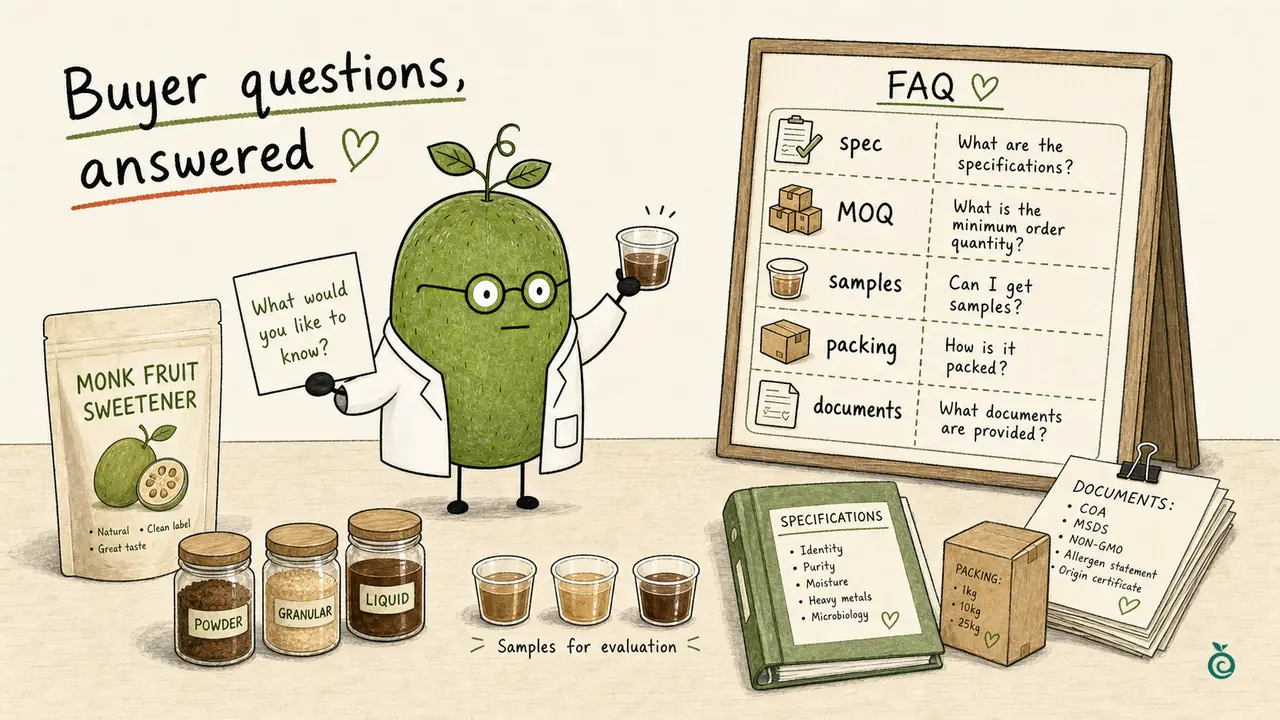
The illustration groups questions about specifications, samples, packaging and documents. Its package sizes and document labels are examples, not confirmed pack availability or evidence that every listed document covers every product.
Identify the material before comparing it
A name such as monk fruit sweetener, extract or powder does not describe a single standardized material. Confirm the product form, analyte, carrier and test basis before comparing price, sweetness or documents.
| Product form | What to compare | What to check next |
|---|---|---|
| Monk fruit extract | Named analyte, assay basis, carrier and grade | The matching specification and sample lot |
| Monk fruit juice concentrate | Soluble solids, pH, flavour and batch results | Use level in the actual base and handling instructions |
| Monk fruit juice powder | Declared composition, carrier and percentage basis | Reconstitution and flavour in the complete drink mix |
| Finished sweetener blend | Full ingredient list and stated sweetness basis | Whether replacement is by mass or volume and what sugar functions remain |
Use a quotation for the same product form and comparison basis. A larger assay number, a lower price per kilogram or a familiar front-label name alone does not tell you the cost or taste in the finished product.
Start with the question you need answered
For a sample, name the application and the product form, then describe what you want to compare: sweetness, the length of the finish, dispersion or another specific property. Include the current sample code and trial conditions when you have them. You can begin before the packaging size and purchase quantity are settled. For an OEM quotation, identify each SKU separately: formula direction, sweetness basis, net weight per pack, packaging format, target market and expected quantity. The specification and commercial details can then be confirmed for the actual project rather than assumed from another product.
Match the documents to the selected product
A specification describes the offered material. A batch COA or test report records results for its identified batch or submitted sample. A factory certificate covers its named holder, site and scope. Check which product, formula and date each file concerns before treating it as evidence for your purchase.
Read the detailed buying and testing guides
Use the matching guide when an FAQ raises a formulation or purchasing decision: dosage records, product certificates, juice concentrate, juice powder and beverage blends each need different evidence.
- Monk Fruit Sweetener Dosage and Pilot Batch Testing Guide
- Monk fruit certificates and COA: match each document to the product
- Monk Fruit Juice Concentrate: Specifications, Batch Data, and Storage
- Monk Fruit Juice Powder With or Without a Carrier: What's the Difference?
- Monk Fruit Stevia Blend for Beverages: Formulation, Ratio and Sample Guide
- FDA: xylitol in human products and the risk to dogs
Common questions
What is monk fruit sweetener?
The name can describe a monk fruit ingredient or a finished sweetener blend. Mogrosides provide the monk fruit sweetness, while other ingredients in a blend can supply bulk or alter its taste and use level. Read the full composition rather than treating the front-label name as a specification.
What is monk fruit extract?
Monk fruit extract is an ingredient derived from monk fruit and used as a sweetening ingredient in food and beverage applications. Its specification and intended use still need review for the target product and market.
What is Mogroside V?
Mogroside V is a sweet component measured in monk fruit extract. Check that the quoted percentage names Mogroside V, rather than total mogrosides, and states the analytical basis. An assay percentage is not a dose recommendation for your finished food.
Is monk fruit sweetener zero calorie?
Check the full formula, serving basis and the rules for the market where the product will be sold. A monk fruit ingredient name alone does not establish a finished product’s calories or permit a zero-calorie claim.
Can monk fruit sweetener replace sugar 1:1?
A blend can be designed for 1:1 replacement on a stated basis. Confirm whether that means equal mass or equal volume. Concentrated extract is not a 1:1 bulk sugar replacement, and matching sweetness does not automatically replace sugar’s texture, browning or freezing functions.
Does monk fruit sweetener have an aftertaste?
It can have a different finish from sugar. Blending and dose adjustment can help reach the intended taste balance. Compare coded samples at the intended serving temperature and separate peak sweetness from lingering sweetness, bitterness and other flavour notes.
Can it be used in coffee and tea?
Yes. Compare it in the actual coffee or tea, including the proposed milk, serving temperature and ice. A result in hot black coffee does not establish the same result in an iced milk drink.
Can it be used in beverages?
Yes. Beverage formulas should compare sweetness, dispersion or dissolution, acidity, flavour interaction and physical changes under the planned processing and serving conditions. Record the material and actual addition with the sample code.
Can it be used in bakery?
Yes, but sugar also contributes bulk, texture and browning. Evaluate the full replacement system in the actual baking process; a sweetness match in water does not show that the baked product will have the same structure.
Can Hengliyuan make private-label monk fruit sweetener?
Yes. Hengliyuan supports private-label and OEM monk fruit sweetener projects. Define the formula direction and each packaging SKU, then confirm the specification, artwork responsibilities and quotation for that project.
What information should buyers provide for OEM?
Start with the intended product and market. For a quotation, add the sweetness basis, packaging format, net weight per SKU, estimated quantity and required files as they become available. Mark undecided items clearly so they can be resolved rather than guessed.
Can I request samples?
Yes. Start with the application, product form and the property you want to test. Confirm the sample identity, available quantity, delivery arrangement and any charges before dispatch; this FAQ does not imply that every sample is free or ready to ship.
What packaging sizes are available?
Retail and bulk packaging can be discussed for the selected product. Send the format and net weight you need for each SKU. The sizes drawn in the illustration are examples; available packs and order quantities need confirmation for the actual quotation.
What certificates should I check?
Match each file to its issuer or holder, site, product scope, date and the material you are buying. Separate the product specification and batch test results from factory certification and market-specific files. A certificate for one entity or formula does not automatically cover another.
Where is Hengliyuan located?
Hengliyuan is based in Guilin, Guangxi, China. When reviewing a quotation or file, keep the seller, manufacturer and certificate holder’s stated roles separate; they need not be the same named entity.
Is monk fruit sweetener the same as stevia?
No. They are different natural sweetener sources. Monk fruit sweetness mainly comes from mogrosides, while stevia sweetness mainly comes from steviol glycosides.
Can monk fruit sweetener be blended with other sweeteners?
Yes. Blends can target taste balance, bulk, dispersion, cost in use or a defined sugar-replacement basis. Choose the composition for the actual application and verify the result rather than assuming that adding a second sweetener improves every property.
What is the difference between monk fruit powder and monk fruit extract?
“Powder” describes a form and may refer to an extract, a juice powder or a blended product. Check the ingredient list, carrier, assay and reporting basis. Compare matching materials before interpreting price or a sweetness claim.
Is monk fruit sweetener suitable for syrup products?
Yes. Evaluate the proposed syrup at its intended dilution and serving temperature, then check taste and physical changes under the planned process and storage conditions. Keep syrup concentration and the amount added to the drink in the record.
Can monk fruit sweetener be used in solid drinks?
Yes. For powdered drink mixes, compare weighing and blend uniformity, flow, consumer mixing, flavour and settling in the prepared drink. Keep the drink mix mass and preparation liquid separate in the record.
What should I test in a sample?
Record the exact sample identity and addition, then test the properties that matter for the intended product: sweetness profile, flavour, mouthfeel, dispersion, appearance and process behaviour. Set the observation conditions and acceptance criteria before comparing samples. A short test does not establish shelf life.
How do I choose a monk fruit sweetener supplier?
Compare the actual specification, sample response, application support, packaging, matching documents and quotation conditions. Ask who makes and supplies the selected material. Compare cost in the accepted application rather than price per kilogram alone.
Can Hengliyuan support export customers?
Yes. Hengliyuan works with overseas customers on products, samples, OEM packaging and the corresponding documents. Match the files and proposed use to the destination market; export support is not automatic market approval for every formula.
Can Hengliyuan help develop a new formula?
Yes. Hengliyuan can discuss sweetener and blend directions for the applications listed here. Bring the real base, process and the taste or handling issue you want to change; use the resulting sample trial to decide the next formulation step.
How should I start an inquiry?
Name the product or application and the question you want help with. Add the target market, known sample or grade and any existing trial result. Packaging, volume and document requirements can follow when you have them; they are not a condition for making first contact.
Can dogs eat monk fruit sweetener?
Do not assume that a human sweetener blend is appropriate for a dog. Check all ingredients and seek veterinary advice about the intended use. FDA warns that xylitol in human products can poison dogs; a monk fruit name on the front does not establish veterinary safety. Suspected xylitol exposure needs prompt contact with a veterinarian or emergency clinic.
