
Read this guide in
ZERO-SUGAR BEVERAGE SYSTEMS
Why Zero-Sugar Beverage Formulas Often Use Sweetener Blends
Why zero-sugar beverage formulas often use sweetener blends: sweetness timing, acid balance, aftertaste, body and first sample plans.
A zero-sugar beverage is not only a sweetness problem. Removing sucrose can change the sweetness curve, acid balance, aroma impression and body at the same time. A blend is useful when it gives the development team separate levers to test. It is not a guarantee that two ingredients will taste better together, and it is not a reason to skip a real-base trial.
That is why a useful first comparison keeps an existing or sucrose control beside sweetener A, sweetener B and one blend direction. The question is not "Which ingredient is best in water?" It is "Which system gives this drink the most acceptable balance with the fewest trade-offs?"
The jobs inside a zero-sugar beverage system
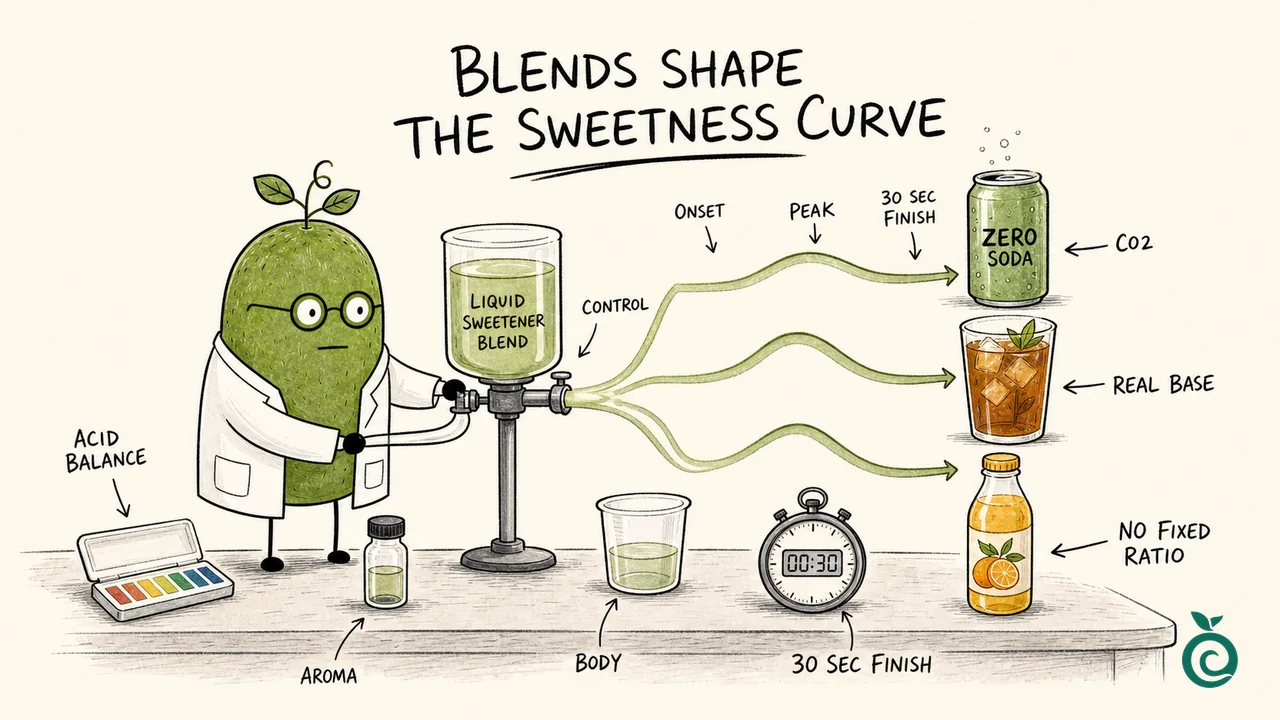
In a fruit drink, tea, coffee, carbonated soft drink or functional beverage, buyers usually need to check sweetness onset and peak, sweetness 30 or 90 seconds after swallowing, bitterness, metallic or licorice-like notes, astringency, acid balance, aroma release, body, viscosity, dissolution, clarity, sediment, separation, foam, heat, carbonation and storage. Choose the checks that matter to the drink and agree the tasting sequence and checkpoints. The 30- or 90-second observations are examples, not a universal testing protocol.
Why acid and time belong in the test
Acid changes more than sourness. Mao et al. (2025) used sucrose and citric-acid model systems and reported changes in how sweet and sour perceptions interact over time. The practical lesson is simple: record the first impression, peak and finish instead of judging sweetness from one sip at one moment. That study used sucrose–citric-acid water models, not a zero-sugar drink or a monk fruit–stevia blend. It supplies context for checking the base and timing, not a commercial sweetener ratio.
Compare peak and finish as separate questions
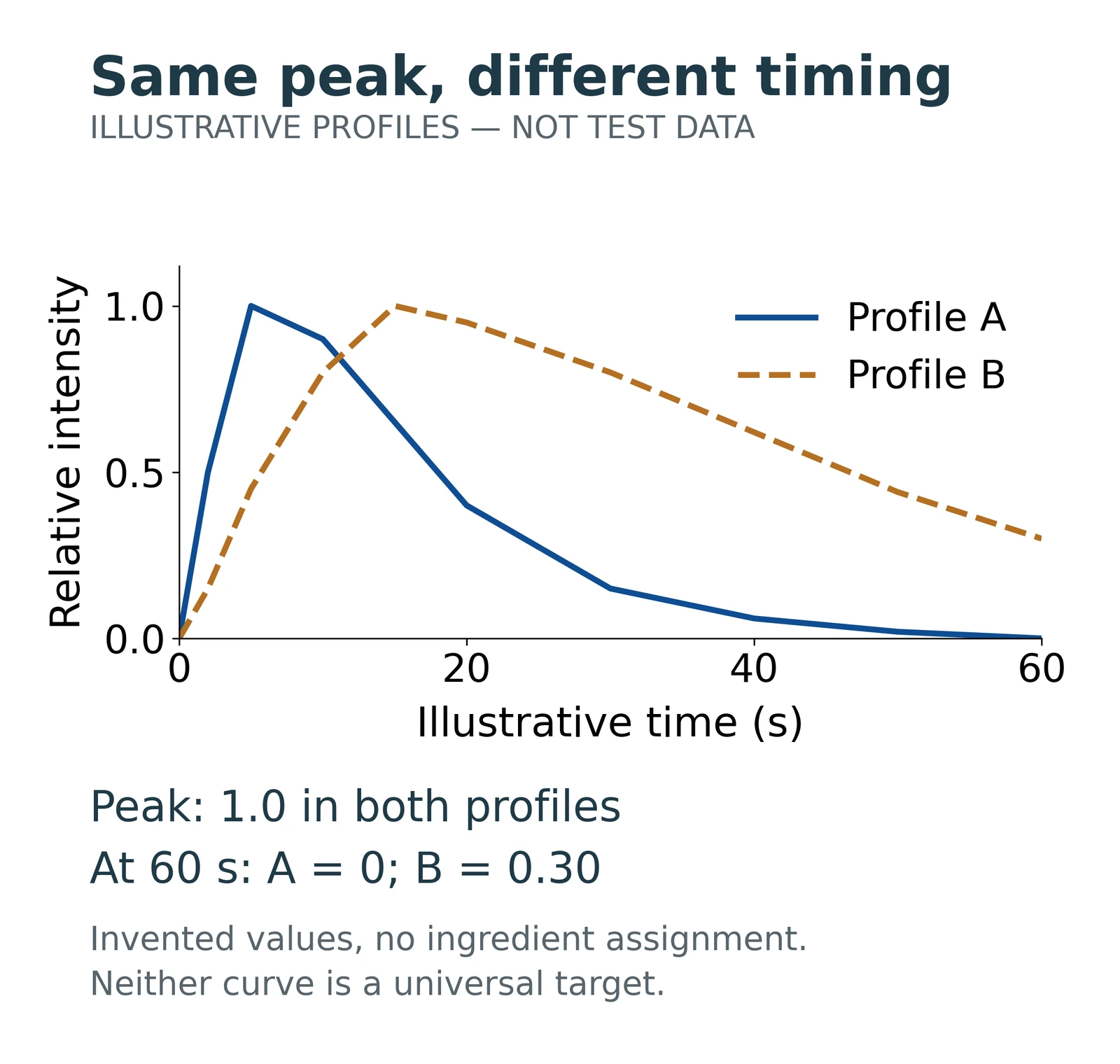
The independent teaching plot below is reused from our existing monk fruit–stevia guide. It uses invented profiles to explain how the same peak can hide a different onset or finish; it is not data from the sucrose–citric-acid study or from a commercial blend. Profile A and B are illustrative labels, not the identities of the samples in your own trial.
What sugar removal can leave behind
Sucrose contributes sweetness and also contributes dissolved solids and a familiar mouthfeel. Replacing it with a low-dose high-intensity system can expose thinness, sharp acidity or a more noticeable aftertaste. A body-supporting ingredient may help in some markets, but the choice must follow the label plan, ingredient permission and the real product target.
Choose the sweetener jobs before choosing the blend
Monk fruit, stevia, allulose-supported directions and erythritol-free systems can all be considered, but they do not perform the same job in every formula. One candidate may arrive quickly and fade quickly. Another may linger. A third direction may support body where the target market permits it. These are sample questions, not universal conclusions.
Use a practical first-round sample plan
Use the real beverage base whenever possible. Keep target sweetness, serving size, acid direction and flavor direction clear. Compare the current or sucrose control, sweetener direction A, sweetener direction B and one blend direction designed to answer a specific question. Record pH or acidity, soluble solids, viscosity, carbonation, heat or filling conditions, serving temperature and storage checkpoints. Change one main variable at a time.
| Comparison | What it answers | Keep with the result |
|---|---|---|
| Current or sucrose control | What sweetness, finish and mouthfeel are you trying to match or improve? | Identified, safely prepared reference, complete base and actual serving conditions. |
| Sweetener direction A | How does this actual material behave in the drink? | Product/grade, carrier, batch or sample version, measured dose and any stock dilution. |
| Sweetener direction B | How does a second identified material differ under the same comparison basis? | The same base, preparation and observation conditions; record the actual dose. |
| One blend direction | Does the chosen combination answer the stated taste or body question? | Full blend identity and proportions for the comparison, measured dose and any other ingredient changes. |
Decide whether you are comparing fixed inclusion or adjusting each candidate to a matched sweetness target, and record that basis. A mass ratio is not a sweetness-contribution ratio; adding a bulking ingredient also changes the complete formulation. Keep pH, titratable acidity and perceived sourness separate, and identify the method and units of any measurement; Brix is not a direct total-sugars assay in a mixed beverage. Record appearance before disturbing the sample, then assess the drink at its intended preparation and serving conditions. Immediate liking, sensory intensity, physical stability and finished-product acceptance answer different questions. Agree processing, packaging and storage checks for the project rather than treating a fresh sample as a shelf-life result.
What a positive sample does not prove
A blend is not automatically cleaner tasting, more stable, lower cost or permitted in every country. U.S. labeling terms such as "sugar free," "zero calories" and "reduced sugar" have separate conditions under 21 CFR 101.60. That is a U.S. labeling reference, not a global formulation or market-approval conclusion. Final claims need the target market, food category, serving size, nutrition data and current local review. For new US projects containing allulose, review the main sales state and proposed wording separately before preparing claim artwork. This guide does not clear zero-sugar, sugar-free or no-added-sugar packaging for those projects.
Research and practical reading
These sources explain temporal sensory methods, the sucrose–citric-acid model and US claim review. They do not establish a commercial blend formula, a finished-drink result or ingredient permission in every market.
- Mao et al. (2025): Dynamic interaction of sweet and sour taste perceptions based on sucrose and citric acid
- Visalli and Galmarini (2024): Multi-attribute temporal descriptive methods in sensory analysis applied in food science
- US eCFR 21 CFR 101.60: calorie and sugar claim conditions
- Compare Reb M and monk fruit roles in a real beverage
Common questions
Is more than one sweetener always better?
A blend is worth testing when the ingredients address different needs in the beverage. It can also introduce new trade-offs. Compare the identified blend with its individual directions and the control rather than assuming that more ingredients improve taste.
Discuss this requestDoes a matched sweetness peak mean the finish will match?
No. Compare onset, peak, drop-off and lingering sensations under the same tasting conditions. The reused teaching graph illustrates that distinction with invented values; it is not a measured comparison of any ingredient or blend.
Discuss this requestWhat should I record about the blend itself?
Keep the commercial ingredient identities or grades, carriers, sample or formula version, actual amounts, total beverage basis and any stock concentrations or dilution. State whether doses were fixed or adjusted to a matched sweetness target.
Discuss this requestCan I use pH or Brix instead of a taste comparison?
Keep those observations separate. pH, titratable acidity and perceived sourness describe different things; Brix is not a direct sugar assay in a mixed drink. Record the relevant methods and assess taste in the actual base and serving conditions.
Discuss this requestCan the same blend cover both still and carbonated drinks?
Evaluate those formats in their intended conditions. Carbonation, foam, acidity, temperature and the beverage base can change the result, even when the ingredient direction is related.
Discuss this requestDoes a good fresh sample confirm stability or label claims?
A fresh sensory result does not establish processing performance, packaged storage behavior, shelf life or a finished-product claim. Agree those checks separately for the beverage, package and final sales market.
Discuss this requestCan I ask for samples before all the details are settled?
Yes. Start with the drink, final sales market and the taste or body question. Known base, process, packaging, quantity, documents and sample details can be added as the discussion develops.
Discuss this request